

Princess Anne’s Visit to War-Torn Ukraine: Delivering by Hand a Teddy, a Letter, and a Promise of Love, Compassion, and Solidarity
The Princess Royal’s unannounced journey to Kyiv was carefully designed not only to demonstrate solidarity with the Ukrainian people but also to shine a light on the plight of children affected by the Russian invasion. Buckingham Palace said the visit was arranged to highlight the traumatic experiences of families living on or near the frontline, many of whom have seen their lives torn apart by displacement, loss, and violence. Anne’s secret visit, which was not publicised beforehand for security reasons, came just two days after a Russian aerial bombardment killed at least four people in Kyiv, including a 12-year-old girl, and injured at least 70 others. The attack, which lasted more than 12 hours, was one of the heaviest in recent months.
Her programme was coordinated with the Foreign, Commonwealth and Development Office, making her the second working member of the Royal Family to travel to Ukraine since the war began, following the Duchess of Edinburgh’s historic visit in 2024. Prince Harry also made a private visit earlier in September, connected to his Invictus Games work with veterans.
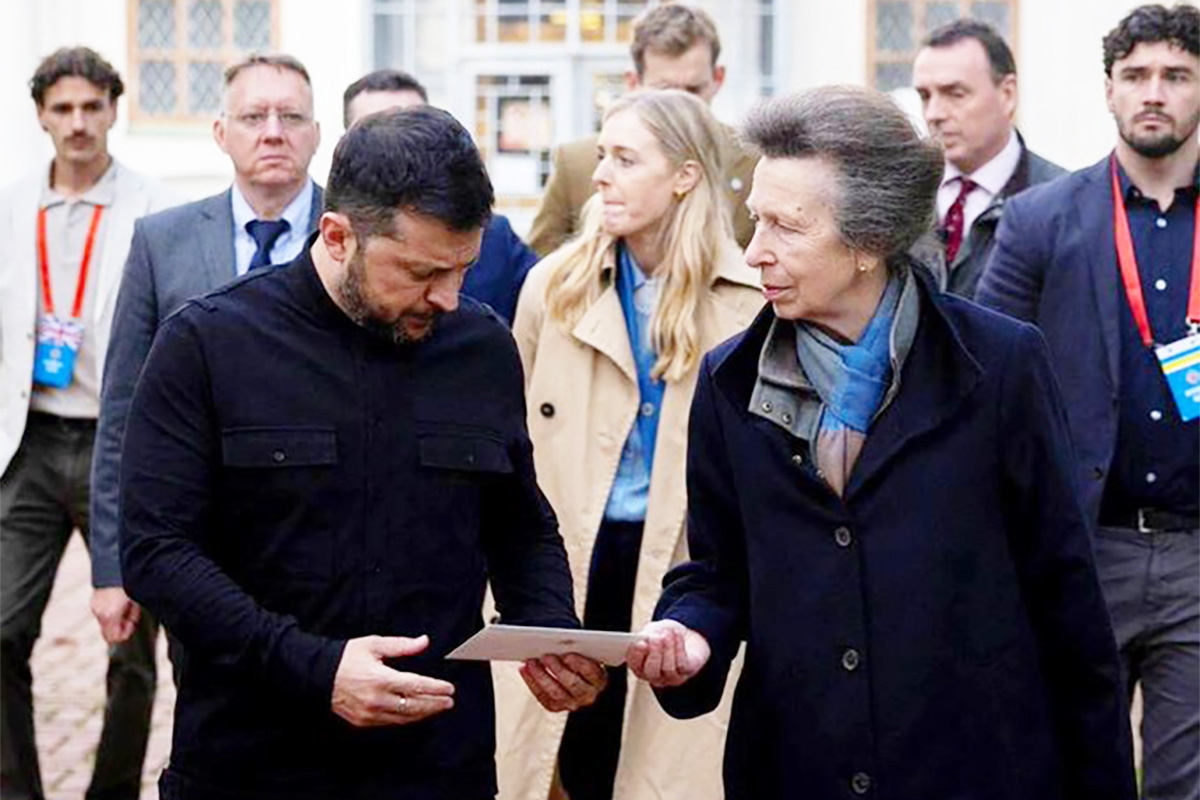
In Kyiv, Princess Anne held a formal meeting with President Volodymyr Zelenskyy, during which they discussed Britain’s steadfast support for Ukraine and the country’s determination to resist Russia’s aggression. Dressed in her characteristically practical style—flat boots, grey trousers, a simple overcoat, and patterned scarf—she greeted the President with a firm handshake and presented him with a personal letter from her brother, King Charles III, bearing the King’s distinctive cypher. Charles has spoken openly of his support for Ukraine, calling the invasion “an unprovoked full-scale attack” and condemning Moscow’s “brutal aggression.”

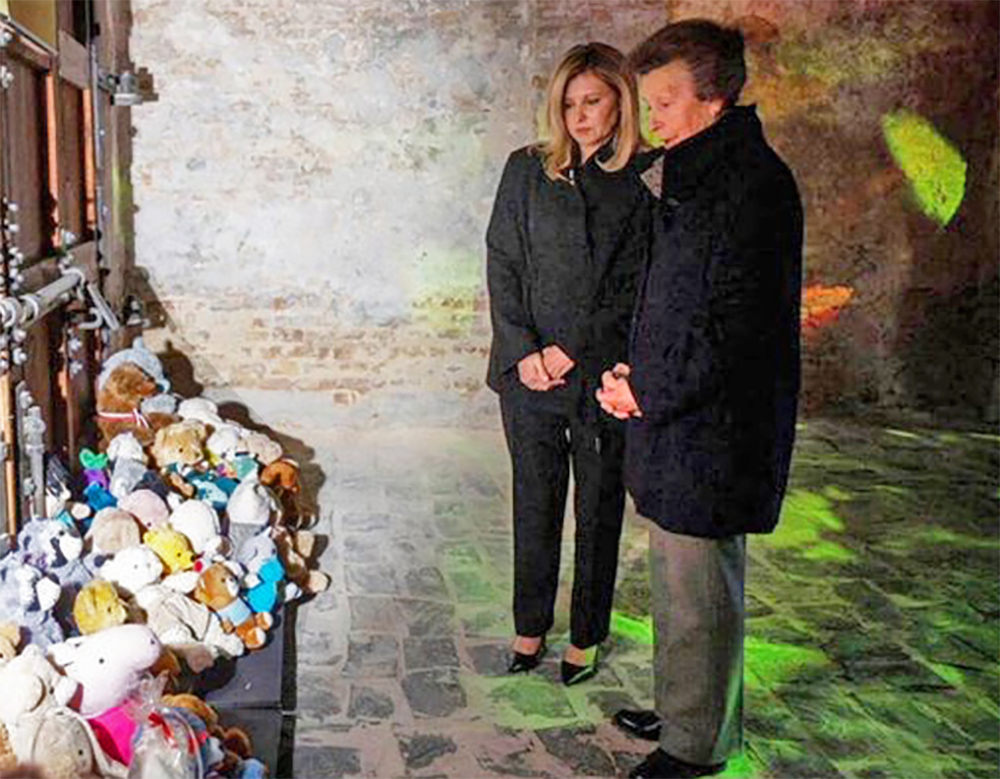
In Kyiv, Princess Anne joined First Lady Olena Zelenska at the Children’s Memorial, a quietly powerful place where teddy bears, simple toys, names, and flowers converge to bear witness to an unfathomable loss. The memorial began as a spontaneous outpouring of grief—families, friends, and strangers laid down soft toys and personal mementoes in memory of children killed or displaced by the war. Each bear represents a life interrupted. Over time the site has become more than a collection of objects—it is a living act of remembrance, inscribing the names of lost children, and marking birthdays and ages, preserving stories so the young souls will not vanish into anonymity. The symbolism is layered: childhood innocence symbolised by teddy bears; the ritual of laying down a toy as both mourning and pledge; ribbons and colours speaking of national identity; and the very gathering together of people—citizens, mothers, veterans, a visiting princess—standing in collective memory and solidarity. When Princess Anne placed her own daughter’s teddy at this memorial, with its yellow and black ribbon, she did more than pay tribute—she mirrored a universal promise: that even amidst war, humanity will remember, children will be honoured, and hope will endure.
Perhaps the most moving part of her schedule came at the Child Rights Protection Centre, an institution in Kyiv dedicated to the welfare of young Ukrainians caught up in the war. The Centre was created as part of the government’s National Strategy for Child Protection during Martial Law and serves as a safe hub for children who have been displaced, separated from their families, or traumatised by the conflict. It provides legal support, psychological counselling, education programmes, and reintegration services for children returning from occupied territories or refugee settings. It also assists families in tracing missing children, documenting war crimes committed against minors, and supporting reunification efforts.
At the Centre, the Princess Royal spent time with children and families who had experienced the heartbreak of separation and displacement. She listened carefully as staff explained the painstaking process of bringing children home from occupied regions, and she met social workers and psychologists who help these young people begin the slow process of recovery. Some of the children she encountered had been recently reunited with parents after long months apart; others were receiving therapy to cope with trauma. Her presence was described by staff as “deeply reassuring,” reinforcing the sense that Ukraine’s children had not been forgotten by the wider world.
The Princess also spoke with women serving in the Ukrainian police and Armed Forces, many of whom are directly involved in child protection operations and frontline civilian safety. She expressed admiration for their courage and determination, recognising the double burden they carry as both defenders and protectors of the most vulnerable. Her itinerary further included a visit to a rehabilitation centre for veterans, where she saw therapies ranging from prosthetic rehabilitation to canine therapy for wounded soldiers, and she paid her respects at a children’s memorial in Kyiv alongside First Lady Olena Zelenska. There, she laid a soft toy teddy bear with a ribbon in Ukraine’s colours, explaining quietly that it was “one that my daughter had,” a gesture that carried both personal tenderness and symbolic weight.
At seventy-five, Princess Anne, the Princess Royal, made a journey of profound symbolism and courage to war-torn Ukraine, where she met President Volodymyr Zelenskyy and First Lady Olena Zelenska, carrying with her the unwavering support of the British Royal Family and the people of the United Kingdom. Her visit cast a bright light on the tragedy of Ukraine’s stolen and displaced children and the immense bravery of a nation enduring unimaginable suffering. In placing her daughter’s teddy bear among the memorials to lost children. This historic visit stands not only as a reminder of Britain’s unwavering commitment to Ukraine’s struggle for freedom, but also as a testament to the enduring power of humanity, even in the face of brutality and war.
HRH Princess Anne turned a simple gesture into a powerful act of love, solidarity, and remembrance. Her decision to personally travel into a country under bombardment to support President Zelenskyy, First Lady Olena Zelenska, and the incredibly brave citizens of Ukraine was not only an extraordinary act of duty but also a profound statement of courage—an enduring reminder that the Royal Family, British Government, the United Kingdom, and compassion stand firm even in the darkest hours of war.
