

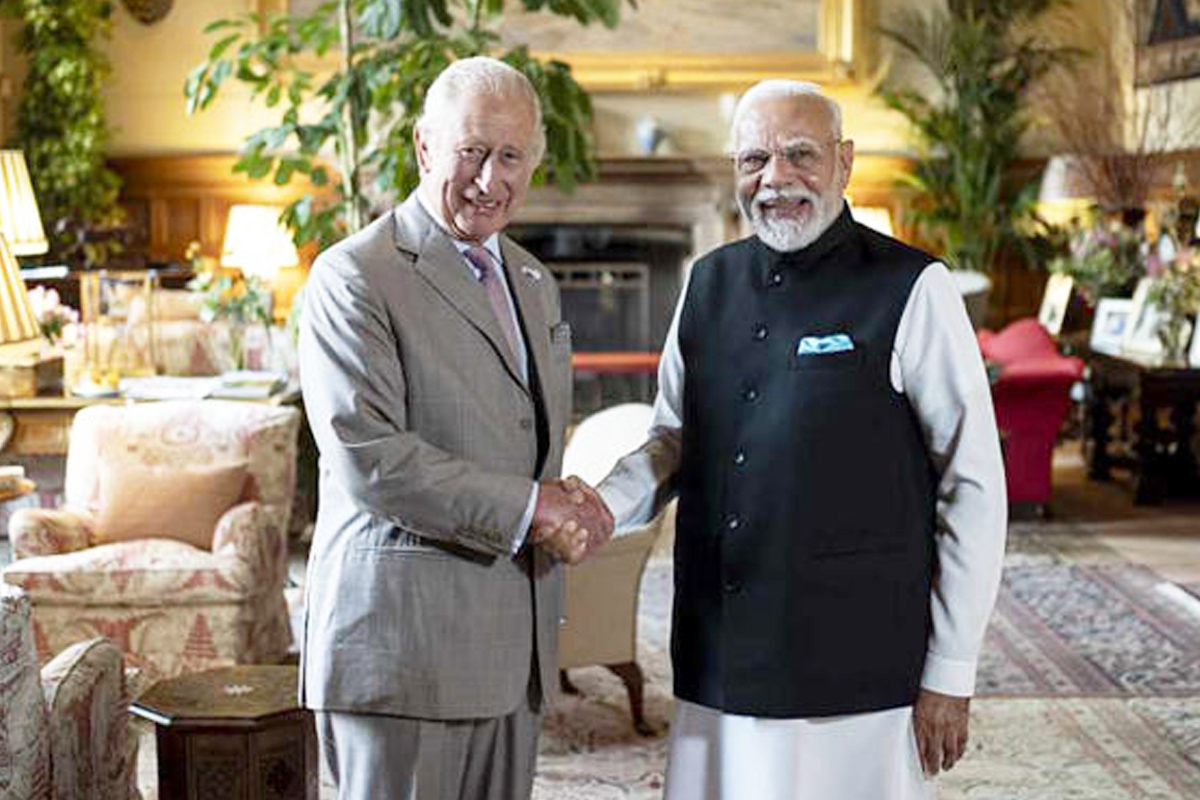
A Historic visit of friendship and shared vision – Indian Prime Minister Modi’s inspiring journey to the UK
Prime Minister Modi had a warm and productive meeting with His Majesty King Charles III at Sandringham House. Their discussions encompassed various aspects of India-UK relations, building on existing progress in trade, investment, education, and healthcare. A highlight of this meeting was PM Modi’s presentation of a tree sapling to the King, to be planted at Sandringham, inspired by India’s “Ek Ped Maa Ke Naam” (One Tree for Mother) environmental initiative.
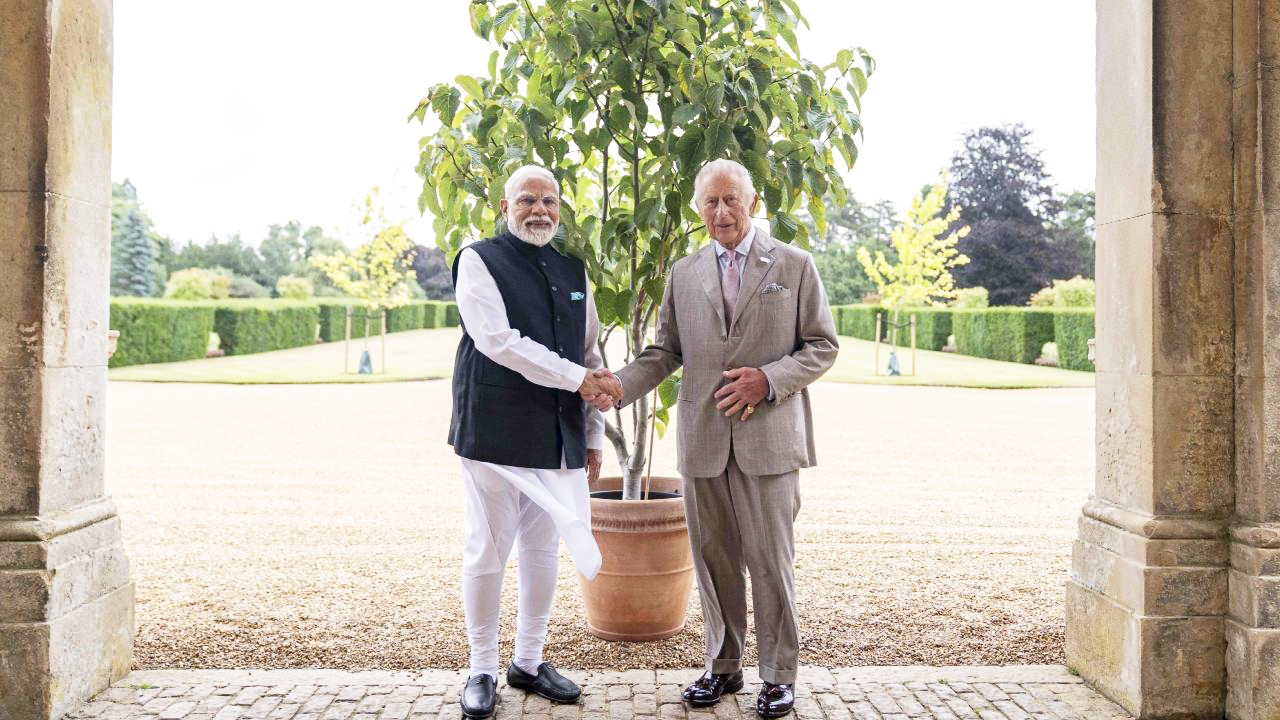
This gesture symbolised a shared commitment to environmental protection and sustainability, areas where both leaders have demonstrated a keen and long-standing interest. The King and Prime Minister Modi also explored holistic approaches to well-being, including Yoga and Ayurveda, reflecting a mutual appreciation for traditional wisdom. This meeting reinforced the cultural and historical bonds that underpin the modern relationship between India and the UK.
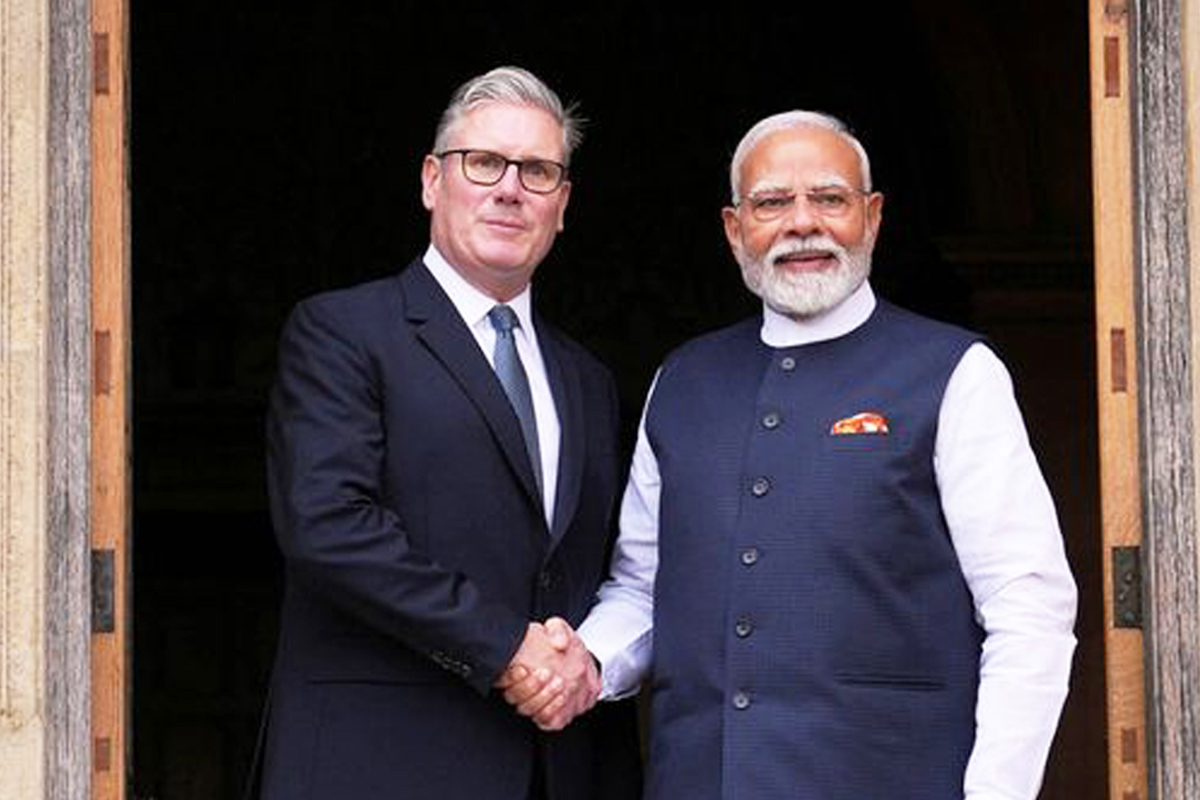
PM Sir Keir Starmer and PM Narendra Modi
The Prime Minister of India’s visit to the United Kingdom was a powerful affirmation of the deep-rooted ties between the two nations. In a moment rich with dignity and symbolism, he was graciously received by His Majesty King Charles III at Buckingham Palace, where they shared reflections on climate leadership, sustainability, and global harmony. The meeting marked a profound union of heritage and modern aspiration. Throughout the visit, the Prime Minister engaged in high-level talks with UK leadership, championed trade and technology partnerships, and connected warmly with the Indian diaspora. With every handshake and speech, he carried a message of peace, progress, and unity—strengthening a historic bond to build a brighter, shared future.
The Prime Minister of India to the UK was a moment of profound significance, uplifting the spirits of both nations and charting an ambitious course for their future relationship. The visit was marked by a series of high-profile engagements, including crucial meetings with UK Prime Minister Sir Keir Starmer and King Charles III, underscoring the depth and breadth of the bilateral ties.
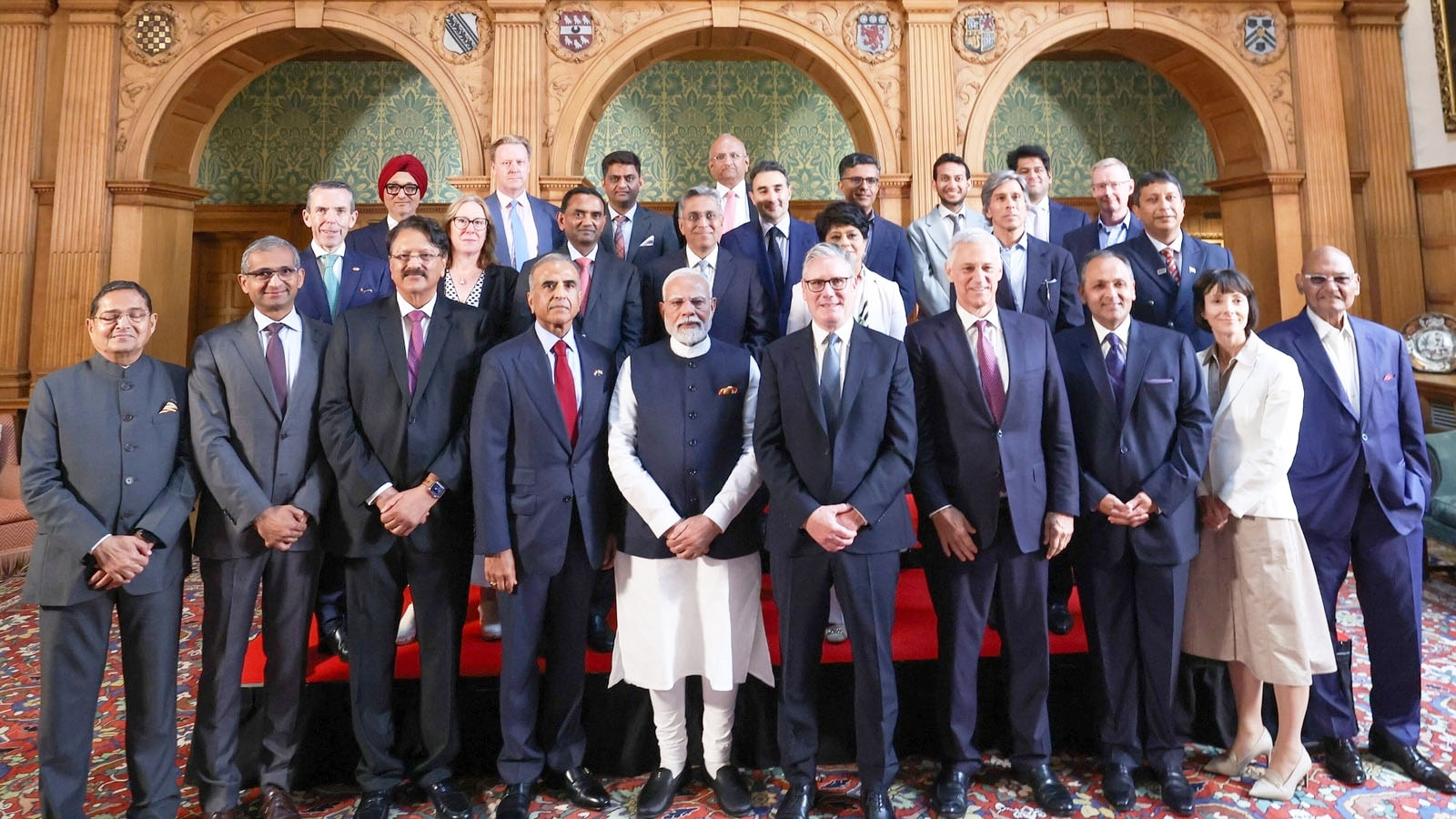
The cornerstone of the visit was the formal signing of the India-UK Free Trade Agreement (FTA), a landmark accord set to redefine economic collaboration. This historic deal, finalized after extensive negotiations, is projected to double bilateral trade to $120 billion by 2030, fostering unprecedented growth and job creation in both countries. The FTA will significantly reduce or eliminate tariffs on a wide array of goods, benefiting Indian exports such as textiles, agricultural produce, and marine products, while making British goods like whisky, automobiles, and medical devices more accessible in India. This economic partnership is not merely transactional; it signifies a shared commitment to a more interconnected and prosperous global economy.
Beyond trade, the two Prime Ministers, Narendra Modi and Sir Keir Starmer, unveiled the “India-UK Vision 2035,” an ambitious roadmap for enhanced cooperation across diverse sectors. This blueprint outlines a strategic commitment to deepen collaboration in defence and security, including co-development and co-production of defence equipment. It also prioritizes technology and innovation, with a focus on cutting-edge fields like AI and critical minerals. Furthermore, the vision emphasizes a transformative climate partnership, accelerating clean energy initiatives and mobilizing climate finance. Crucially, the leaders also discussed strengthening people-to-people ties, including the potential for UK universities to establish campuses in India and addressing social security for Indian professionals in the UK. During their discussions, PM Modi also underscored India’s concerns regarding extremist ideologies and the need for stronger action against pro-Khalistan elements in the UK.
