

A Golden Afternoon of Kinship: Royal Treasures, Children’s Laughter, and Friendship Light Up the United Kingdom German State Visit
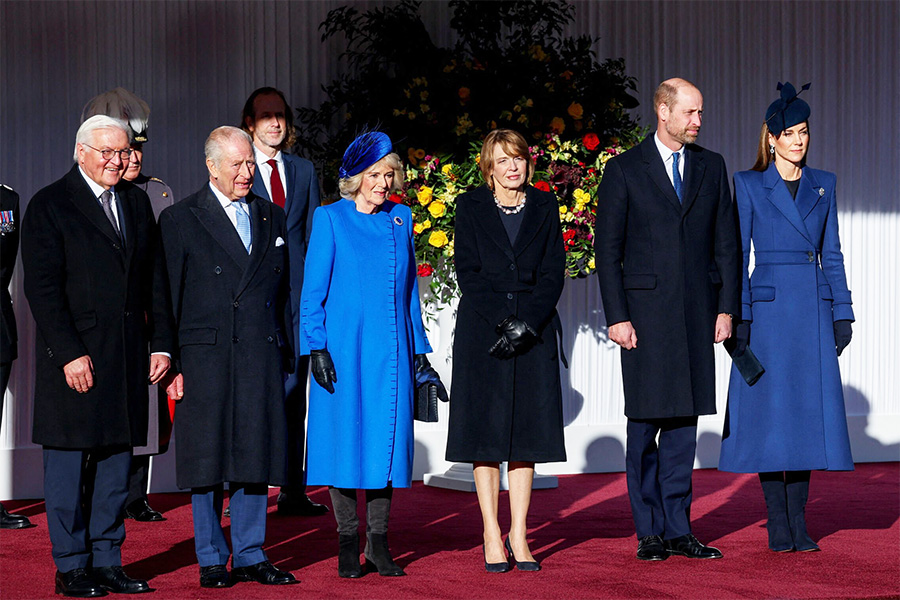
The first German State Visit to Britain in almost three decades moved from the grandeur of ceremony of the morning into quieter, yet no less significant, expressions of shared history and living friendship.
At two o’clock, behind the crimson silk walls of the Green Drawing Room at Windsor Castle, King Charles III and Queen Camilla welcomed President Frank-Walter Steinmeier and First Lady Elke Büdenbender to a private exhibition drawn from the depths of the Royal Collection. Curators had assembled a delicate constellation of objects that tell the long, intertwined story of the British and German royal houses: a porcelain service commissioned by Queen Victoria for her beloved Prince Albert of Saxe-Coburg and Gotha; the young prince’s own sketches of Windsor’s terraces; a miniature portraits exchanged between Hanoverian and Prussian cousins; and the touching order of service from the lying-in-state of King George V, attended by Kaiser Wilhelm II’s representative in a final gesture of pre-war kinship.
Standing before a display case containing Albert’s field telescope, the King and the President spoke quietly of continuity, of how personal ties between families have so often softened the harder edges of politics between nations. Queen Camilla and Frau Büdenbender lingered over a first edition of the Grimm brothers’ *Kinder- und Hausmärchen* presented to the young Princess Victoria in 1839, its inscription still bright in faded ink. For my dear little cousin, from Uncle Leopold. In that small, sunlit chamber, history felt less like a chronicle of conflict and more like an extended, sometimes quarrelsome, family album.
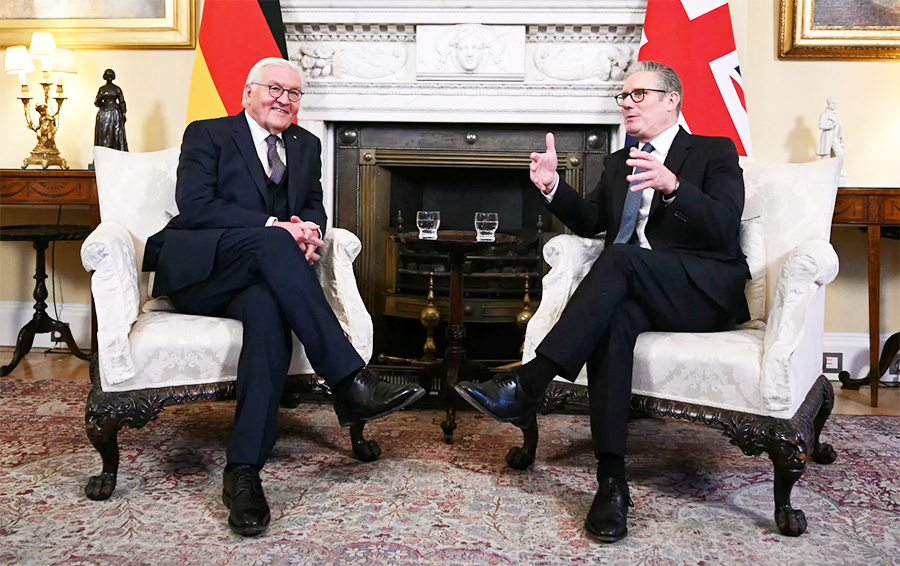
Across the river in Downing Street, beneath the familiar black door that has witnessed so many turning points in European history, President Frank-Walter Steinmeier and Prime Minister Sir Keir Starmer met not as representatives, but as heirs to a friendship forged anew in the fire of shared conviction. Their conversation ranged across the practical (trade corridors, energy security, the realities of life after Brexit) and the profound: how two democracies, shaped by the same belief in freedom, the rule of law, and the dignity of every person, must stand shoulder-to-shoulder when those values are threatened. Every sentence carried the quiet confidence of partners who have chosen one another again and again, deliberately, proudly, irrevocably.
At the heart of their discussion lay Ukraine. Both leaders spoke with one voice: the defence of a sovereign nation against brutal aggression is not a favour granted to Kyiv, but a duty owed to the idea of Europe itself. Germany’s transformation of its defence posture, Britain’s unflinching supply of weapons and training, the joint work on reconstruction and eventual EU and NATO membership; these are not separate national efforts but twin flames from the same fire of resolve. When President Steinmeier thanked the Prime Minister for Britain’s early and decisive leadership, and Sir Keir replied that Germany’s steadfast courage had inspired the entire continent, something deeper than diplomacy occurred. Two statesmen, speaking different mother tongues yet the same moral language, renewed a promise written not on paper but in the marrow of both nations: as long as aggression threatens the innocent, Britain and Germany will answer together; not out of calculation, but because it is who we are when we are at our best. In that room, on that winter afternoon, Europe’s future felt a little safer, and the unbreakable Anglo-German bond burned a little brighter.
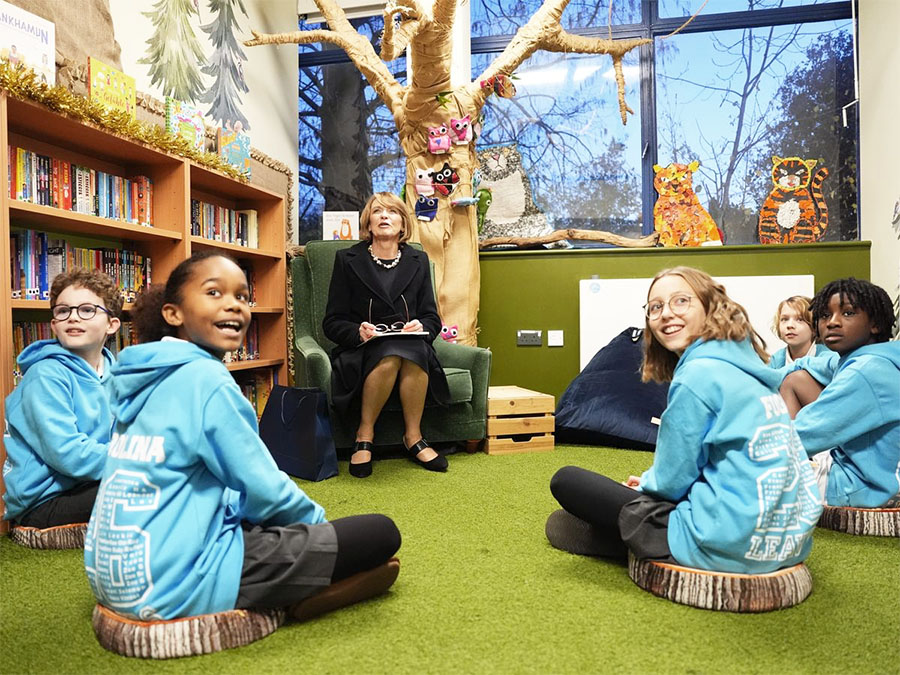 At the same moment, in a brightly decorated school hall in south-east London, First Lady Elke Büdenbender brought smiles to the faces of several hundred children at Judith Kerr Primary School, named after the Berlin-born author who fled Nazi Germany as a child and later gave the world *The Tiger Who Came to Tea*. The First Lady read from the book in both German and English, the children roaring with laughter as the tiger drank all the water in the tap and ate all the buns in the tin. Afterwards she joined Year 3 pupils in drawing their own unexpected dinner guests, several tigers appearing alongside footballers and astronauts. “Judith Kerr’s daughter, Tacy Kneale, was present and visibly moved, saying afterwards: “My mother would have been delighted to know that her stories are still bringing British and German children together.”
As the winter sun began its early descent, the threads of the afternoon, royal treasures in Windsor, serious diplomacy in Whitehall, and the pure joy of children in a London classroom, wove together into a single, hopeful pattern. Later this evening, beneath the hammerbeam roof of St George’s Hall, the speeches at the State Banquet will rightly speak of alliances and treaties. Yet it is these gentler moments of the afternoon that will perhaps linger longest: a shared glance over a porcelain plate, a child’s crayon tiger, the quiet recognition that the ties binding Britain and Germany today are not only strategic, but profoundly human.
In the end, the grandest treaties are sealed not only in ink but in these fleeting, luminous moments: an open door, a story read aloud, a centuries-old heirloom catching the winter light. They remind us of something deeper and far stronger than any single chapter of history could ever fracture: that Britain and Germany are not merely allies by choice, but kindred by blood, by memory, and by heart.
Today, in the laughter of children and the quiet reverence of kings, two nations looked at one another and saw, unmistakably, family. And in that recognition lies a bond no storm of the past could break, and no challenge of the future will ever shake.
