

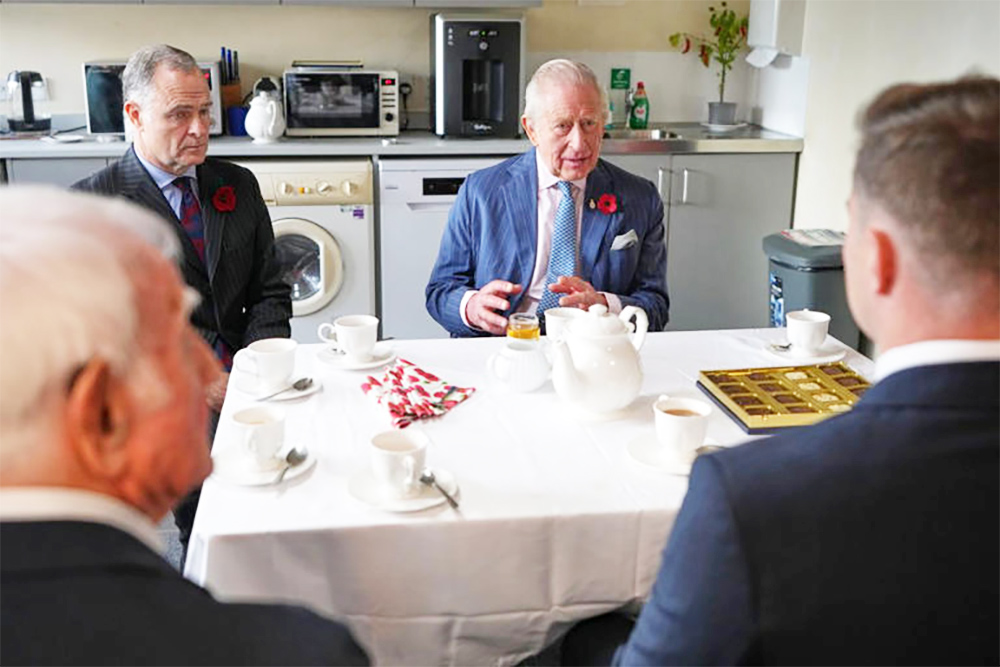
His Majesty King Charles champions compassion and healing as he honours NHS veterans
King Charles III recently made a warm and deeply meaningful visit to Chatfield Health Care in Battersea – a specialist GP practice accredited under the Veteran Friendly GP Practice scheme by NHS England, dedicated to supporting former members of the armed forces. Arriving with a sense of purpose and calm dignity, the 76-year-old monarch was greeted with heartfelt smiles from staff before joining former servicemen and women in the lead-up to Remembrance Day.
With his own history of service in both the Royal Air Force and the Royal Navy during the 1970s, the King showed genuine interest in learning more about the personalised healthcare and rehabilitation programmes offered at the centre. His presence reflected not only curiosity, but a profound respect for those who have worn the nation’s uniform — and an enduring commitment to championing the wellbeing of veterans long after their service ends.
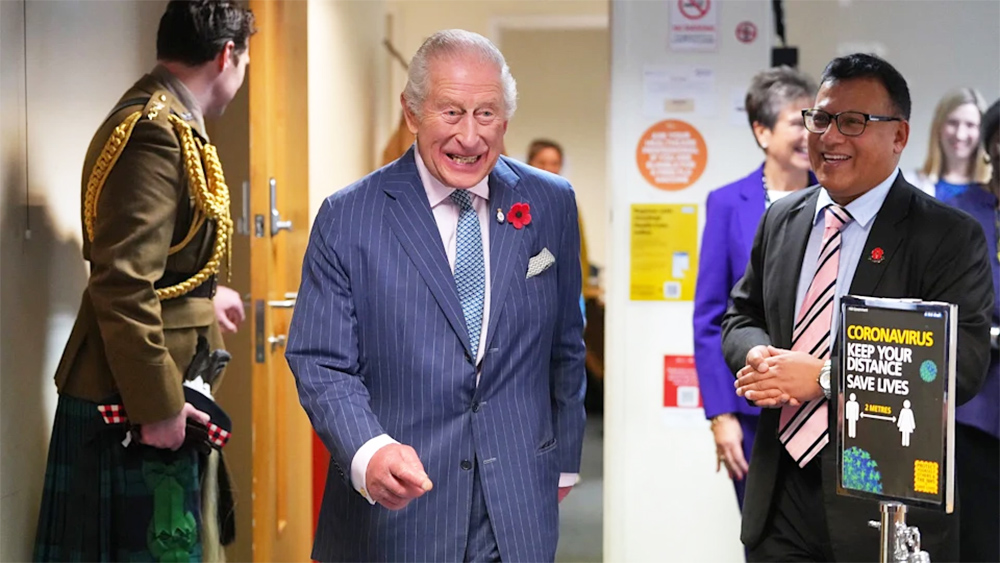
His Majesty lifting the spirits of Hero Veterans
The King’s characteristic wit was on full display during his engagement at a London medical centre, where he light-heartedly remarked on the realities of ageing and recovery. While meeting former Army personnel receiving dedicated support at Chatfield Health Care, the 76-year-old monarch shared a playful comment, adding warmth and ease to his conversations with veterans benefitting from the centre’s specialist services.
A touching and memorable moment came when he spoke to veteran David Wiggins, who had recently broken his arm in a cycling accident and now carried three plates in it. With characteristic warmth and humour, the King remarked, “I’ve got endless plates and screws in my arm as well — all that’s left of you when you drop dead is ‘Made in Switzerland’.” Beneath the light-hearted remark lay a deep sense of empathy — a recognition of the hidden struggles of recovery, and the humanity shared between those who serve and their King.
Supporting Our Veterans
In his conversation with Dr. Shane Barker (himself a veteran), the King asked, “The difficulty, I suspect, is that when you leave the forces, then you’re leaving that whole family of your unit. You’re suddenly left wondering what to do, I presume?” This simple question framed one of the key issues: when the uniform comes off, the network of comrades-in-arms often vanishes, and with it the sense of belonging, purpose and shared identity. Dr Barker explained how many veterans struggle quietly, reluctant to burden others, and present symptoms of fatigue or headaches rather than saying “I was in Afghanistan and now I’m struggling”. The Veteran-Friendly scheme encourages GPs to ask, “Did you ever serve in the Armed Forces?” as a way to open the door to the right support.
A Herculean Difference Made
Chatfield Health Care is among 4,450 practices in England that have joined the Veteran-Friendly programme. It signed up in 2021, and though currently serving around 49 registered veteran patients, Dr Barker estimates there could be as many as 120 eligible in the local area who might not yet have connected with the service. King Charles expressed his delight at discovering “this marvellous effort in specialising with veterans in GP practices, which is clearly making a big difference.” For veterans, service often means sacrifice — of time, of self, of identity. The transition to civilian life can feel like stepping into a new world where the old roles and rhythms no longer apply. The existence of a GP and healthcare practice that recognises this, that treats veteran experience as relevant rather than incidental, creates a space of understanding and connection. The King’s visit not only acknowledged their service, but also validated the human story behind the uniform.
In a moment of connection, King Charles’ approach was heartfelt; listening with compassion. By sitting across a table from veterans, sharing a gentle joke about his own arm, and acknowledging their journey and the strength it took — he highlighted the dignity of those who served and the profound value of health-care systems attuned to their needs. Yet this gesture was more than a royal visit. It was a deeply human expression of gratitude from a monarch who understands that service does not end when the uniform is folded away, and that the cost of duty extends long beyond the battlefield.
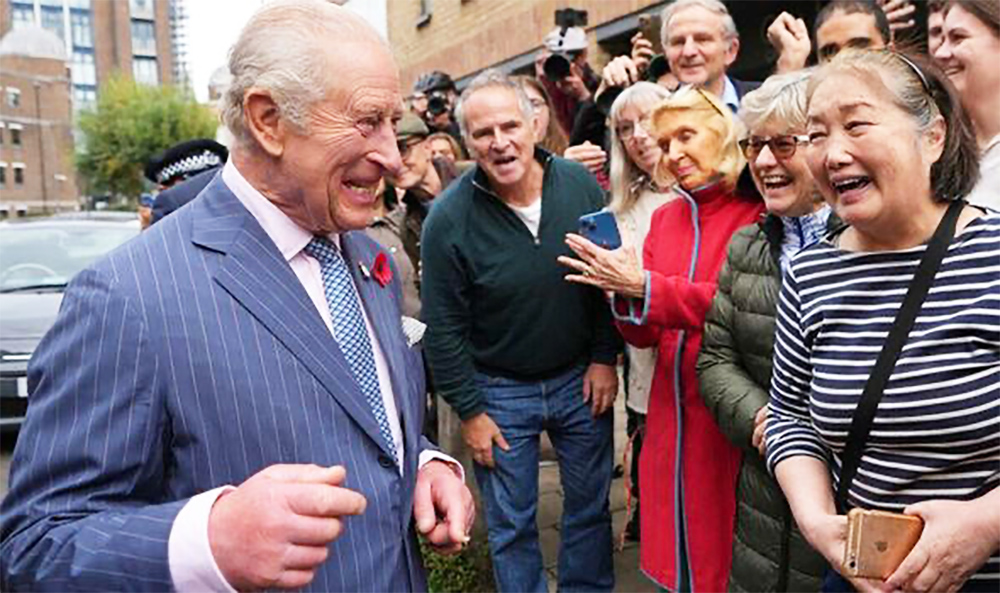
His Majesty King Charles Visit Inspires
Outside the centre, the atmosphere was filled with warmth and anticipation as crowds gathered hours in advance, hoping for a glimpse of their King. When His Majesty stepped out to greet them, the mood lifted instantly — smiles widening, hands waving, voices trembling with excitement. King Charles moved with unhurried grace, stopping to shake hands, share kind words, and look each person in the eye, as though every greeting was a moment that truly mattered. People were visibly moved, some emotional, others simply beaming with pride, grateful not only for his presence but for the sincerity with which he acknowledged them. In those brief exchanges — a touch on the arm, a gentle laugh, a heartfelt thank-you — the King transformed a simple walkabout into a moment of national warmth and connection, reaffirming the deep bond between the Crown and the people it serves.
Alongside the Royal Family, King Charles has long championed the bravery and sacrifice of our veterans. Their shared presence at commemorations, their continued patronage of service charities, and their willingness to sit quietly and truly listen are symbols of a gratitude that runs deeper than ceremony. It speaks to a legacy of duty and thanks — one carried forward from Her late Majesty and woven into the very fabric of the monarchy’s identity. Their appreciation is not simply institutional; it is personal, heartfelt and enduring, honouring courage not only in moments of conflict but in the quiet resilience forged in recovery and transition.
As Remembrance Day approaches, this visit is a reminder that honouring service is more than a moment of silence or a wreath laid. It is a promise: that those who stood for our nation will never stand alone. It is about ensuring that every veteran is seen, heard and supported in the years after service, cherished not simply for what they gave, but for who they are. The work of practices like Chatfield, and the recognition by figures such as the King, gives substance to that commitment. It reaffirms that remembrance lives not only in our ceremonies, but in our care, our understanding and our unwavering national gratitude — today, tomorrow and always.
