

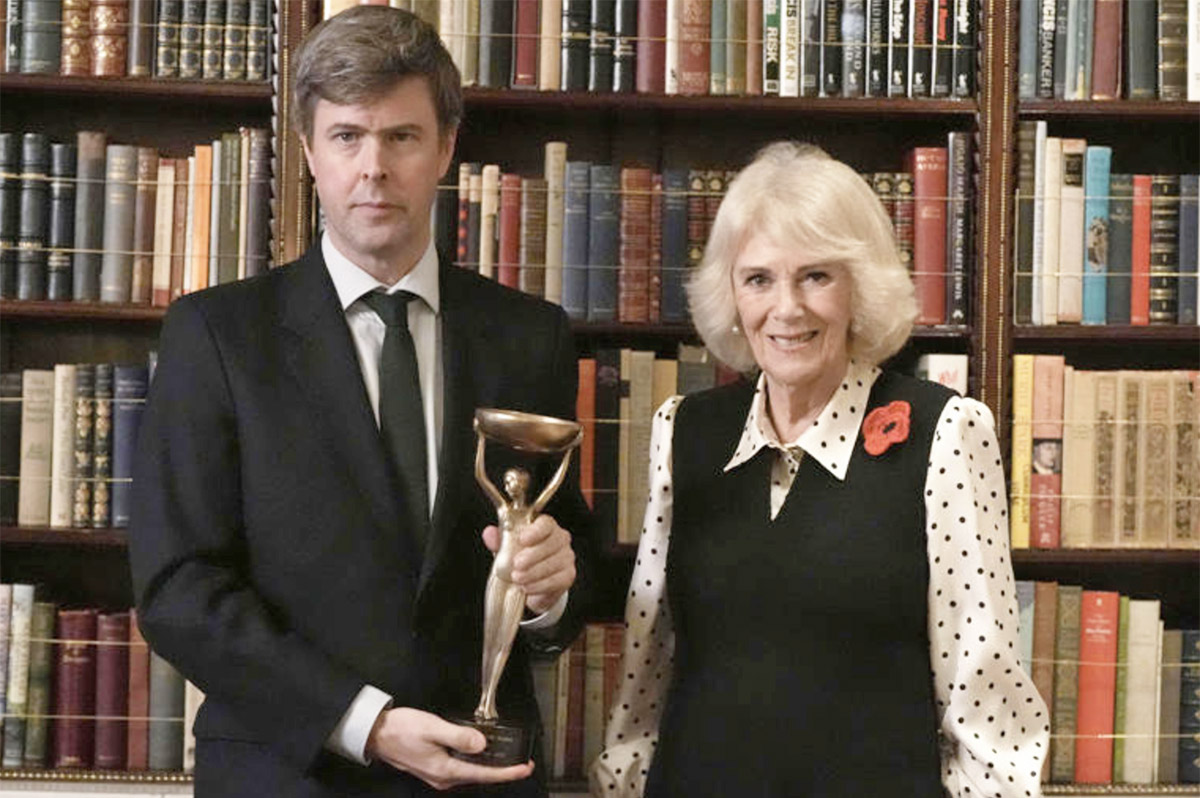
Booker prize winner David Szalay,
Her Majesty Queen Camilla Illuminates the 2025 Booker Prize Reception with Grace, Splendour and Literary Passion
Queen Camilla presented the 2025 Booker Prize to David Szalay, honouring a writer whose eloquence and insight have redefined the boundaries of modern fiction. His winning novel, Flesh, stands as a luminous exploration of the human condition—its desires, vulnerabilities, and the fragile threads that bind people together. With prose both spare and profound, Szalay transforms the ordinary into the unforgettable, capturing the quiet truths that echo in every life. Judges praised Flesh for its “rare honesty and emotional precision,” a work that balances intellect with deep compassion. What made Szalay’s achievement so compelling was his fearless commitment to subtlety—to the quiet dramas of existence where meaning often hides. As Queen Camilla placed the honour in his hands, it was more than the recognition of a remarkable novel; it was a celebration of literature’s enduring power to reveal, to heal, and to connect us through the simple grace of story.
Her Majesty Queen Camilla brought grace and warmth to Clarence House as she hosted the 2025 Booker Prize reception—a gathering that shimmered with literary prestige and genuine affection for the written word. The evening was an elegant tribute to storytelling and imagination, uniting celebrated authors, judges, and cultural figures beneath the vaulted ceilings of one of Britain’s most storied royal residences.
Queen Camilla welcomed each guest with the ease and attentiveness for which she has become known. Among those present were Booker Prize winner David Szalay, honoured for his remarkable novel Flesh; acclaimed novelist and chair of the judging panel Roddy Doyle; Nigerian writer Ayọ̀bámi Adébáyọ̀; American author Kiley Reid; literary critic Chris Power; and acclaimed actress and producer Sarah Jessica Parker, who served as one of this year’s judges. The Queen greeted Ms Parker with an unmistakable warmth, noting with a smile, “I see one of your many hats tonight.” Parker—dressed in a refined navy ensemble—laughed and expressed her admiration for the authors celebrated, remarking how profoundly moved she had been by the diversity and beauty of the shortlisted works. Their exchange, equal parts gracious and spirited, captured the evening’s tone: mutual respect between those who cherish stories and those who bring them to life.
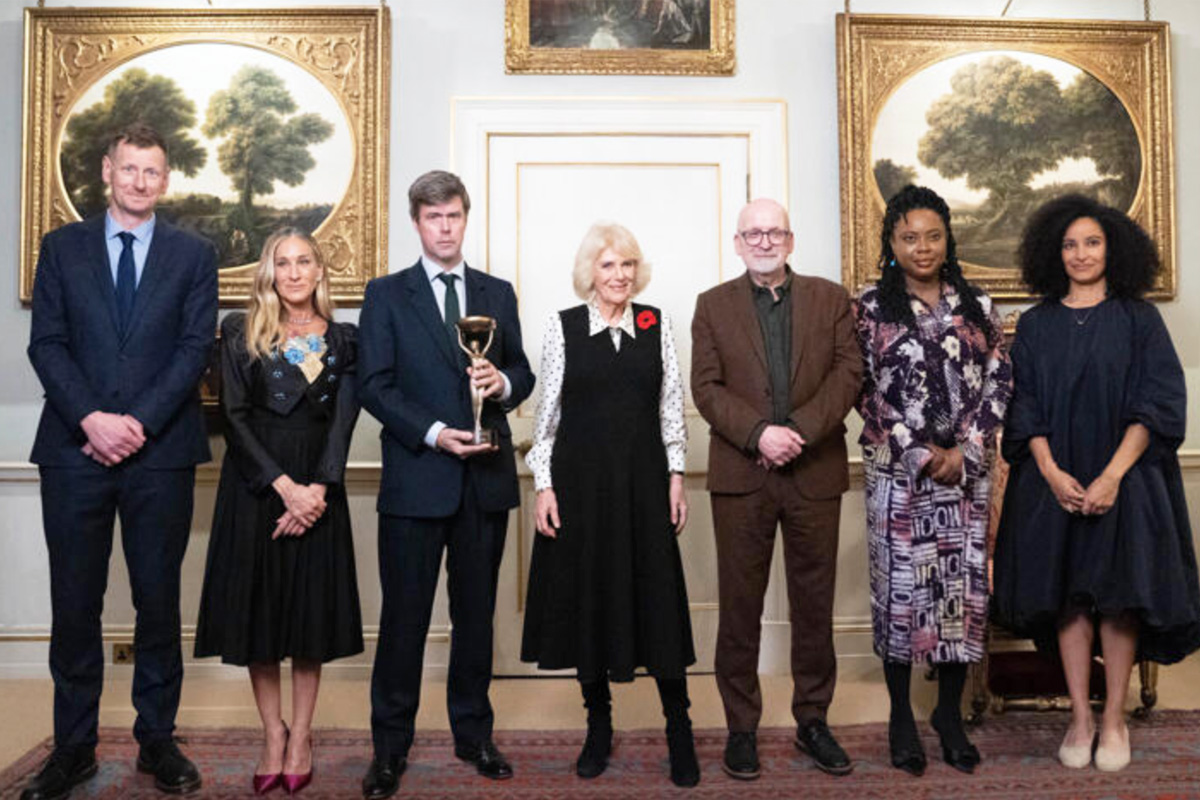
Her Majesty Queen Camilla’s address to the assembled guests carried her hallmark sincerity. She thanked the writers and judges for their contributions to the literary world, adding that reading remains “one of the most powerful ways we understand one another and stay connected.” She praised the Booker Prize’s new Children’s Booker initiative, which aims to inspire younger generations to discover the joy of books.
In conversation, the Queen congratulated David Szalay warmly—recalling his earlier Booker nomination in 2016—and commended his continuing dedication to his craft. Her exchange with Roddy Doyle, himself a Booker laureate from 1993, touched on the evolution of literature over the decades, with both reflecting on the enduring role of storytelling as a mirror of society.
Queen Camilla’s long-standing advocacy for literacy added emotional weight to the event. As founder of The Queen’s Reading Room, a charitable initiative encouraging reading across the Commonwealth, she has long championed the belief that books are both a refuge and a bridge between generations. Her genuine delight in discussing novels, characters, and the writing process revealed a patron who truly lives her passion.
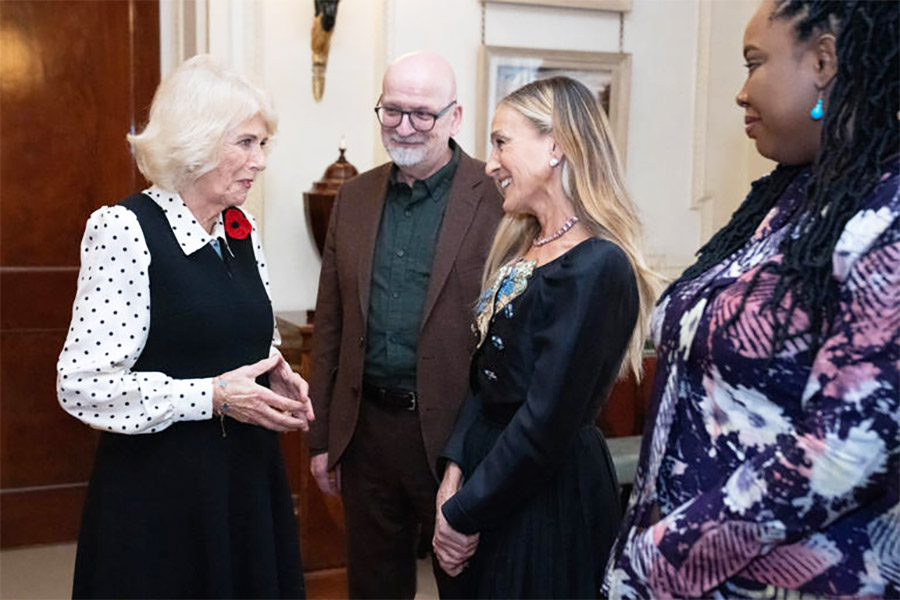
A Night to Remember
Sarah Jessica Parker later described the evening as “utterly inspiring,” noting how rare it was to find such a powerful meeting of royalty, artistry, and imagination. For Parker, whose own production company adapts literary works for film, the night was “a reminder that storytelling is one of the oldest, and still one of the most human, forms of connection.”
As conversation filled the gilded rooms of Clarence House, the event transcended ceremony. It became a celebration of shared creativity and intellectual curiosity—a reminder that literature endures because it speaks to every heart and every era. Queen Camilla’s warmth and engagement with her guests reflected her belief that books are not just treasures on shelves but living companions that shape who we are.
As the evening unfolded beneath the chandeliers of Clarence House, a deep affection for Her Majesty filled the room. Guests spoke not only of her elegance and poise but of the genuine warmth that radiated from her every exchange. Queen Camilla’s passion for literature was unmistakable—her eyes lighting up as she discussed stories that had moved her, her laughter mingling easily with that of the authors and judges she so admired. What touched many most was her sincerity: her belief that books are not ornaments of culture, but vessels of empathy and imagination. Her dedication to The Queen’s Reading Room—a charity she has nurtured from a personal love of reading into a global community of shared discovery—stood as a testament to her lifelong conviction that reading can change lives.
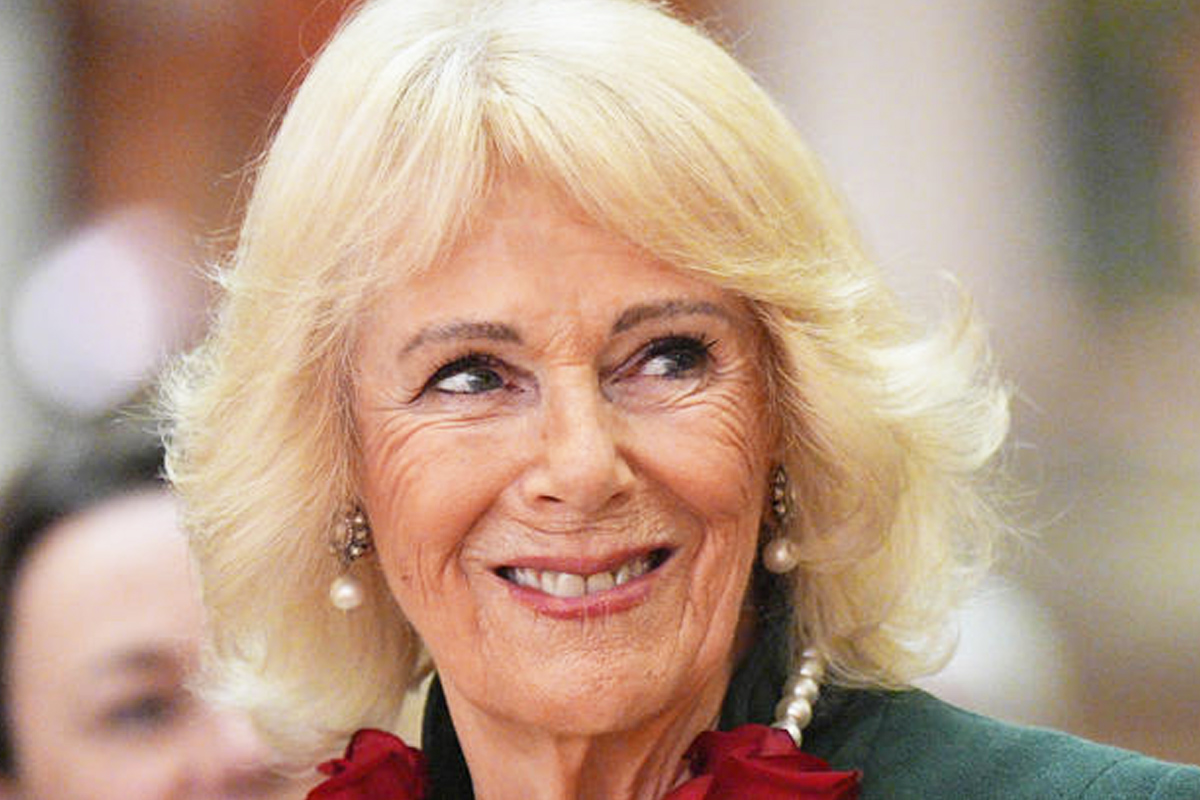
Royal Grace, Splendour and Literary Passion
In those moments, it became clear that Queen Camilla was not merely hosting a literary celebration; she was embodying it. The authors felt seen, the guests felt inspired, and the evening shimmered with a shared understanding of how words can unite us. As conversation drifted into laughter and heartfelt applause, one truth lingered: Her Majesty Queen Camilla’s enthusiasm for the written word has rekindled a national affection for reading itself. Through her warmth, her grace, and her unwavering passion, she reminds us that literature is a light that never fades—a bridge between hearts, a comfort in solitude, and, above all, a gift to be shared. In the soft glow of that November evening, surrounded by laughter, dialogue, and the hum of ideas, Queen Camilla once again proved that the Crown’s cultural heart beats strongly in the quiet rhythm of the turning page.
