


Captain Elizabeth Godwin — First female officer in The Life Guards
Captain Elizabeth Godwin a Trailblazer in Tradition, stands as a symbol of inspiration and perseverance, making history as the first female officer commissioned into The Life Guards, the senior regiment of the Household Cavalry. Her groundbreaking achievement in 2020 broke centuries-old barriers within one of the British Army’s most prestigious units, combining her determination with the enduring traditions of military service.
Born with a passion for leadership and a deep sense of duty, Godwin pursued her dreams with unwavering resolve. Her journey to the Household Cavalry required exceptional discipline and resilience, as she mastered not only the demanding requirements of modern military tactics but also the ceremonial duties that define the Life Guards. Whether riding on horseback as part of the Sovereign’s Escort or leading the King’s Life Guard in state parades, Godwin exemplifies poise, strength, and grace under pressure.
Her historic career has inspired countless young women to imagine themselves in roles previously dominated by men. Beyond her ceremonial responsibilities, she has contributed significantly to the modernization of the British Army, demonstrating that tradition and progress can coexist harmoniously. Her commitment to service is matched by her humility, as she continues to pave the way for others to follow.
Captain Elizabeth Godwin reminds us that breaking barriers is not about erasing the past but enriching it with new voices. Her story is a testament to the power of courage, the strength of perseverance, and the fulfilment of a dream realised. Standing as a symbol of inspiration and perseverance, making history as the first female officer commissioned into The Life Guards, the senior regiment of the Household Cavalry. Her groundbreaking achievement in 2020 broke centuries-old barriers within one of the British Army’s most prestigious units, combining her determination with the enduring traditions of military service.
Born with a passion for leadership and a deep sense of duty, Godwin pursued her dreams with unwavering resolve. Her journey to the Household Cavalry required exceptional discipline and resilience, as she mastered not only the demanding requirements of modern military tactics but also the ceremonial duties that define the Life Guards. Whether riding on horseback as part of the Sovereign’s Escort or leading the King’s Life Guard in state parades, Godwin exemplifies poise, strength, and grace under pressure.
Her historic career has inspired countless young women to imagine themselves in roles previously dominated by men. Beyond her ceremonial responsibilities, she has contributed significantly to the modernization of the British Army, demonstrating that tradition and progress can coexist harmoniously. Her commitment to service is matched by her humility, as she continues to pave the way for others to follow.
Captain Elizabeth Godwin reminds us that breaking barriers is not about erasing the past but enriching it with new voices. Her story is a testament to the power of courage, the strength of perseverance, and the fulfillment of a dream realised.
The Life Guards
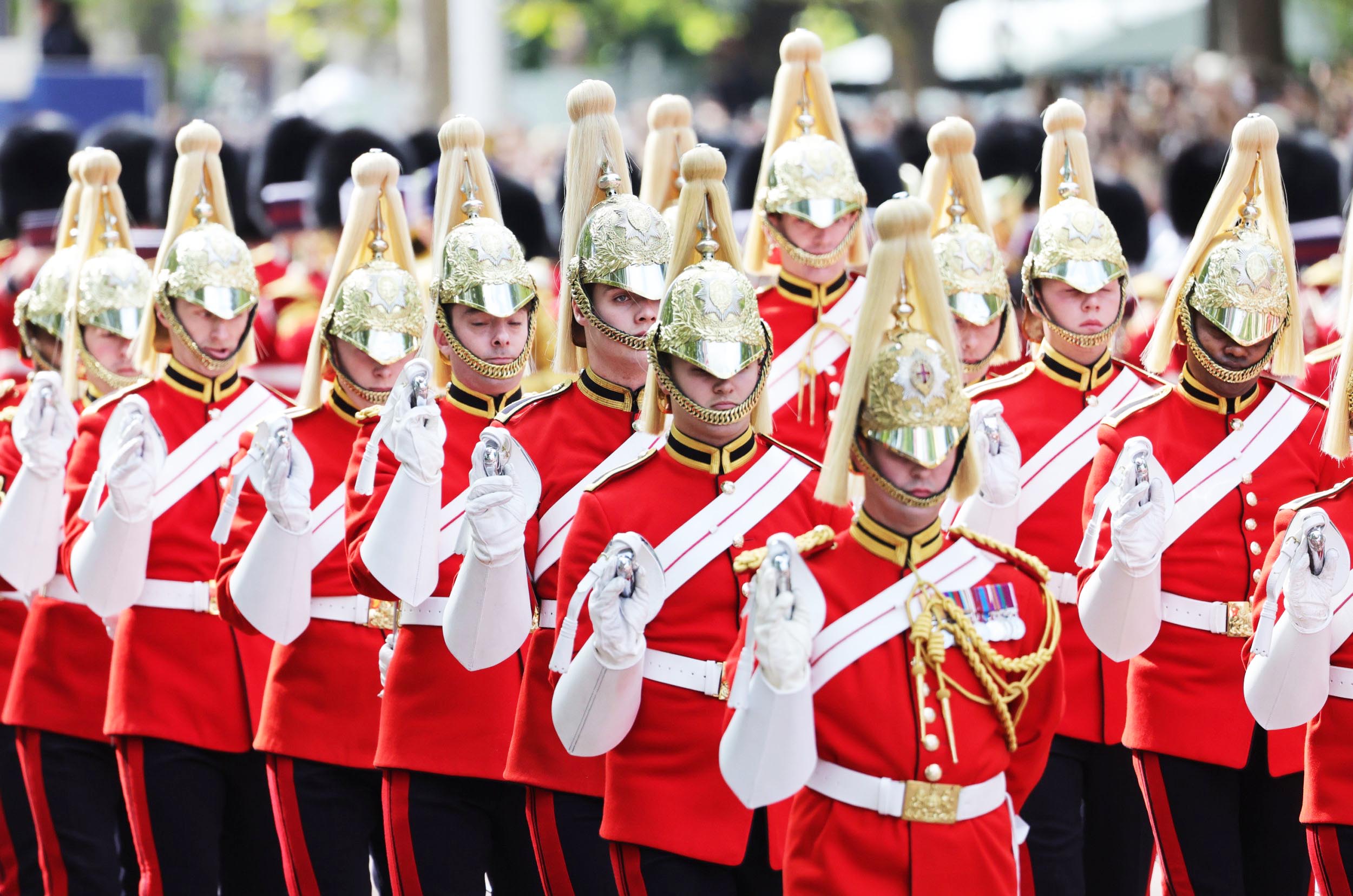
The Life Guards are one of the two senior regiments within the Household Cavalry of the British Army, alongside the Blues and Royals. As part of the Household Division, their primary roles include providing the Sovereign’s personal bodyguard and performing ceremonial duties during state occasions. Established in 1660 as a cavalry regiment for King Charles II, the Life Guards hold a distinguished position in British military history, symbolizing both tradition and excellence.
Known for their iconic uniforms of bright red tunics and silver helmets, the Life Guards are most famously seen during ceremonial events such as Trooping the Colour, the State Opening of Parliament, and royal weddings. They are also a key part of the Sovereign’s Escort during processions, including coronations and state visits.
Beyond their ceremonial duties, the Life Guards serve as an operational regiment, capable of undertaking modern military tasks. Members are highly trained soldiers, skilled in both ceremonial precision and active combat operations. The regiment’s dual role underscores their unique position as both defenders of tradition and contributors to the British Army’s operational effectiveness.
Their motto, Honi soit qui mal y pense (“Shame on him who thinks evil of it”), reflects the honor and loyalty they embody, making them a celebrated and integral part of British heritage.
