
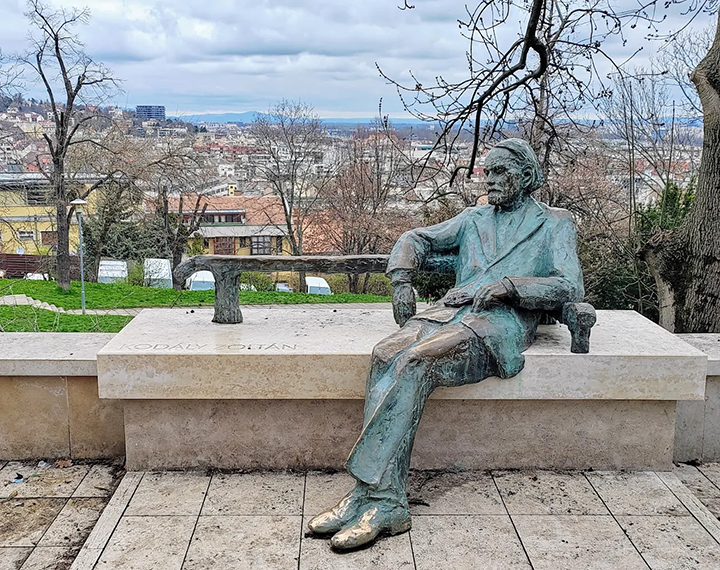
The Zoltán Kodály statueClick to open side panel for more information stands as a dignified tribute to one of Hungary’s most influential composers and ethnomusicologists. Located in the charming Európa liget near the Vienna Gate, the monument captures the essence of a man who dedicated his life to preserving folk traditions and revolutionizing music education. The atmosphere surrounding the bronze figure is one of contemplative peace, inviting passersby to pause and reflect on the profound cultural harmony he fostered through his world-renowned Kodály Method.
Culturally, the statue represents a cornerstone of Hungarian national identity, celebrating a figure who bridged the gap between ancient oral traditions and modern classical composition. Kodály’s work in collecting folk songs alongside Béla Bartók is immortalized here, symbolizing the intellectual and artistic revival of the early twentieth century. It serves as a focal point for music lovers and educators who travel from across the globe to pay their respects to the creator of a pedagogical system that continues to shape choral singing today.
Historically, the monument was inaugurated to mark the significant contributions Kodály made to the nation’s heritage and international prestige. The choice of location in the Castle District is particularly poignant, as it places the composer in the heart of the city’s most ancient and storied neighborhood. Over the decades, the site has become a gathering place for commemorative events, where the air often fills with the very melodies he worked so tirelessly to document and refine for future generations.
Tourists will find the site to be a delightful addition to an afternoon walk through the northern reaches of Buda Castle. The statue is surrounded by manicured greenery and offers a moment of artistic inspiration away from the more crowded historical landmarks. It provides a wonderful opportunity to learn about the man behind the “Hary Janos” suite while enjoying the architectural elegance of the surrounding district. Many find that visiting this spot adds a lyrical layer to their understanding of Hungary’s rich and complex cultural tapestry.



 Own or work here?