

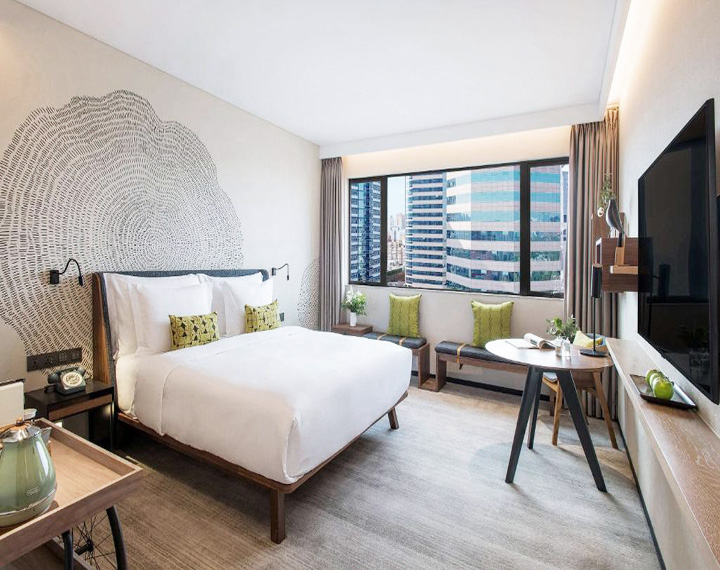
The Zhao Long Hotel in Beijing once stood as a symbol of the city’s dynamic transition from tradition to modernity, offering visitors a glimpse into China’s evolving hospitality landscape during the reform and opening-up era. Located in the bustling Chaoyang District near the embassy area and Sanlitun, it became one of Beijing’s earliest international-standard hotels, welcoming diplomats, business travellers, and tourists seeking comfort within reach of the capital’s cultural heart. Architecturally, the hotel reflected the pragmatic modernism of late 20th-century Beijing, its polished façade and grand lobby signalling a confidence that mirrored the nation’s growing engagement with the world.
Culturally, the Zhao Long Hotel served as more than accommodation; it was a meeting point for East and West during the formative years of Beijing’s international renaissance. Inside its walls, banquets, conferences, and cultural exchanges unfolded, representing the city’s desire to open itself to global perspectives while preserving Chinese courtesy and hospitality. Many travellers remember its blend of classic Chinese touches and contemporary amenities, a balance that made it both cosmopolitan and distinctly local.
For tourists, the hotel’s location was among its greatest attractions. Within walking distance lay the vibrant nightlife of Sanlitun, the designer boutiques of the embassy district, and close access to historical treasures such as the Lama Temple, the Forbidden City, and Tiananmen Square. The hotel provided a convenient base for exploring both ancient and modern Beijing, where the echoes of imperial grandeur meet the energy of a global metropolis.
Today, even as new luxury hotels have risen across the skyline, Zhao Long Hotel remains part of Beijing’s cultural memory — a reminder of a time when the city first began to open its doors to the world. For many who passed through its lobby, it represents a chapter in Beijing’s journey: a fusion of ambition, elegance, and the enduring charm of Chinese hospitality.



 Own or work here?