

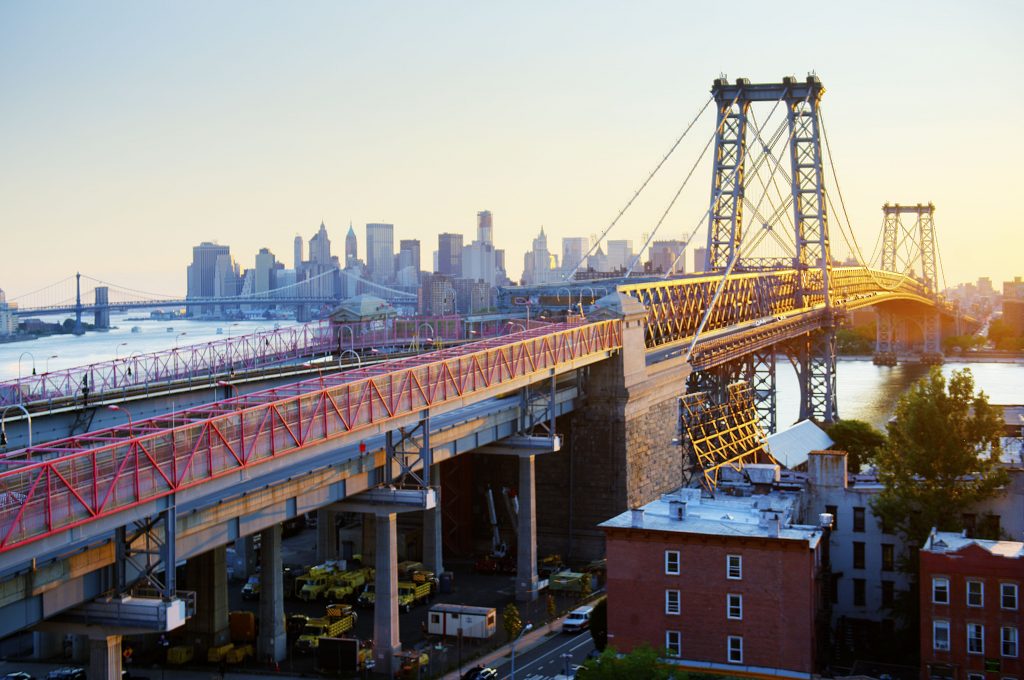
The Williamsburg Bridge is a suspension bridge in New York City across the East River connecting the Lower East Side of Manhattan at Delancey Street with the Williamsburg neighborhood of Brooklyn at Broadway near the Brooklyn-Queens Expressway. Completed in 1903, it was the longest suspension bridge span in the world until 1924. The Williamsburg Bridge, spanning the East River from Manhattan’s Lower East Side to Brooklyn’s Williamsburg neighborhood, stands as a testament to early 20th-century engineering ambition.
Completed in 1903 after seven years of construction plagued by funding woes and political hurdles, it was designed by chief engineer Leffert L. Buck as the world’s longest suspension bridge at the time, measuring 7,308 feet overall with a main span of 1,600 feet. Originally dubbed the East River Bridge, it connected bustling immigrant communities on both shores, facilitating the flow of trolleys, pedestrians, and eventually automobiles in an era when horse-drawn carriages still dominated city streets.
What sets the Williamsburg Bridge apart from its iconic neighbor, the Brooklyn Bridge, is its pioneering use of steel towers rising 155 feet above the water, marking the first major suspension bridge to abandon traditional masonry for a sleeker, more resilient material. Deep 40-foot stiffening trusses were incorporated to brace against fierce winds and the weight of emerging subway lines, which began crossing in 1908 via the J, M, and Z trains that still rumble through its core today. Architect Henry Hornbostel’s subtle aesthetic touches, added late in construction, lent a neoclassical elegance to the utilitarian design, blending form with the raw functionality demanded by New York’s relentless urban pulse.
Today, the bridge pulses with modern life, its dedicated pedestrian and bike paths drawing cyclists and joggers for panoramic views of glittering skyscrapers and the hazy Hudson horizon at dusk. Amid ongoing rehabilitation efforts to mend corrosion and reinforce its aging cables, it remains a vital artery for over 100,000 daily vehicles while symbolizing the city’s enduring grit—from its role in the Great Migration to its cameo in films capturing New York’s restless spirit. Crossing it feels like threading through layers of history, where the creak of cables whispers tales of laborers who toiled in the shadow of progress.



 Own or work here?