

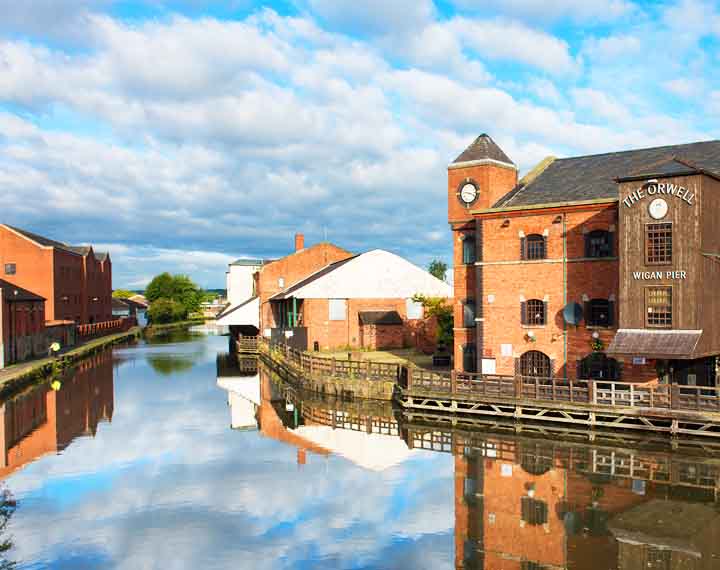
Wigan Pier is an area around the Leeds and Liverpool Canal in Wigan, Greater Manchester, England, south-west of the town centre. The name has humorous or ironic connotations since it conjures an image of a seaside pleasure pier, whereas Wigan is in fact an inland and traditionally industrial town. Famous by its reference in George Orwell’s book, Wigan Pier is a wharf on the Leeds-Liverpool Canal. The area was extensively redeveloped in the 1980s and 1990s as a tourism and leisure destination.
Wigan Pier refers to a historic site along the Leeds and Liverpool Canal in Wigan, Greater Manchester, rather than a traditional seaside structure. The name originated from a simple wooden jetty, known as a coal staithe, where wagons from nearby collieries tipped coal into barges for transport. This industrial loading point gained fame through music hall jokes and songs, particularly from comedian George Formby, who ironically referred to it as a “pier” despite Wigan being far inland, turning the term into a humorous symbol of the town’s working-class heritage.
The original pier was demolished around 1929, but the name endured, especially after George Orwell featured it in his 1937 book “The Road to Wigan Pier,” which documented poverty and industrial hardship in northern England. Although Orwell never actually described finding the pier itself, the title helped cement its legendary status. A symbolic replica of the coal tippler was later erected in the 1980s near the canal basin, transforming the area into a recognized landmark that blends history with local pride.
Today, Wigan Pier is a revitalized waterfront spot along the canal, offering a mix of heritage, nature, and modern development near the town center. The surrounding area features towpaths for walking, views of the waterway, and ongoing regeneration efforts that include commercial and leisure spaces. It stands as a reminder of Wigan’s industrial past while serving as a pleasant place to reflect on the town’s evolution from coal transport hub to a point of cultural interest.



 Own or work here?