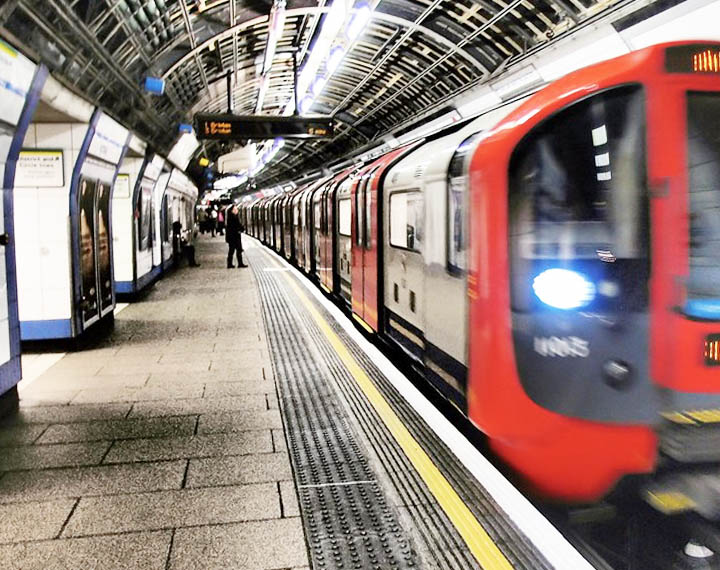
Victoria is one of London’s busiest and most important transport hubs, a fascinating blend of history and modern-day hustle and bustle. Let’s take a look at the information for customers, opening hours, and its rich history. Victoria is a London Underground station in Victoria, London, sitting adjacent to the mainline station. It is served by three lines: Circle, District and Victoria. 3rd busiest station on the Underground, and made up of two separate component parts occupying different levels on the tube network, and built over a century apart from each other. The earlier section serves the Circle and District lines, while the later one serves the Victoria line. There are two individual ticket halls, and a link between them.
For Customers: Getting Around Victoria Tube Station
Victoria is a massive complex that serves both the London Underground (Tube) and National Rail services, so it’s essential to know which part you need. The Tube station is a major interchange for three key lines:
- Victoria Line: Known for its light blue color on the Tube map. It’s one of the fastest and most frequent lines, running from Brixton in the south to Walthamstow Central in the north-east.3
- District Line: A green line on the map, connecting Ealing Broadway and Richmond in the west to Upminster in the east.
- Circle Line: A yellow line that forms a loop around central London.
Key Customer Information:
- Accessibility: Victoria is a complex station, but there is step-free access from the street to the Victoria line platforms via the Cardinal Place entrance. However, step-free access to the District and Circle lines can be limited, so it’s always best to check the latest updates on the Transport for London (TfL) website.
- Facilities: The station has a wide range of facilities, including ticket offices, ticket machines, help points, public toilets, baby-changing facilities, and a variety of shops and food outlets.5 There are also lost property services and Wi-Fi available.
Opening & Closing Times
The Victoria tube station is not a 24-hour operation, though its service hours are quite extensive to accommodate the vast number of passengers.
- Monday to Saturday: Services typically run from around 4:15 AM until shortly after midnight.
- Sunday: Services start a bit later, around 5:25 AM, and also run until shortly after midnight.
- Night Tube: A fantastic feature for late-night travelers, the Victoria Line operates a 24-hour service on Friday and Saturday nights, with trains running at regular intervals across the entire line.
Remember that these are general times, and it’s always a good idea to check for the first and last train times for your specific journey on the TfL website or app, especially during public holidays or for planned maintenance.
A Journey Through History
Victoria Station has a unique and intricate history, beginning with a fierce rivalry between two railway companies!
- The Early Days (1860s): The main-line railway station opened in 1860, but it was originally two separate stations side-by-side. The London, Brighton and South Coast Railway opened its side first, followed by the London, Chatham and Dover Railway two years later. They were separated by a party wall, reflecting the intense competition to provide the best service into London.
- The Underground Arrives: The first part of the Tube station, for the District Railway, opened in 1868.This was a “sub-surface” line, built using a “cut and cover” method just below street level.
- The Victoria Line (1960s): The deep-level Victoria Line, which we know today, was a much later addition. It was proposed in the 1940s as a way to relieve congestion in central London. The line was a technological marvel for its time, as it was the world’s first fully automatic passenger railway. Queen Elizabeth II famously took the first ride on the line in 1969, becoming the first reigning monarch to ride the Underground!
- Modern Expansion: The two separate railway stations were eventually unified, and over the decades, the entire complex has undergone massive upgrades and expansions to handle millions of passengers a year. The most recent major upgrade was completed in 2018, which included a new ticket hall and additional escalators and lifts to improve passenger flow and accessibility.
Victoria is not just a station; it’s a vital part of London’s history and a perfect example of how the city’s transport network has evolved over time.





 Own or work here?