

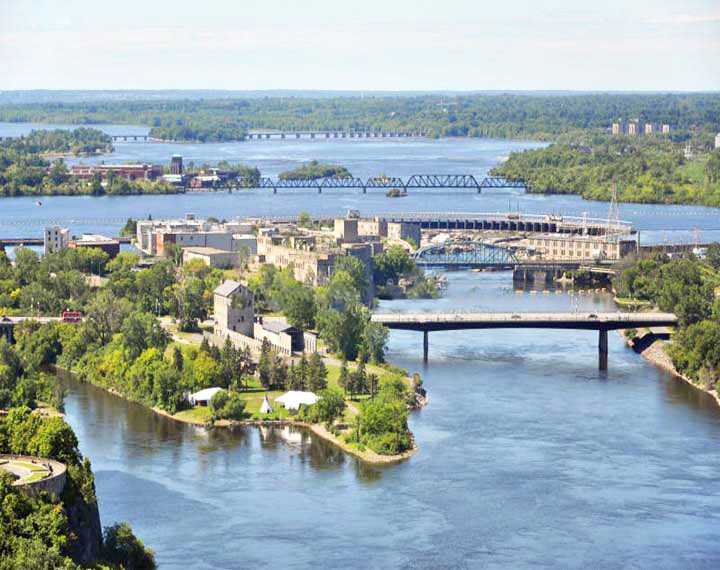
“A sacred site of history, culture, and environmental renewal.” Victoria Island (Île Victoria), also known by its Algonquin name Asinabka, is a 5.6-hectare island situated in the Ottawa River, approximately 1 km west of Parliament Hill in Ottawa, Ontario. This island holds profound cultural significance for the Algonquin Anishinaabe people, serving as a place for ceremonies, gatherings, and protests. Historically, it was a hub for Indigenous trade and spiritual practices, notably at the nearby Chaudière Falls, which were used for ceremonial purposes, meetings, and as a burial site.
In the 19th century, Victoria Island transitioned into an industrial site, housing various mills and factories, including the Wilson Carbide Mill built in 1900. These industrial activities led to significant environmental contamination. To address this, the National Capital Commission (NCC) initiated a comprehensive remediation project, which began in 2019 and is expected to conclude in 2028. As of December 2023, 3.26 hectares of the island had been remediated. During this period, public access to the island is restricted.
Once the remediation is complete, the NCC plans to collaborate with the Algonquin Anishinaabe Nation to develop a master plan for the island, aiming to reopen it to the public as a space that honors its Indigenous heritage and natural beauty.



 Own or work here?