
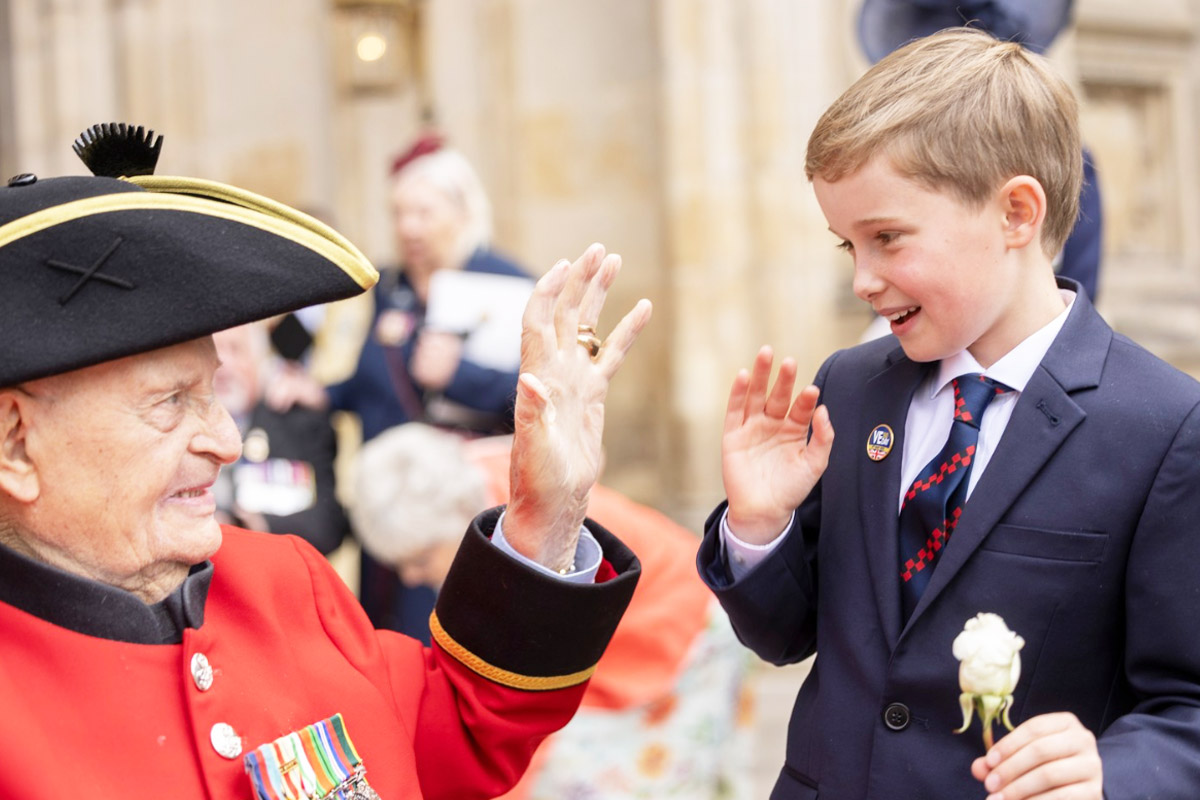
This poignant moment brings history to life as Alexander Churchill, great-great-grandson of Winston Churchill, meets John Morris, a 103-year-old Second World War hero, at the #VEDay80 Service of Thanksgiving at Westminster Abbey. Morris is the last surviving member of the Raiding Support Regiment, a highly skilled and courageous unit formed in 1943 to support covert operations behind enemy lines. Known for their expertise in sabotage, reconnaissance, and guerrilla warfare, the regiment played a vital role in disrupting enemy supply lines and aiding Allied forces.
John Morris gave up a peaceful life to join this elite unit, risking everything to secure the freedoms we enjoy today. John, who served in multiple major campaigns during WWII, was honoured with a special visit arranged by friends and supporters. Morris joined the army at just 17 years old, serving first in the Battle of Britain before being deployed to North Africa. His remarkable resilience and bravery exemplify the sacrifices made by the Greatest Generation. This photograph not only honors Morris’s heroism but also symbolizes the lasting legacy of those who fought for a peaceful and prosperous future—a legacy now cherished and upheld by younger generations.
King Charles III and Queen Camilla hosted a heartfelt garden party at Buckingham Palace to commemorate the 80th anniversary of Victory in Europe (VE) Day. The event honored the sacrifices of the wartime generation and celebrated their enduring legacy of resilience and peace.
Buckingham Palace, an enduring symbol of national unity, served as a fitting backdrop for the occasion. The palace has long been at the center of national celebrations and reflections, particularly during times of historical significance. During World War II, it stood as a beacon of hope and perseverance, despite enduring bomb damage itself, symbolising the fortitude of the British people.
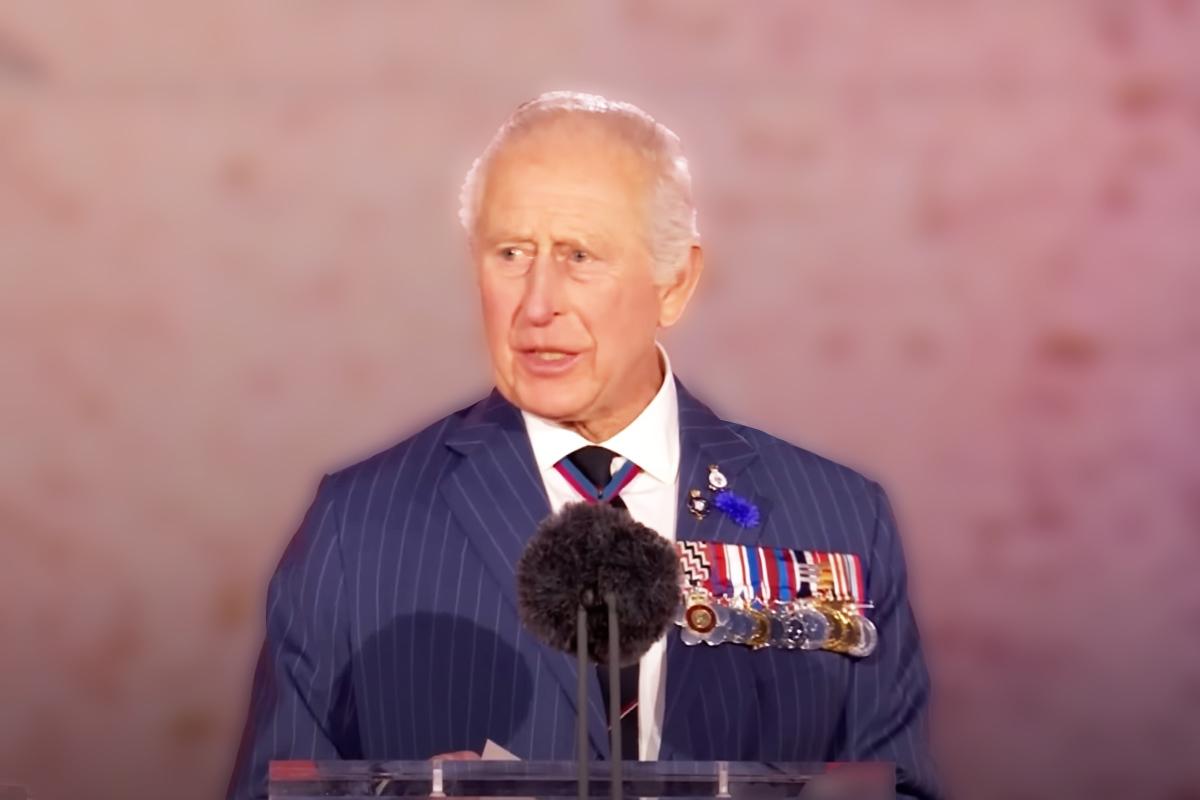
King Charles delivered a poignant speech, reflecting on the immense sacrifices made during World War II. Echoing the words of his grandfather, King George VI, in 1945, he emphasized the importance of remembering the courage and determination of that era. He also highlighted the ongoing responsibility to uphold the values of peace and freedom, drawing a powerful connection between the past and present.
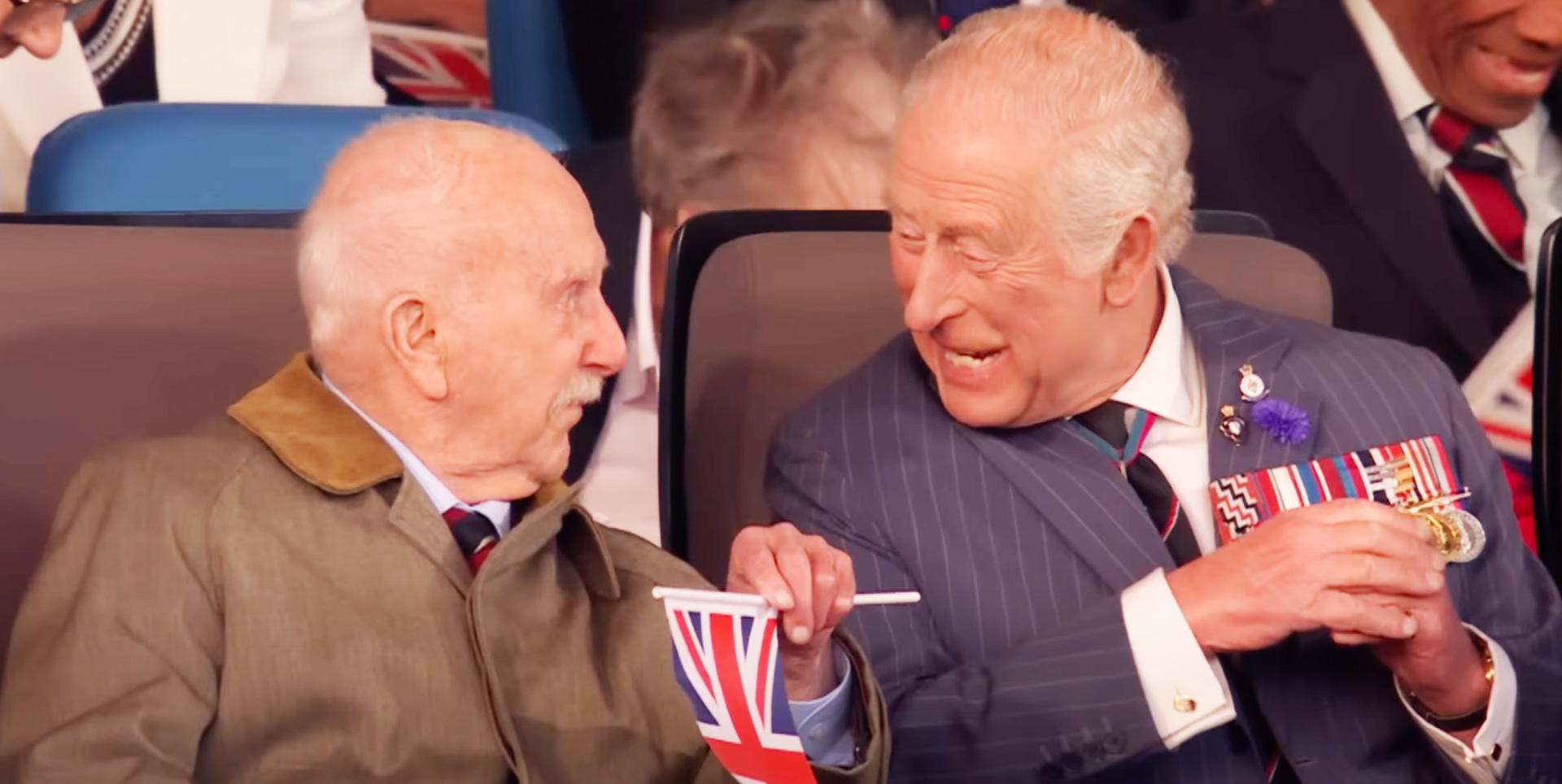
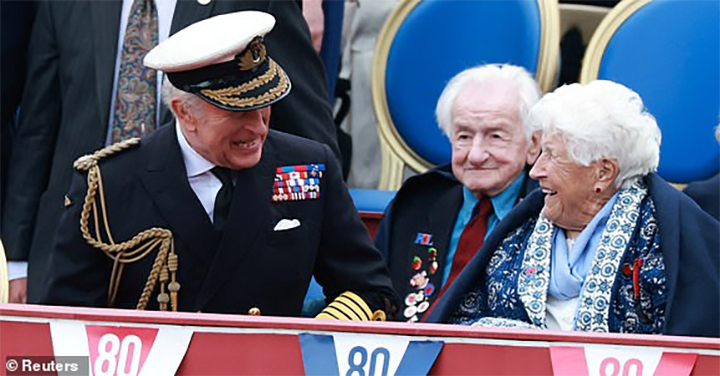
Throughout the event, the royal family engaged personally with World War II veterans and their families. King Charles and Queen Camilla, joined by the Prince and Princess of Wales, spent time speaking with attendees, listening to their stories of service and sacrifice. Among the veterans were individuals aged 98 to 104, including a former prisoner of war, a D-Day participant, and a member of the Special Operations Executive. These personal connections brought to life the bravery and resilience of those who lived through the war.
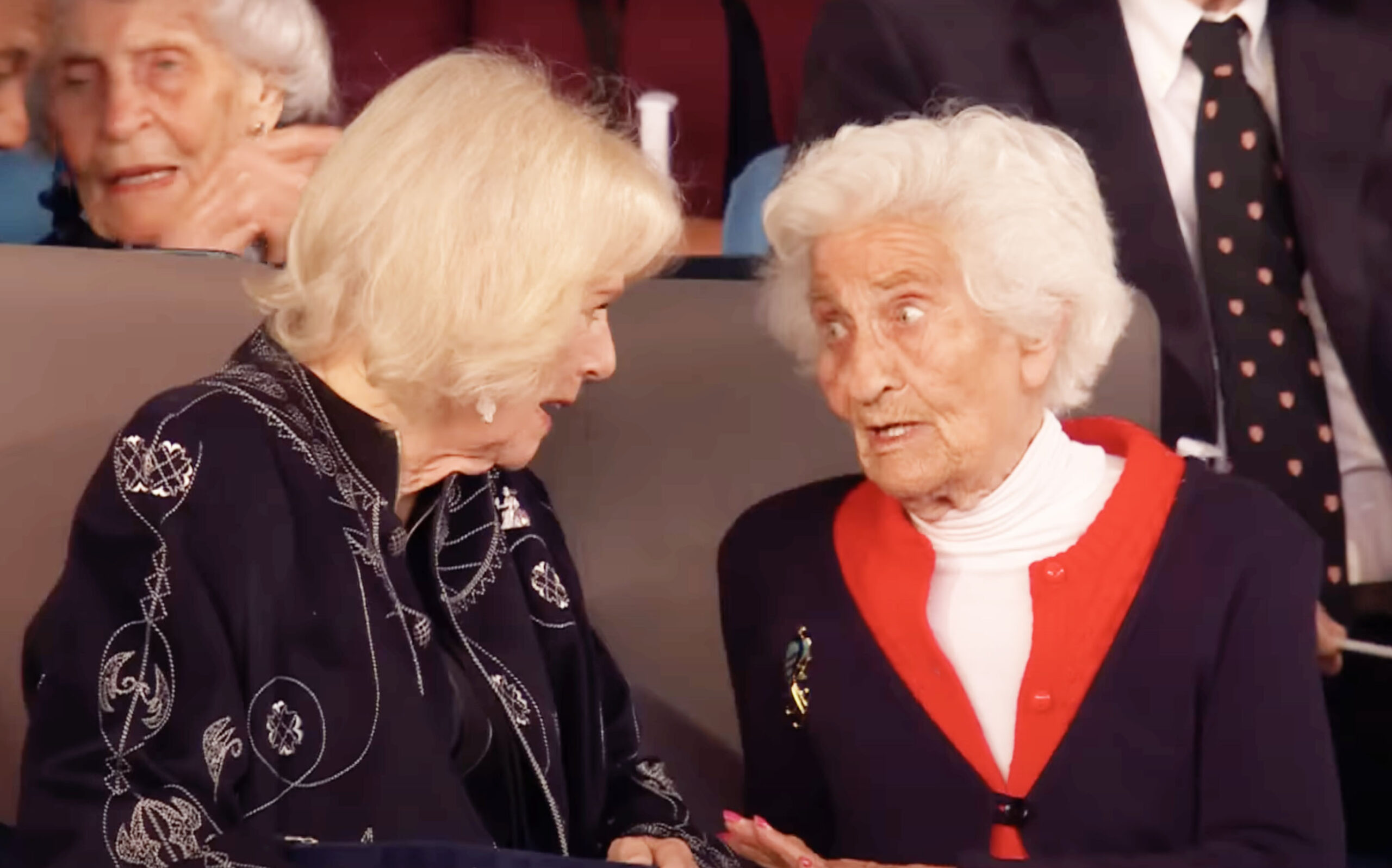
Guests enjoyed traditional garden party refreshments, including tea, sandwiches, and a variety of cakes, served amidst the tranquil beauty of Buckingham Palace’s gardens. The gardens, renowned for their diverse flora and serene design, offered a picturesque setting for reflection and celebration.
The Royal Marines Commando Training Centre Band and the Band of the Welsh Guards provided musical performances that added grandeur to the occasion. These ensembles, celebrated for their exceptional skill and ceremonial precision, have a storied history of representing Britain at significant national events. Their performances brought a stirring and dignified atmosphere to the garden party.
This Royal Garden Party was a meaningful tribute to the wartime generation, reaffirming the Royal Family’s commitment to preserving their legacy. It also highlighted the significance of Buckingham Palace as a symbol of continuity and unity, providing a space to honor the past while inspiring hope for the future.
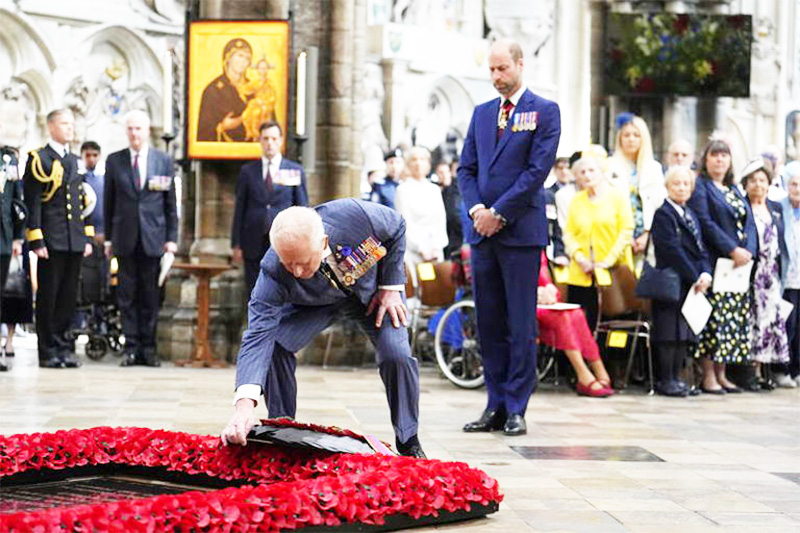
Today, the United Kingdom commemorated the 80th anniversary of Victory in Europe (VE) Day, a solemn and celebratory occasion that honored the sacrifices of the wartime generation and the peace they helped secure. Led by King Charles III, Queen Camilla, and the Prince and Princess of Wales, the day brought the nation together through poignant ceremonies and heartfelt reflections. King Charles and Prince William laid wreaths at the Grave of the Unknown Warrior during the service. The King’s wreath featured seasonal flowers from May 1945, representing the nation’s gratitude and remembrance.
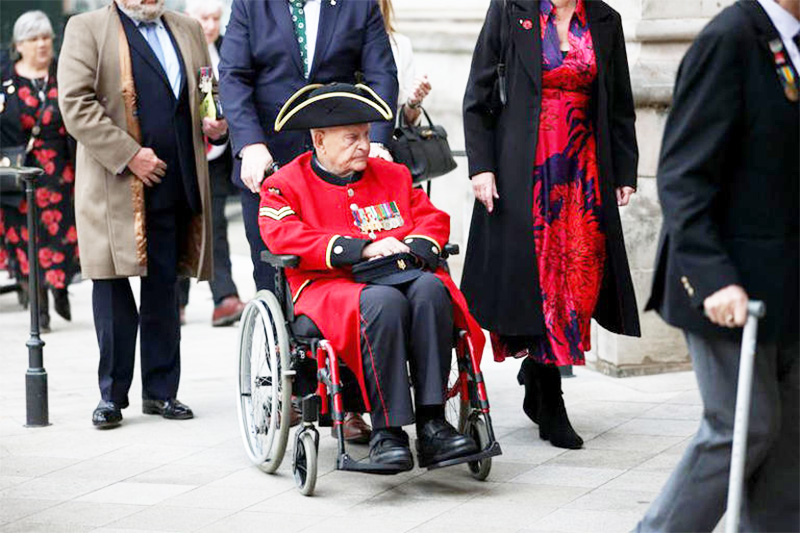
King Charles, Queen Camilla, Prince William, and Princess Catherine were joined by veterans, officials, and members of the public for a Service of Thanksgiving at Westminster Abbey. The service was led by the Dean of Westminster, Dr. David Hoyle, with a powerful sermon delivered by Archbishop of York Stephen Cottrell.
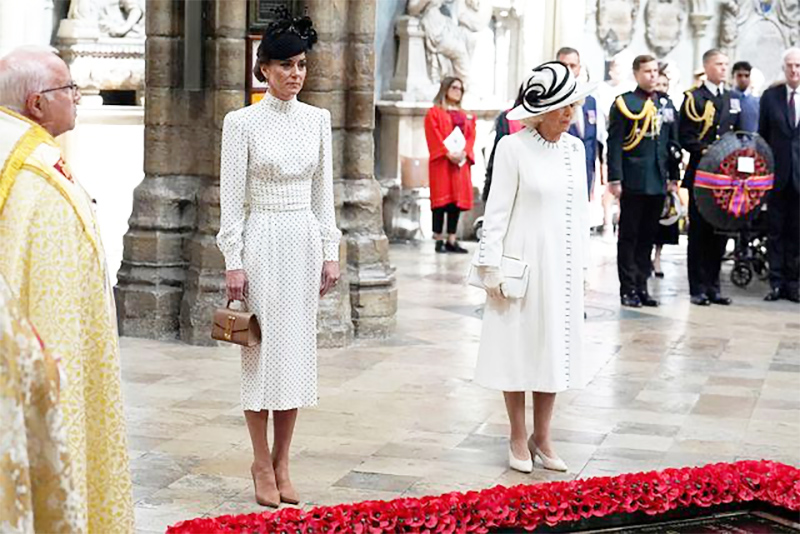
Queen Camilla and the Princess of Wales observed a moving two-minute silence at the Grave of the Unknown Warrior. Their shared moment of reflection symbolised the nation’s enduring gratitude for the countless lives lost during World War II. The Queen, with her deep connection to military families, and the Princess, representing the hope and resilience of a younger generation, together paid tribute to those who made the ultimate sacrifice in the pursuit of peace.
Queen Camilla’s presence added a deeply personal touch to the occasion. Known for her steadfast support of veterans and her work with military charities, she engaged warmly with attendees, particularly focusing on the contributions of women during the war. She highlighted the critical roles played by the Women’s Auxiliary Services and shared anecdotes about her own family’s wartime experiences, further connecting with those gathered. Queen Camilla placed a smaller, personal wreath of white lilies and rosemary, a traditional symbol of remembrance. Her tribute acknowledged the often-overlooked sacrifices of families and civilians during the war, reflecting her dedication to inclusivity and recognition of all contributions to the war effort.
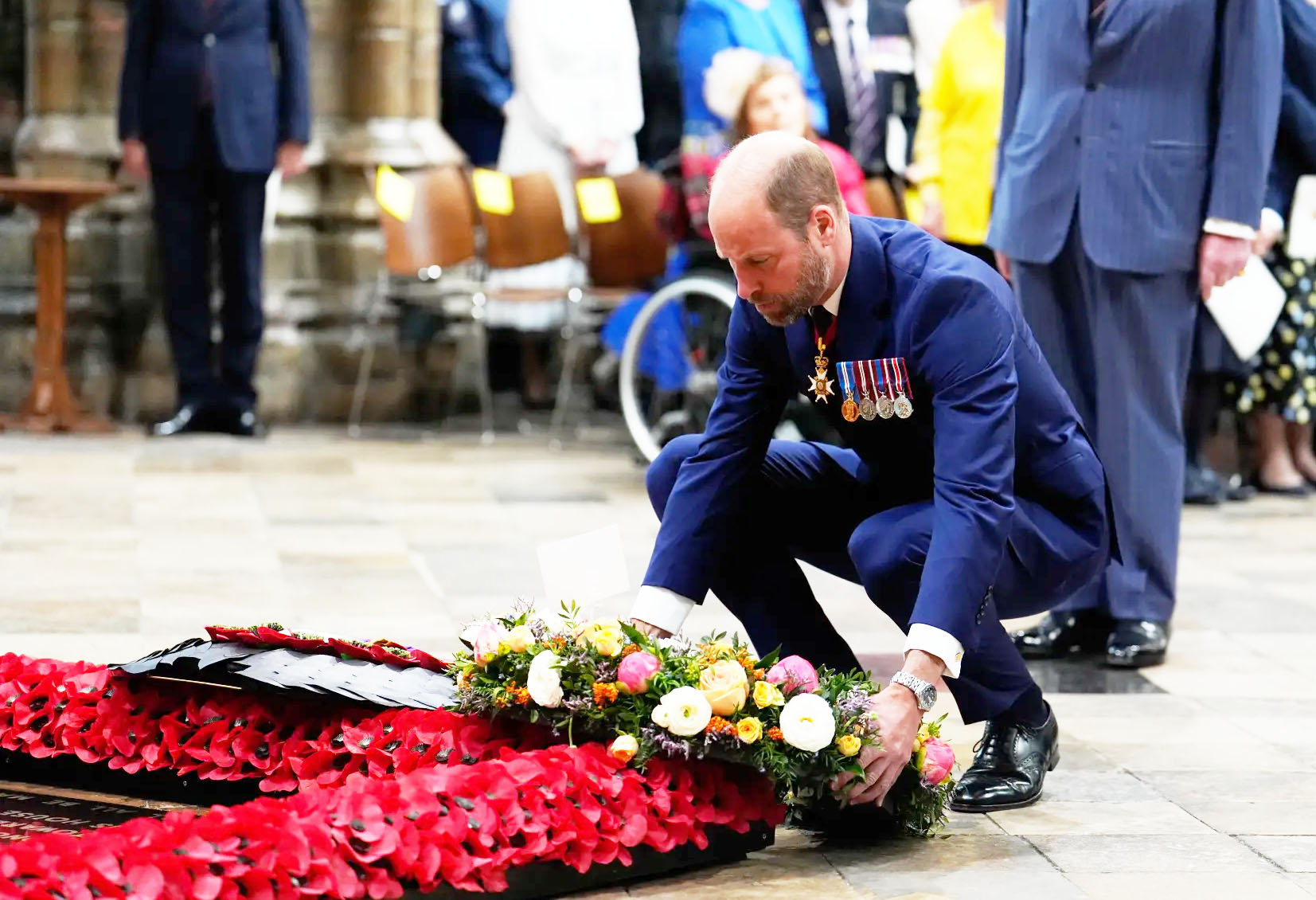
At Westminster Abbey, the Prince of Wales participated in a deeply symbolic moment during the VE Day 80 commemorations by laying a wreath at the Grave of the Unknown Warrior. This act of remembrance was imbued with profound significance, as the grave represents all those who sacrificed their lives during World War II without their identities being known. Prince William’s wreath featured poppies interwoven with laurel leaves, traditional symbols of both remembrance and victory, signifying respect for the fallen and the enduring legacy of peace they secured.
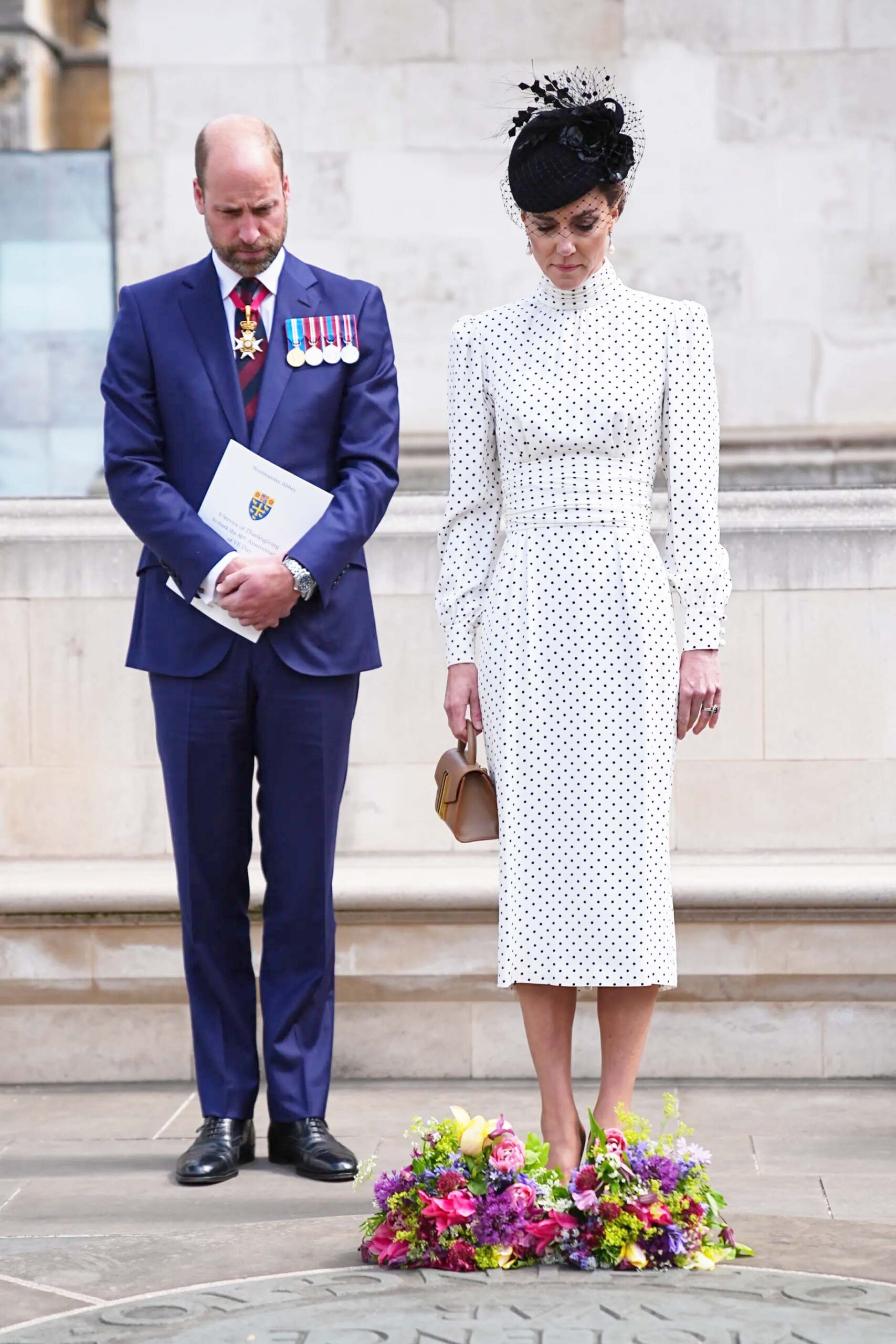
As he laid the wreath, the Prince bowed his head in a moment of solemn reflection, a gesture that conveyed the gravity of the occasion. The wreath bore a handwritten note from the Prince, expressing the nation’s eternal gratitude to those who gave their lives for freedom. By performing this tribute, Prince William underscored the importance of honoring past sacrifices while inspiring the current and future generations to uphold the values for which so many had fought. Prince William’s wreath echoed this sentiment, symbolising the passing of this legacy to future generations.
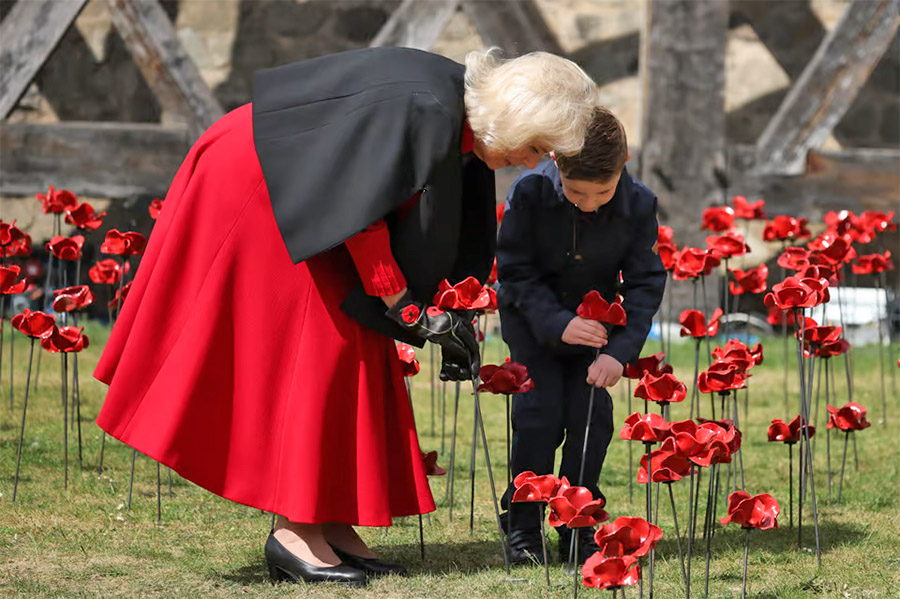
Queen Camilla’s visit to the Tower of London for the 80th anniversary of Victory in Europe (VE) Day was a heartfelt tribute to those who sacrificed so much during World War II. The centrepiece of the occasion was the unveiling of the deeply moving installation, “The Tower Remembers,” featuring nearly 30,000 cascading ceramic poppies, symbolising the lives lost and the resilience that brought peace.
Poppies, the symbol of remembrance in Britain, were installed to form a bright red cascade flowing from one corner of the 950-year-old White Tower onto the grass below. In a poignant moment, Queen Camilla placed the final poppy into the display, accompanied by a Yeoman Warder, young Harrison, and two D-Day veterans, Henry Rice and Richard Aldred. The display’s striking design, with the poppies forming a symbolic “wound” across the historic fortress walls, was a powerful reminder of the cost of war and the importance of remembrance.
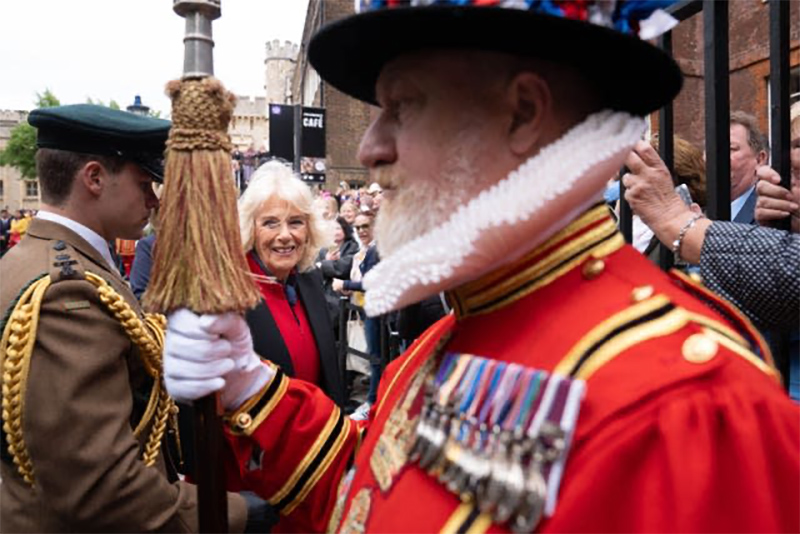
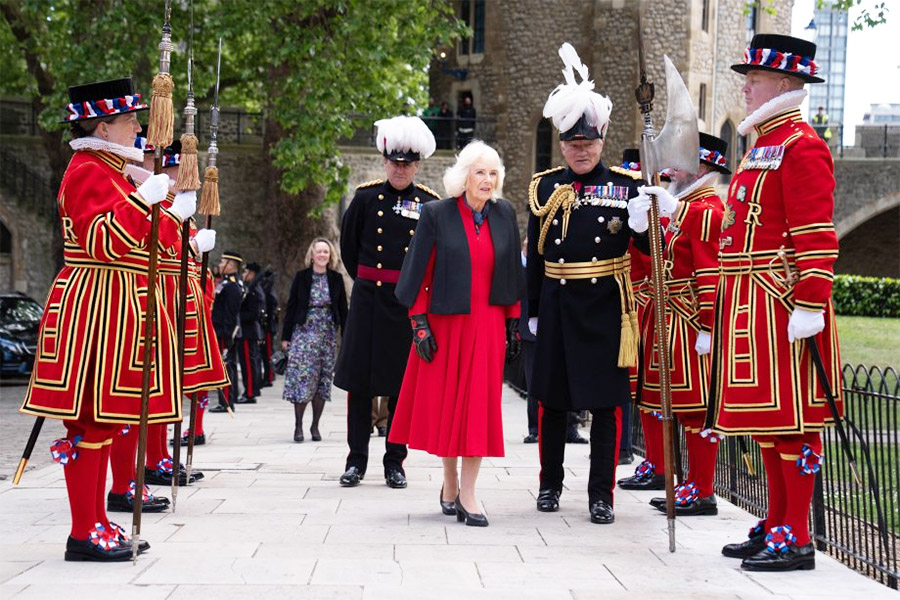
The poppy display was beautifully positioned within the moat of the Tower of London, a site steeped in history and significance, providing a striking backdrop for this poignant tribute. The presence of the iconic Yeoman Warders, known as Beefeaters, added an air of tradition and solemnity to the event. Dressed in their distinctive uniforms, they stood proudly amidst the sea of red poppies, symbolising the guardianship of British heritage and honouring the memories of those who served. The historic walls and timeless grandeur of the Tower further amplified the emotional impact of the display, making it a fitting and unforgettable setting for this commemoration.
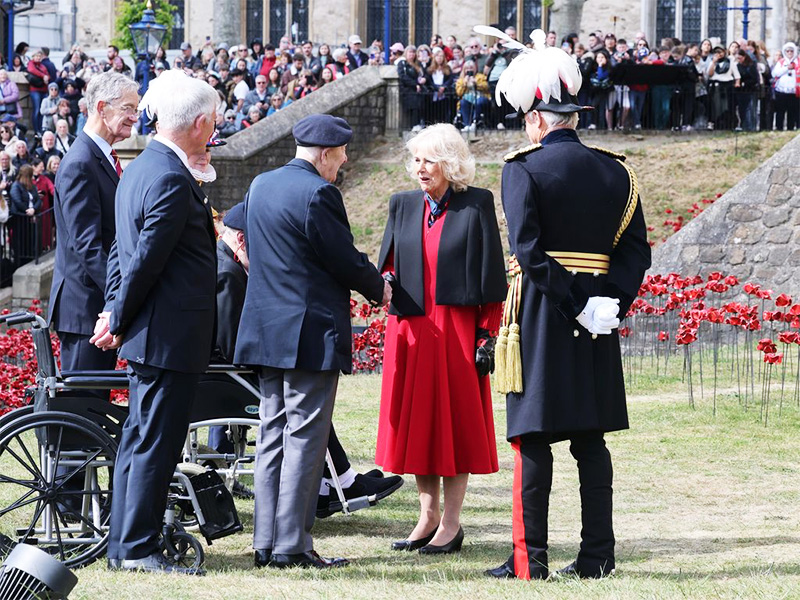
The Queen’s visit was made even more special by her personal engagement with the veterans, who were visibly moved by her genuine interest in their stories. She spoke warmly with Henry Rice, a former Royal Navy signalman, and Richard Aldred, a tank driver with the Inniskilling Dragoon Guards, as they shared memories of their wartime experiences. The veterans expressed pride and excitement at meeting her, while she thanked them for their courage and service.
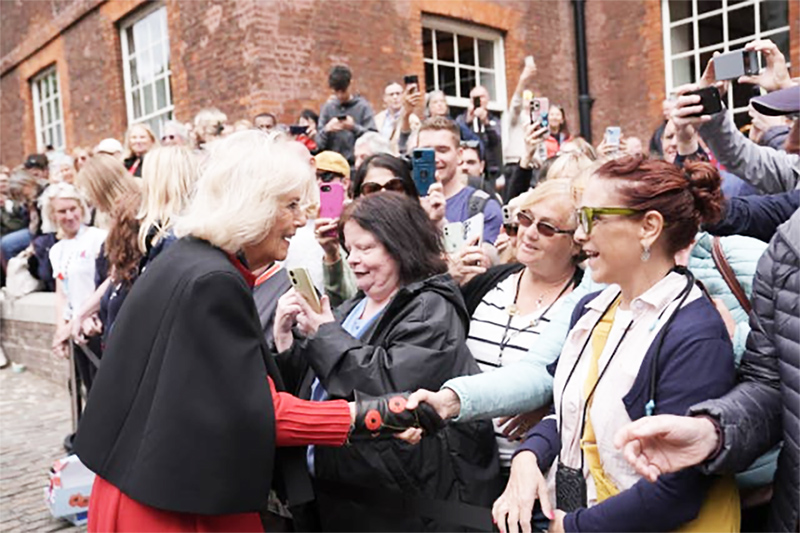
Queen Camilla, inspiring, kind-hearted, and genuinely connected with the waiting crowds, her genuine warmth shining through in every interaction. As she made her way through the sea of faces, she took the time to stop, offering smiles and kind words to those eager to share a moment with her. Each conversation, though brief, felt personal, as if she truly listened to those around her, making everyone feel valued. The crowd’s excitement was palpable, with cheers and applause following her every step. She looked absolutely wonderful in her elegant outfit, radiating grace and poise, which only added to the admiration and affection everyone felt. It was clear that her presence meant so much to them—not just as a member of the Royal Family, but as someone who took the time to truly engage, leaving behind a sense of warmth and gratitude that lingered long after.
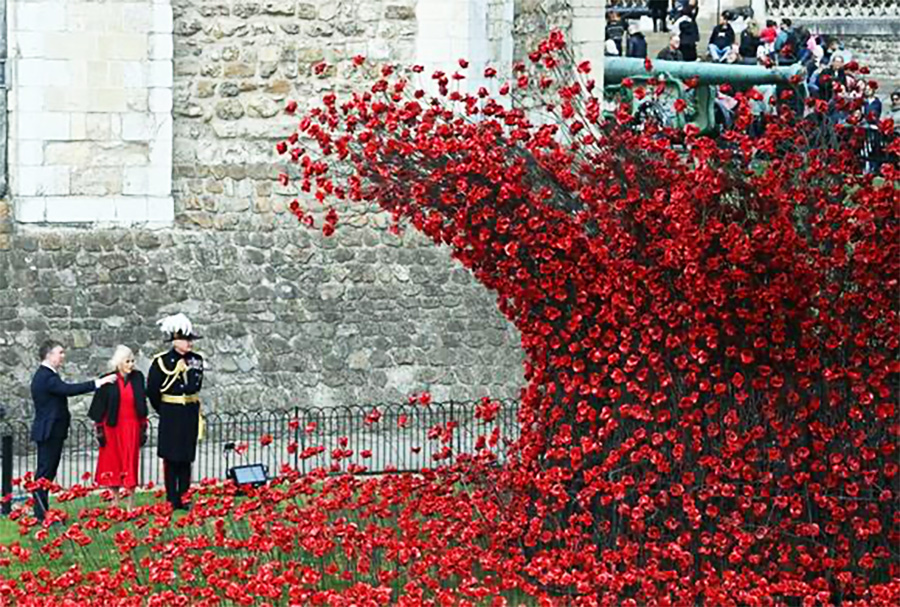
The breathtaking poppy display was a profoundly moving and inspirational tribute, capturing the enormity of sacrifice and the enduring legacy of peace. The vibrant red of the ceramic poppies, set against the ancient walls, evoked both sorrow and gratitude, creating an atmosphere of reflection and hope.
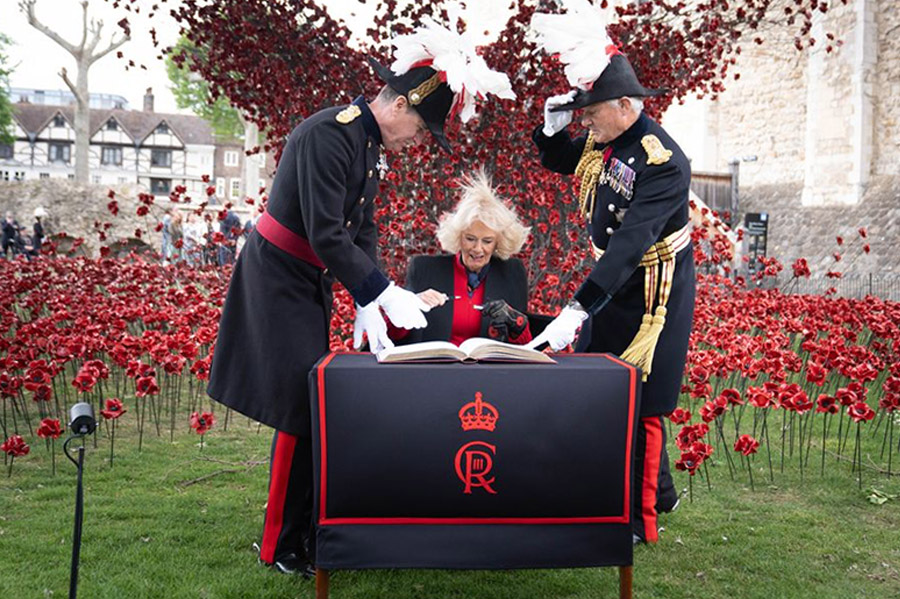
This remarkable installation united art, history, and humanity in an unforgettable expression of remembrance, serving as a vivid reminder of the courage and resilience of those who served and urging future generations to cherish the peace hard-won by so many. Queen Camilla’s visit embodied both reverence and hope, making the event a solemn yet uplifting celebration of shared memory and enduring peace.
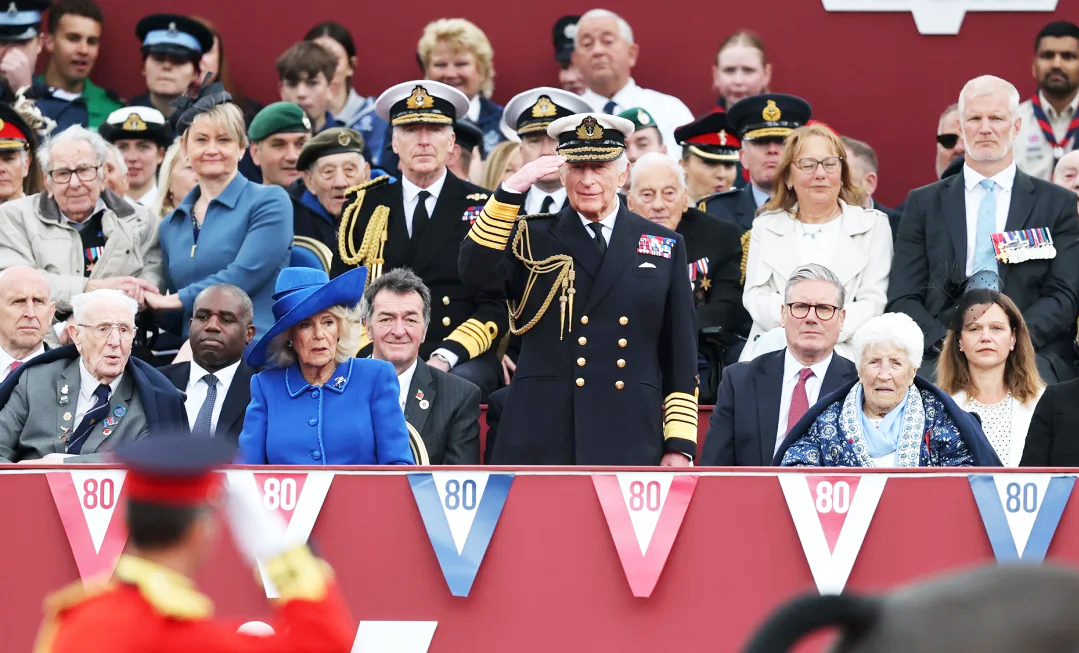
VE Day 80 was a celebration, honouring the 80th anniversary of Victory in Europe Day. The occasion brought together World War II veterans, some in their nineties and beyond, wearing medals that glinted in the spring sunshine.
The day unfolded with grandeur and heartfelt tributes. King Charles III led the ceremonies with a dignified salute, honoring the fallen and recognizing the enduring contributions of the war generation. The British Armed Forces, accompanied by Ukrainian soldiers, marched through London in an awe-inspiring display of unity and precision.
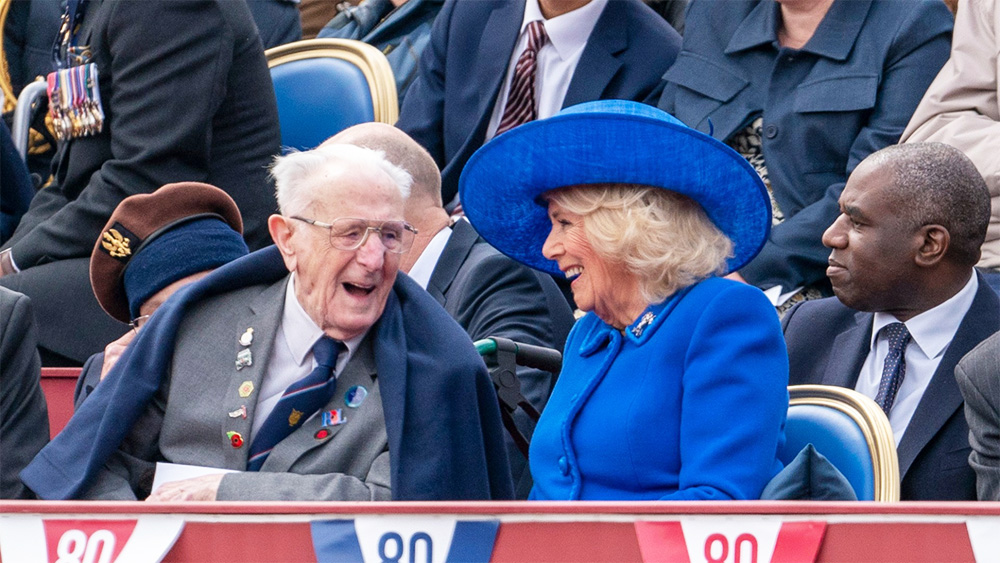
These remarkable individuals stood as living testaments to courage and sacrifice, sharing stories of valour and resilience that left the crowds inspired and humbled. Their presence added an unparalleled depth to the event, connecting history to the present in a way that resonated deeply with all in attendance.
The marching British Forces and the King’s Guard brought an air of precision and grandeur to the VE Day 80 commemorations, embodying the strength and discipline that have long defined their service. Clad in immaculate uniforms, their synchronised steps resonated through the streets as they paraded with steadfast pride, paying tribute to the soldiers who fought so valiantly during the Second World War.
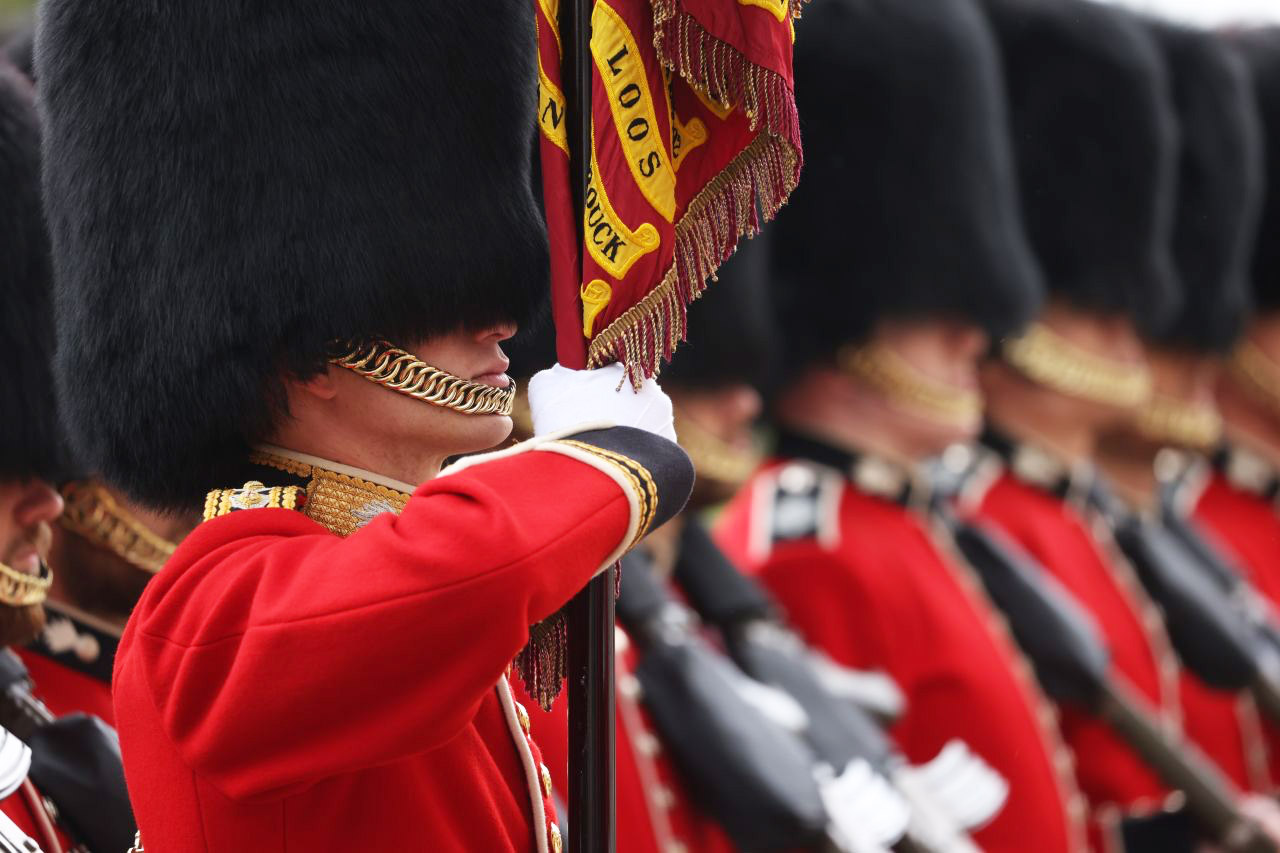
The King’s Guard, resplendent in their iconic bearskin hats and scarlet tunics, added a regal elegance to the occasion, symbolising the enduring traditions of duty and honour. The march, witnessed by thousands lining the streets, served as a powerful reminder of the resilience and unity that secured peace 80 years ago, with the crowd erupting into applause as the procession passed Buckingham Palace in a magnificent display of patriotism and reverence.
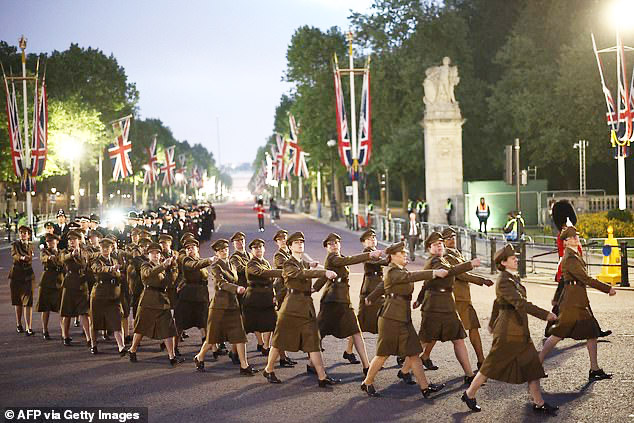
During the VE Day 80 commemorations, female soldiers from the British Army marched with pride and precision, honouring the legacy of the women who served during World War II. Their presence in the grand parade underscored the evolving role of women in the armed forces and paid tribute to the countless contributions made by women in wartime.While specific regiments were not detailed in the available sources, the participation of female personnel highlighted the strength and dedication of women in the military, reflecting both historical significance and contemporary service. The inclusion of these female soldiers in the procession served as a powerful reminder of the progress made over the decades and the enduring spirit of those who paved the way. Their involvement resonated deeply with the crowds, symbolising the indispensable contributions women have made—and continue to make—in securing peace and freedom.
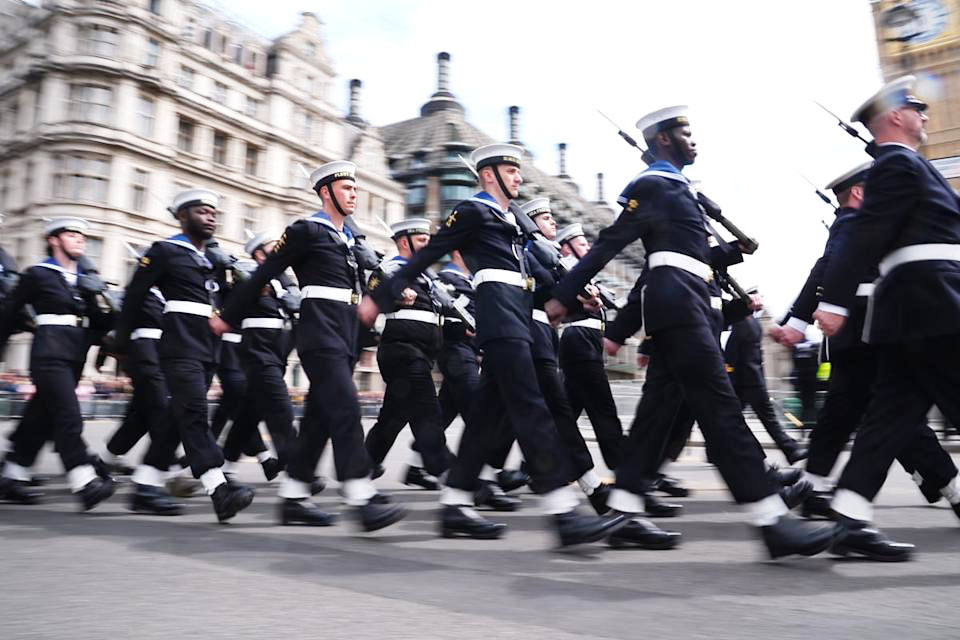
The Royal Navy played a prominent and heartfelt role in the VE Day 80 commemorations, marching proudly through the heart of London alongside fellow Armed Forces personnel. From Parliament Square, up Whitehall, and down The Mall to Buckingham Palace, sailors in immaculate dress uniforms moved in perfect step, their presence a living tribute to the naval heroes of the Second World War. Among them was Lieutenant Ben Streeter, who reflected on the emotional weight of the occasion, saying he would be thinking about the sacrifices made by his family and others who served both at home and abroad. The Royal Navy’s participation was not limited to London. In Plymouth, a city steeped in naval history, the day began with a flag-raising ceremony and a full parade of standards at the Belvedere, featuring the Royal Navy Guard and ships in the Sound . The day’s events included a gun fire from the Royal Citadel to mark the two-minute silence
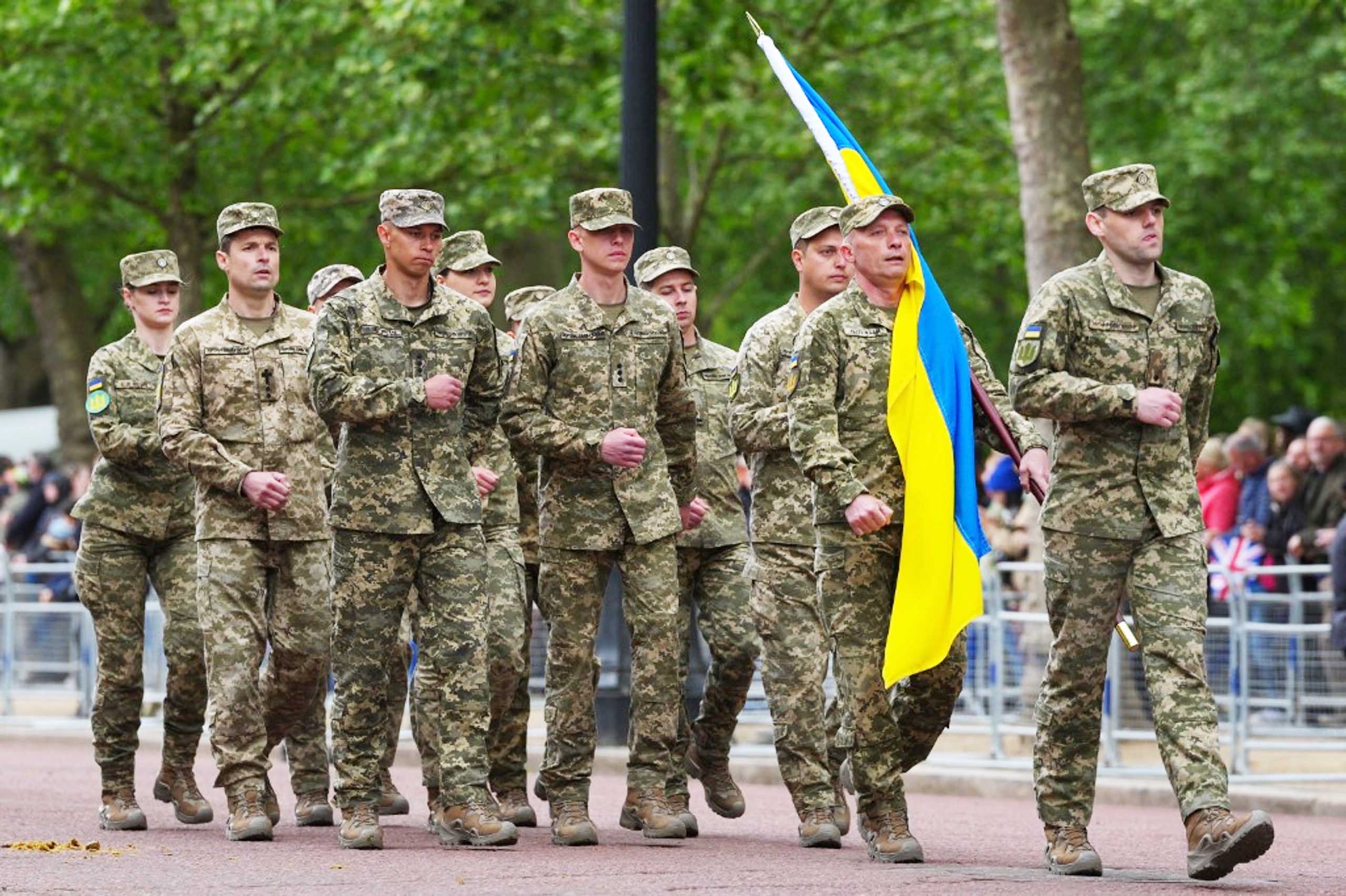
The Ukrainian soldiers who marched on VE Day 80 brought an unforgettable sense of courage and hope to the occasion. Walking shoulder to shoulder with British forces, they reminded everyone of the shared struggles and sacrifices made in the name of freedom—both in the past and today. Their presence was deeply moving, a reflection of their nation’s resilience and unyielding determination to stand strong against oppression. With every step, they carried not just their own pride, but the hopes of countless people around the world who believe in the power of unity and the fight for peace. Their participation was a poignant reminder that the spirit of those who fought for liberty 80 years ago lives on in those who continue to defend it today.
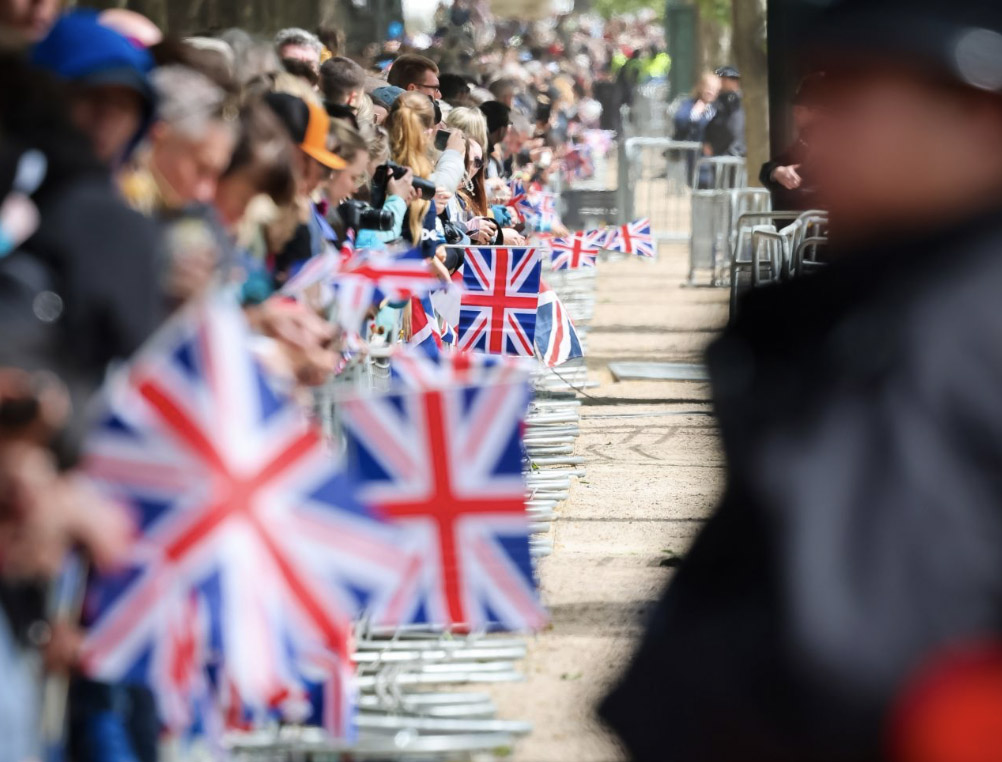
The sight of the two nations marching side by side drew thunderous applause, symbolising the enduring spirit of solidarity against tyranny. Outside Buckingham Palace, the royal family—King Charles, Queen Camilla, and other senior members—joined the enormous crowds, creating a moment of shared national pride.
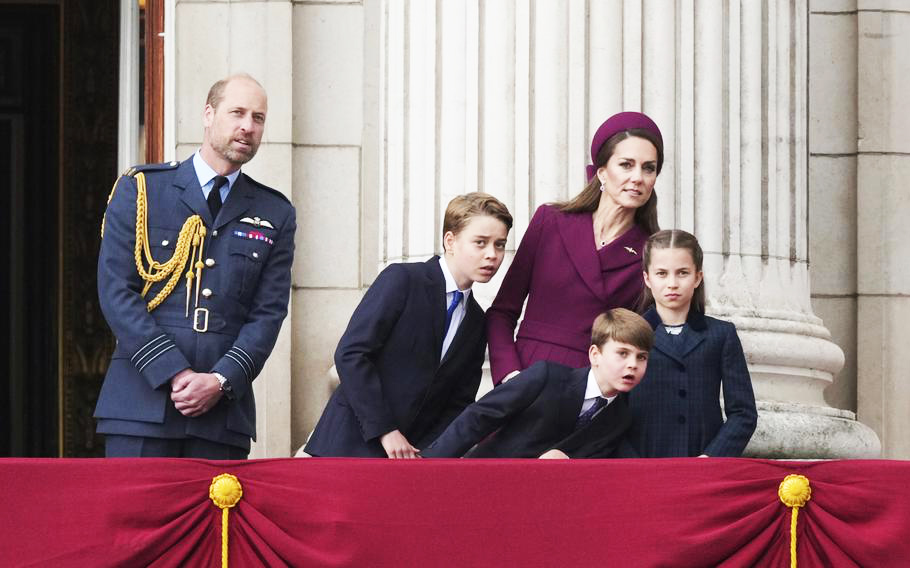
The Prince and Princess of Wales were a picture of joy and excitement as they stepped onto the balcony of Buckingham Palace, sharing a heartfelt connection with the cheering crowds below. Standing with their children, Prince George, Princess Charlotte, and Prince Louis, they gazed skyward with wide-eyed wonder as the Red Arrows roared overhead, painting the sky with brilliant streaks of red, white, and blue.
The children’s excitement was palpable, with Prince Louis pointing animatedly and Princess Charlotte beaming with delight, while Prince George stood proudly beside his parents, taking in the spectacle. The family’s warmth and enthusiasm brought an air of relatability to the occasion, as they laughed and chatted, clearly captivated by the breathtaking display. Their shared joy reflected the jubilant energy of the day, creating a magical moment of national pride and celebration.
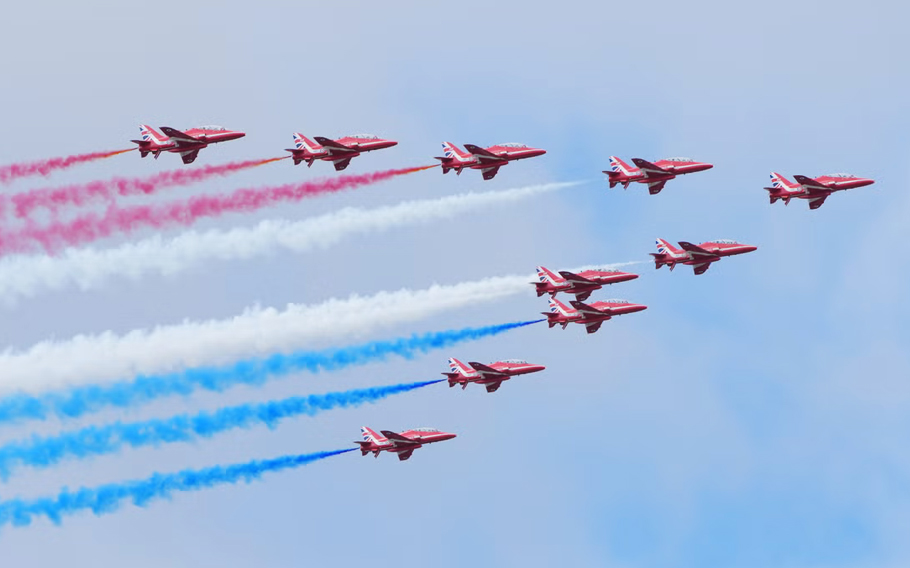
As the Royal Air Force’s Red Arrows soared across the blue skies, their trails of red, white, and blue painted a vivid celebration above Buckingham Palace. The cheers of the thousands gathered below echoed through the city, blending with the laughter and joy of families, veterans, and visitors from around the world. This breathtaking flypast honored the indomitable spirit of the wartime generation while igniting a sense of hope and unity for the future.
The festivities concluded with a magnificent garden party in the palace grounds. Veterans mingled with dignitaries and the public, enjoying live music, delicious food, and a warm atmosphere of camaraderie. Stories of hardship and triumph were exchanged, creating connections between generations. The event was a fitting close to a day filled with splendor, remembrance, and gratitude, ensuring that the legacy of those who sacrificed for freedom lives on in the hearts of all who celebrated VE Day 80.
The VE80 commemorations will unfold from May 5 to May 8, 2025.
Landmarks across London will play a central role in honoring the legacy of the war generation. The Cenotaph on Whitehall, adorned with the Union Jack, will serve as a solemn symbol of remembrance, inviting reflection and gratitude. The iconic Tower of London will see the return of its striking ceramic poppy installation, a sea of red symbolizing lives lost but never forgotten. This breathtaking tribute will remind all who visit of the profound cost of conflict and the enduring power of remembrance.
As the sun sets, historic buildings will be illuminated in a symbolic gesture of hope and unity, their lights casting a glow that honors the past while looking toward a brighter future.
Throughout the commemorations, music and storytelling will weave a rich tapestry of remembrance and celebration. The Parliament Choir, performing at Westminster Hall, will fill the historic chamber with voices that echo the resilience of those who lived through the war years. A concert at Horse Guards Parade will bring together 10,000 people in a heartwarming event filled with music and narratives of triumph, creating an unforgettable experience of unity and joy.
At the Royal Albert Hall, the aptly named “VE Day 80: The Party” will bring together renowned artists and orchestras, offering an evening of musical storytelling that bridges generations. As the Royal Philharmonic Concert Orchestra performs, it will remind audiences of the enduring power of art to heal and inspire.
VE80 is not only a London event but a national moment of unity. Pubs across the country will extend their hours, inviting communities to gather, share stories, and raise a glass to the bravery and sacrifice of those who came before. The Royal British Legion’s Tea Party for Veterans will bring together those who lived through these transformative years, offering a chance for stories to be shared, connections to be forged, and legacies to be honored.
Tower of London Poppy Installation: Approximately 30,000 ceramic poppies from the 2014 World War I centenary display will be reinstalled at the Tower of London, symbolizing the sacrifices made during the war.
Landmark Illuminations: Historic landmarks across the UK will be illuminated in the evening as a tribute to those who served
Parliament Choir Concert: A commemorative concert will be held in Westminster Hall, featuring performances by the Parliament Choir to honor the legacy of those who contributed to the war effort.
Horse Guards Parade Concert: A large-scale concert at Horse Guards Parade will accommodate 10,000 attendees, featuring performances by stars of stage and screen alongside military musicians, narrating the story of victory and remembrance.
Royal Albert Hall – VE Day 80: The Party: An evening of music-led storytelling at the Royal Albert Hall, hosted by Dan Walker, Katherine Jenkins OBE, and Myleene Klass MBE, with performances by the Royal Philharmonic Concert Orchestra and RAF Squadronaires. The event starts at 7:30 PM, with doors opening at 6:45 PM.
Royal British Legion Tea Party: A private tea party for Second World War veterans and their families will be hosted by the Royal British Legion at the National Memorial Arboretum at 2:00 PM, followed by a Service of Commemoration at 4:00 PM.
VE80 is more than a commemoration; it is a call to remember the lessons of the past and carry forward the ideals of peace, courage, and unity. It honors the lives lost and celebrates the freedom secured, urging future generations to cherish and protect what was won at such great cost.
As London comes alive with events that honor this remarkable milestone, the spirit of VE Day will resonate far beyond the city’s streets, touching hearts across the nation and the world. The message is clear: in the face of darkness, humanity has the power to endure, to rebuild, and to shine ever brighter
The main events, including the procession and flypast on May 5, will be broadcast live on national television. Viewing areas around the procession route in London will be available for those wishing to attend in person
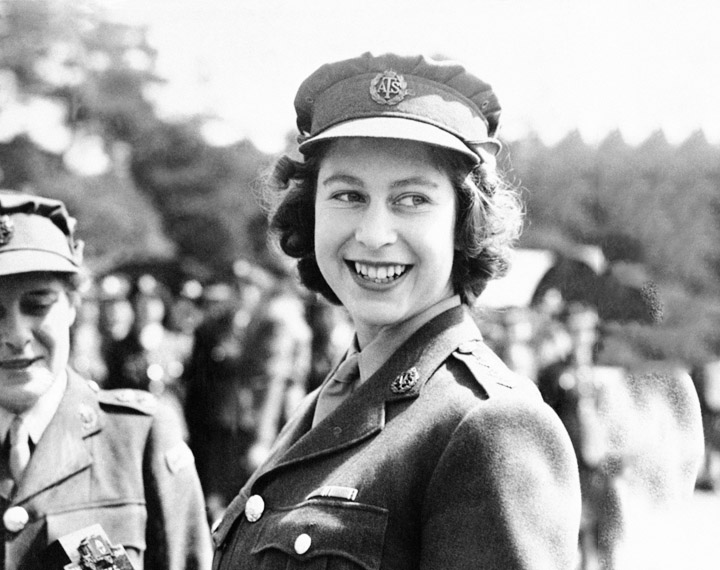
The British Royal Family became a steadfast symbol of unity, resilience, and hope, inspiring the nation through some of its darkest days. King George VI and Queen Elizabeth, refusing to leave London even during the height of the Blitz, shared in the struggles of ordinary citizens, visiting bombed-out neighborhoods and comforting those affected by the devastation. Their daughters, Princess Elizabeth and Princess Margaret, contributed by broadcasting morale-boosting messages to children evacuated from the cities. Princess Elizabeth, the future Queen, also served as a mechanic in the Auxiliary Territorial Service, embodying the spirit of service and duty. The Royal Family’s presence and unwavering commitment to the war effort bridged social divides, fostering a sense of solidarity across the nation. Through their actions and steadfast leadership, they became enduring symbols of courage and perseverance, exemplifying the collective resolve of the British people to endure and triumph.
10 Downing Street served as the nerve center of Britain’s wartime leadership, embodying resilience and determination as the country faced its greatest peril. Under the indomitable leadership of Prime Minister Winston Churchill, the iconic residence became a hub of strategic planning, where crucial decisions were made that shaped the outcome of the war. Within its walls, the War Cabinet met to deliberate on military operations, intelligence reports, and diplomatic maneuvers, while Churchill’s powerful speeches, often drafted in its rooms, inspired a nation to stand firm against tyranny. Despite the constant threat of air raids, 10 Downing Street symbolized stability and resolve, with its lights burning late into the night as leaders worked tirelessly to chart a path to victory. It became not only the heart of British governance but also a beacon of hope, embodying the unyielding spirit of a nation united in its fight for freedom and peace.
During the Second World War, the House of Commons played a crucial role in shaping Britain’s wartime policies, embodying the democratic spirit and resilience of the nation. As the war escalated, Members of Parliament worked tirelessly to support the government, make critical decisions on military strategy, and pass essential legislation to sustain the war effort. The House of Commons became a platform for vital debates, with figures like Winston Churchill delivering impassioned speeches that galvanized the country’s resolve. Despite the threat of bombing raids, which frequently interrupted proceedings, the members continued their work, showing unyielding commitment to the nation’s survival and future. The House of Commons also served as a beacon of transparency and accountability, with the government regularly updating Parliament on the progress of the war. Throughout the conflict, the House of Commons remained a pillar of democracy, ensuring that the voice of the people was heard, even in the midst of war, and that Britain’s values of freedom and justice endured.
During the Second World War, the Ministry of Defence became the cornerstone of Britain’s wartime strategy, uniting the armed forces, intelligence services, and industries into a cohesive and formidable force. It oversaw critical campaigns, from the Battle of Britain to the D-Day landings, where its meticulous planning and coordination secured pivotal victories. The Ministry championed groundbreaking technological advancements, such as the development of radar and the decryption of the Enigma code at Bletchley Park, turning the tide of the war through innovation and strategic brilliance. Its ability to adapt to the demands of modern warfare demonstrated a level of resourcefulness that inspired Britain and its allies to persevere. Beyond the battlefield, the Ministry of Defence galvanized the home front, ensuring that the war effort extended into factories, communities, and homes. It coordinated the production and distribution of resources, maintained morale, and empowered civilians to contribute through roles in civil defense and wartime industries. This unyielding commitment to both military success and national unity exemplified the Ministry’s leadership during the war. By uniting the nation in its darkest hour, the Ministry of Defence not only defended the ideals of freedom and democracy but also set a benchmark for resilience and determination that would resonate for generations.
The British Armed Forces made heroic contributions across land, sea, and air. From the beaches of Normandy to the skies of the Battle of Britain, their courage and sacrifice were instrumental in securing victory. Together, these institutions and individuals exemplified a collective spirit of determination, ingenuity, and collaboration that led to the end of the war and a lasting peace. The Royal Navy, Royal Air Force (RAF), and British Army stood united as a triumphant force of courage and determination, defending freedom against overwhelming odds. The Royal Navy secured vital supply lines in the Atlantic, orchestrated daring rescues like Dunkirk, and neutralized powerful adversaries such as the Bismarck. The RAF, immortalized in the Battle of Britain, safeguarded the skies with innovation and valor, while also launching decisive strikes against enemy forces worldwide. The British Army displayed unmatched tenacity on the frontlines, from the deserts of North Africa to the beaches of Normandy, liberating occupied territories and leading the charge toward victory. Together, they symbolized the indomitable spirit of a nation that stood firm in the face of tyranny, turning the tide of history and inspiring generations.
The Foreign and Commonwealth Office (FCO) played a vital role in shaping Britain’s diplomatic strategies, navigating the complexities of a global conflict with skill and determination. Tasked with maintaining and forging alliances, the FCO worked tirelessly to secure international support for the Allied cause, fostering relationships that would prove pivotal to the war effort. From negotiating critical agreements with the United States, such as the Lend-Lease Act, to coordinating with Commonwealth nations and resistance movements in occupied territories, the FCO demonstrated remarkable foresight and adaptability. Its diplomats operated in high-stakes environments, often under the threat of espionage and sabotage, ensuring the flow of essential intelligence and resources. Beyond diplomacy, the FCO managed communications that upheld Britain’s image as a resilient and principled leader on the global stage. Through its efforts, the FCO not only contributed to the ultimate victory but also laid the groundwork for post-war international cooperation and reconstruction.
The British Home Office played a pivotal role in safeguarding the nation, embodying resilience and determination in the face of adversity. Tasked with maintaining domestic security and civil order, the department orchestrated a comprehensive strategy to protect citizens during air raids, including the establishment of air-raid shelters, blackout regulations, and the pioneering use of air-raid wardens who became unsung heroes in every community. It coordinated the evacuation of children from cities to the countryside, ensuring their safety amidst the relentless threat of bombings. The Home Office also managed vital wartime legislation, including rationing and identity cards, helping to foster a spirit of shared sacrifice and unity. Its tireless work extended to counter-espionage efforts and the protection of vital infrastructure, underscoring its crucial contribution to the Allied war effort. Despite overwhelming challenges, the Home Office exemplified steadfastness and innovation, ensuring the home front remained resilient, resourceful, and unwavering in its resolve to support the broader struggle for freedom and peace.
MI5, Britain’s Security Service, stood as a silent yet formidable shield, protecting the nation from threats that lurked in the shadows. Tasked with counterintelligence and the defense against espionage, MI5 unraveled and neutralized enemy spy networks, ensuring vital wartime secrets remained secure. The service’s groundbreaking “Double Cross System” turned captured enemy agents into double agents, feeding the Nazis false information that significantly shaped the course of the war, including the success of the D-Day landings. MI5 worked tirelessly to safeguard the United Kingdom from internal subversion, monitoring potential threats with precision while respecting the balance of national security and civil liberties. Its operatives, often working under intense pressure and in complete anonymity, exemplified resourcefulness, courage, and dedication. MI5’s efforts not only safeguarded Britain’s wartime intelligence but also fortified the trust and morale of a nation united against tyranny, proving that its quiet vigilance was a cornerstone of victory.
MI6, Britain’s Secret Intelligence Service, became a beacon of ingenuity and courage, operating in the shadows to gather critical intelligence that shaped the Allied victory. With agents stationed across occupied Europe and beyond, MI6 risked everything to infiltrate enemy lines, intercept plans, and secure vital information about Axis strategies. The service’s collaboration with resistance movements fueled sabotage efforts and disrupted Nazi operations, while its skilled codebreakers and analysts played a pivotal role in decrypting enemy communications, complementing the groundbreaking work at Bletchley Park. MI6 pioneered innovative espionage techniques, including the use of secret gadgets and safehouses, and its operatives displayed remarkable bravery, often operating in hostile territories under the constant threat of exposure. Through clandestine networks, forged alliances, and unwavering resolve, MI6 proved instrumental in outwitting the enemy, safeguarding the free world, and leaving an indelible legacy as the guardians of Britain’s strategic intelligence.
GCHQ, then known as the Government Code and Cypher School (GC\&CS), emerged as a cornerstone of Britain’s defense, harnessing the power of intelligence to turn the tide of war. Stationed at Bletchley Park, its brilliant codebreakers, including luminaries like Alan Turing, worked tirelessly to decipher the seemingly impenetrable Enigma and Lorenz ciphers used by the Axis powers. Their groundbreaking achievements in cryptanalysis not only provided the Allies with a decisive strategic advantage but also significantly shortened the war, saving countless lives. GCHQ’s work extended beyond codebreaking, creating secure communication systems for Allied forces and ensuring critical information could be shared without compromise. Operating in secrecy and under immense pressure, the men and women of GCHQ displayed unparalleled dedication, ingenuity, and perseverance, revolutionizing intelligence and laying the foundation for modern computing. Their efforts stand as a testament to the quiet power of intellect and collaboration in shaping the course of history.
Bletchley Park stood as a crucible of intellect, innovation, and resilience, playing a critical role in securing Allied victory. This unassuming estate became the epicenter of Britain’s codebreaking efforts, where a diverse team of mathematicians, linguists, engineers, and ordinary citizens worked tirelessly to crack the seemingly unbreakable codes of the Axis powers. Led by visionary figures like Alan Turing, their groundbreaking work on the Enigma and Lorenz ciphers unraveled enemy plans, providing invaluable intelligence that reshaped the battlefield and hastened the war’s end. Bletchley Park fostered some of the earliest advances in computing, with the development of machines like the Bombe and Colossus, setting the stage for technological revolutions to come. Despite the immense pressure and secrecy, the men and women of Bletchley Park worked with unmatched dedication, their contributions remaining hidden for decades. Today, their story stands as a powerful testament to the ingenuity and determination that quietly changed the course of history.
London Police became symbols of unwavering courage and humanity, standing resolute amidst the chaos and devastation that engulfed the city. As bombs rained down during the Blitz, they faced danger head-on, guiding terrified citizens to safety, rescuing the injured, and offering solace to those who had lost everything. They patrolled the shattered streets with unshakable determination, preventing lawlessness and bringing hope to communities that clung to their resilience. Their tireless efforts extended beyond duty, becoming a lifeline of stability and compassion in a city under siege. Through their bravery, sacrifice, and unrelenting spirit, the London police upheld the heart of London, proving that even in the darkest moments, the light of humanity could shine brightly and inspire a nation.
The Fire Service emerged as unsung heroes, standing resolute amidst the devastation of the Blitz. Braving relentless bombings, these courageous men and women faced infernos with unwavering resolve, often under fire themselves, to save lives and protect vital infrastructure. Their work extended beyond extinguishing flames; they became symbols of hope and unity, embodying the spirit of resilience that defined Britain’s wartime endurance. Whether rescuing civilians from collapsing buildings or working tirelessly to safeguard communities, the Fire Service exemplified selflessness and bravery, proving to be an indispensable force in the nation’s survival and ultimate victory.
Nurses, first aiders, and ambulance crews were the lifeblood of Britain’s resilience, embodying unparalleled courage and compassion. Amidst bombings and battlefield chaos, nurses provided critical care, often in makeshift hospitals under the constant threat of attack, soothing both the physical and emotional wounds of war. First aiders rushed to the scenes of destruction, stabilizing the injured and saving countless lives with their swift actions. Ambulance crews braved treacherous conditions, navigating rubble-strewn streets and air raid zones to transport the wounded to safety. Together, these heroes formed a steadfast network of humanity, ensuring that care and hope endured even in the darkest hours.
The Mayor of London embodied resilience and leadership, standing as a symbol of hope and unity during the city’s darkest hours. Amid relentless bombing during the Blitz, the Mayor worked tirelessly to coordinate emergency responses, ensuring shelters were built, evacuations were organized, and morale remained unbroken. The role extended beyond administration, as the Mayor became a comforting figure for Londoners, visiting devastated areas, supporting the injured, and rallying communities to rebuild after each attack. Balancing the city’s needs with the national war effort, the Mayor played a crucial part in maintaining order and fostering a sense of solidarity. Their leadership helped London endure unimaginable trials, emerging not only as a survivor but as a testament to the unyielding spirit of its people. The Mayor of London during the war era remains a lasting symbol of courage, unity, and the resolve to rebuild a city under siege.
The Royal British Legion became a vital source of hope and support, extending its mission to meet the immense needs of servicemen, women, veterans, and their families. Offering welfare assistance, financial aid, and emotional comfort, the Legion ensured that those on the front lines and their loved ones at home were cared for and remembered. Through initiatives like the Poppy Appeal, it united the nation in honoring sacrifices and fostering resilience amidst the hardships of war. The Legion’s unwavering commitment during this pivotal time solidified its legacy as a symbol of compassion, remembrance, and enduring support for those who serve.



 Own or work here?