

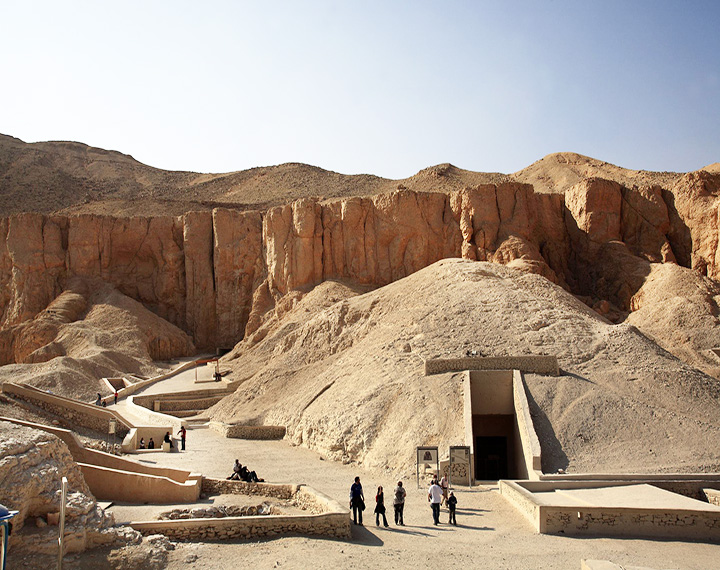
A sacred desert canyon where the eternal spirits of pharaohs reside. The valley contains over 60 known tombs, including the world-famous burial chamber of Tutankhamun, discovered by Howard Carter in 1922. While some tombs are simple pits, others, like the Tomb of Seti I, are sprawling complexes adorned with vibrant, exceptionally well-preserved wall paintings that depict the pharaoh’s journey through the underworld. Every corridor and chamber is covered in intricate hieroglyphics and divine scenes from funerary texts, offering an uplifting glimpse into the complex spiritual beliefs and artistic brilliance of ancient Egyptian civilization.
Beyond the iconic burial of the boy king, the valley holds the resting places of legendary rulers like Ramses II and Thutmose III. Exploring these rock-cut sanctuaries provides a powerful connection to the history of the 18th, 19th, and 20th Dynasties, highlighting the transition from the era of pyramids to these secretive underground mausoleums. The atmosphere is one of deep reverence, inviting travelers to marvel at the skill of the ancient architects and artists who worked in near-darkness to create eternal homes for their divine leaders.
The stark, rugged beauty of the surrounding Theban hills, dominated by the natural pyramid-shaped peak of Al-Qurn, provides a dramatic and timeless backdrop for exploration. Standing at the entrance to these subterranean worlds, the silence of the desert is interrupted only by the warm wind, creating a meditative environment that fosters deep reflection on the legacy of the pharaohs. The site is a living museum where the golden desert sands meet the colorful narratives of a civilization that aimed for immortality, making it an essential chapter in any Egyptian pilgrimage.
A visit to the Valley of the Kings is a transformative experience that connects the modern traveler with the heart of ancient Thebes. The dedication of conservation teams ensures that these delicate masterpieces remain protected, allowing the world to continue witnessing the splendor of the New Kingdom. It remains a cherished UNESCO World Heritage site, inviting every guest to step into a hidden world of divine royalty and timeless artistic mastery that continues to inspire and educate millions from around the globe.



 Own or work here?