

The site is world-renowned for its private tombs, which, although smaller than royal burials, are famous for their incredibly vivid and detailed paintings. The Tomb of Sennedjem is a particular highlight, featuring radiant scenes of farming and spiritual life under a brilliant blue sky, preserved with astonishing clarity for over three millennia. Exploring these personal sanctuaries offers a moving connection to the hopes and beliefs of non-elite ancient Egyptians, showcasing their artistic mastery and profound devotion to the gods. The atmosphere is one of quiet dignity and creative pride, inviting every traveler to appreciate the human hand that shaped the history of the Nile.
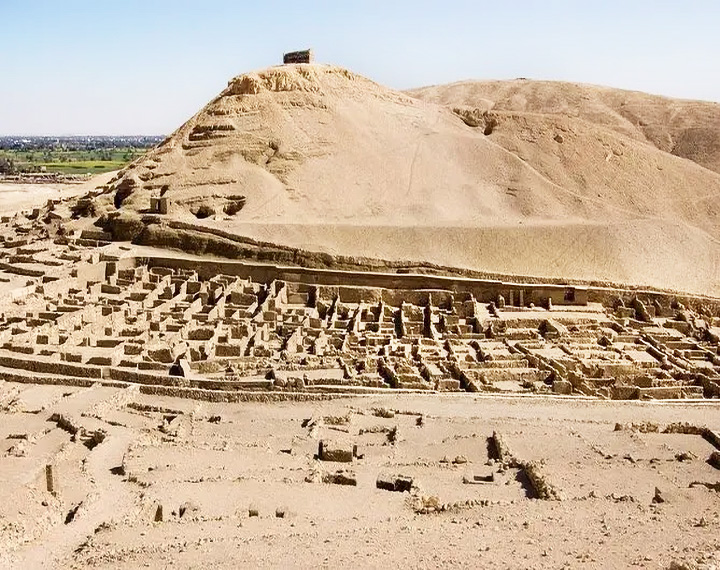
Within the village precincts, guests can discover the remnants of over sixty houses, a local court of law, and the charming Ptolemaic Temple of Hathor. This sanctuary, later used as a Christian monastery, provides a serene space for reflection and highlights the layers of faith that have occupied this valley through the centuries. The discovery of thousands of ostraca—inscribed limestone flakes and pottery shards—has allowed historians to reconstruct the village’s vibrant social history, including records of legal disputes, personal letters, and even the world’s first recorded labor strikes. It is a place where history feels living and conversational, offering a story that is more human than mythological.
The surrounding desert landscape, framed by the rugged limestone cliffs of the Theban Hills, provides a dramatic and peaceful setting for exploration away from the busier tourist hubs. Standing at the village gates, the contrast between the sun-bleached stones and the golden desert dunes creates a visual harmony that is both meditative and inspiring. The site acts as a bridge between the monumental ambition of the pharaohs and the humble resilience of the artisans, fostering a deep appreciation for the social organization that sustained the New Kingdom. Every winding path and narrow street tells a tale of a community that found beauty and purpose in the heart of the arid desert.
A visit to the Valley of the Artisans is a restorative and essential chapter in any Luxor itinerary, highlighting the enduring legacy of the unsung heroes of Pharaonic history. The dedication of the modern archaeological teams ensures that the village remains an educational sanctuary where the voices of the past are honored and heard. It stands as a proud sentinel of the West Bank, inviting everyone to witness the artistic sophistication and cultural richness of the people who built for the gods. Stepping into Deir el-Medina is an invitation to celebrate the creative spirit and the timeless bonds of family that remain constant throughout the ages.



 Own or work here?