

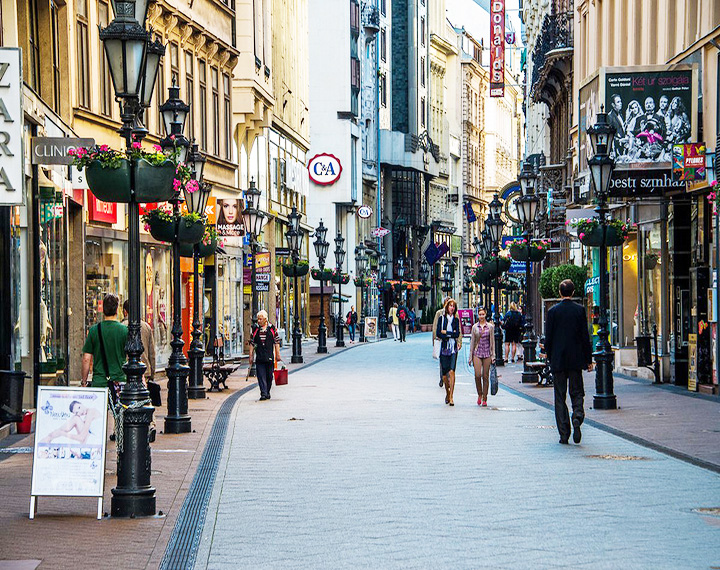
Specifically its northern half, remains one of the most exclusive commercial addresses in the Fifth District, radiating an atmosphere of historic mercantile success. It is an inviting and bustling promenade where the city’s grand 19th-century architecture houses high-end retailers and elegant traditional cafes. Serves as a pedestrian-only thoroughfare, allowing visitors to admire the detailed masonry of the “Golden Age” buildings at a leisurely pace.
Home to the famous Gerbeaud House nearby, which anchors the northern end of the street with its legendary imperial pastry traditions.
Vaci Street, or Váci utca, stands as the most famous pedestrian thoroughfare in Budapest, stretching between Vörösmarty Square and the Great Market Hall. This historic artery is essentially split into two distinct sections, each offering a different atmosphere to those who wander its length. The northern half is a vibrant, high-energy hub filled with international flagship stores, luxury boutiques, and grand architecture that dates back to the 18th and 19th centuries. As you walk along the polished stone pavement, the sheer elegance of the facades serves as a reminder of the city’s Golden Age, making it a primary destination for both dedicated shoppers and architecture enthusiasts.
The southern portion of the street offers a slightly more relaxed and traditional experience, where the pace slows down and the focus shifts toward local charm. Here, the grand commercial storefronts give way to quaint souvenir shops, traditional Hungarian craft stores, and hidden courtyards that whisper stories of old Budapest. It is a fantastic stretch for finding authentic handmade goods or simply enjoying the sight of iron-wrought balconies and decorative doorways. This part of the street feels more intimate, inviting visitors to look beyond the modern displays and appreciate the historical texture of the Inner City.
Beyond the retail experience, Vaci Street is a culinary landmark lined with a diverse array of cafes, bistros, and restaurants featuring outdoor terraces. While it is undeniably one of the most tourist-centric locations in the capital, its energy is infectious, especially during the summer months when the street is alive with street performers and the chatter of people from all over the world. Whether you are stopping for a classic chimney cake or admiring the intricate tile work of the nearby buildings, a stroll down Vaci Street remains an essential Budapest ritual that perfectly captures the city’s blend of commercial vitality and old-world sophistication.



 Own or work here?