

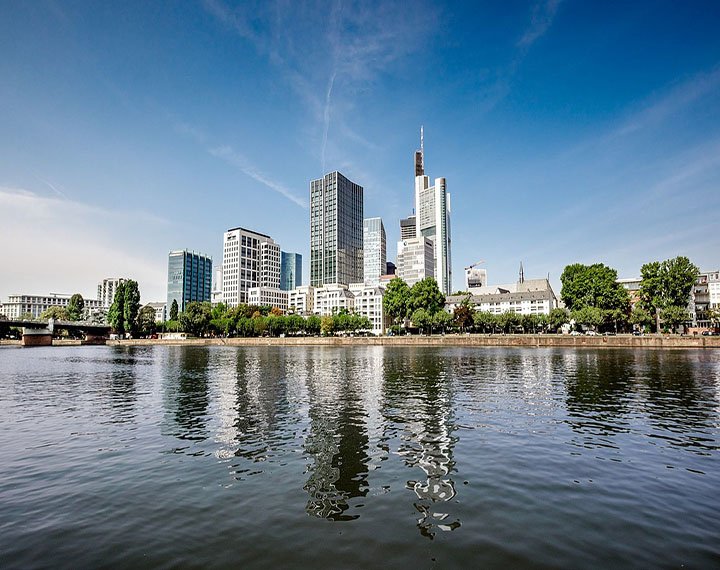
The history of the Untermainbrücke, or Lower Main Bridge, dates back to the early 19th century. The first bridge at this location was constructed between 1811 and 1813, replacing an older wooden bridge. It played a crucial role in connecting the northern and southern parts of Frankfurt, facilitating trade and transportation across the River Main.
Over the years, the bridge underwent several renovations and reconstructions to accommodate increasing traffic and modernize its structure. One significant renovation occurred in the late 19th century when the original stone arches were replaced with iron trusses, enhancing the bridge’s stability and load-bearing capacity.
During World War II, the Untermainbrücke suffered considerable damage from bombings, leading to extensive repairs and reconstruction efforts in the post-war period. In the following decades, further modifications were made to modernize the bridge and adapt it to the evolving transportation needs of Frankfurt.
Today, the Untermainbrücke stands as a symbol of Frankfurt’s resilience and enduring connectivity. It continues to serve as a vital transportation artery, connecting the city’s bustling districts and facilitating the flow of traffic and pedestrians across the River Main.



 Own or work here?