

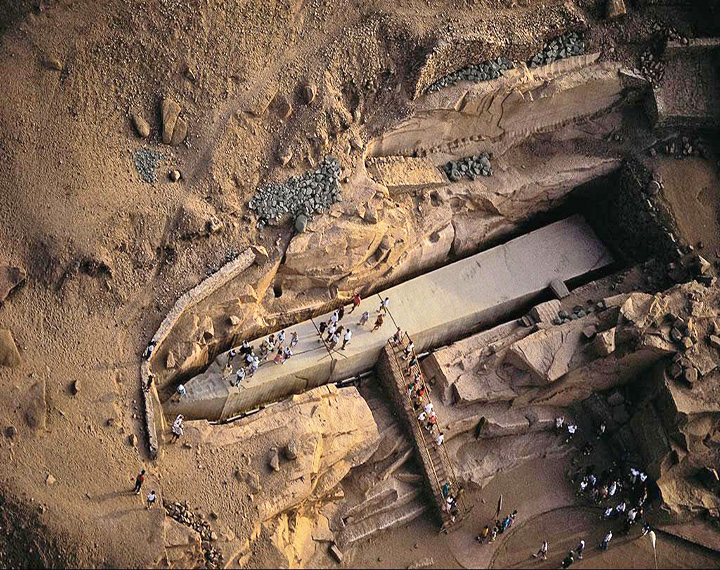
A monumental glimpse into the ambitious engineering of the ancient world. The unfinished obelisk is the largest known ancient obelisk and is located in the northern region of the stone quarries of ancient Egypt in Aswan, Egypt. Located in the ancient granite quarries, this site offers a fascinating look at the sheer scale of Pharaonic ambition and the techniques used to shape the landscape. The Unfinished Obelisk remains attached to the bedrock, abandoned after a crack appeared in the stone during its creation. Had it been finished, it would have been the largest obelisk ever carved, standing as a testament to the incredible skill of ancient stonemasons.
Walking along the paths of the quarry allows you to see the marks left by tools thousands of years ago, providing a tangible link to the workers of the past. The site is an open-air museum of engineering, where you can visualize the process of carving, polishing, and transporting these massive monoliths. It is a humbling experience to stand beside such a giant piece of stone and imagine the effort required to move it.
The quarry itself is part of the “Fatimid Cemetery” area and showcases the high-quality rose granite that was prized across Egypt for temples and statues. The geological beauty of the site is striking, with the rough-hewn stone glowing in the sunlight. It provides a unique “behind-the-scenes” look at how the grand monuments seen in Luxor and Cairo actually began their journey.
Informative signage helps explain the archaeological significance of the find and the theories on how such a massive weight would have been handled. It is a relatively quick stop but one that provides immense value for those interested in the practicalities of ancient construction. The sheer size of the obelisk is truly breathtaking when viewed from the rim of the quarry.
Visiting in the early morning is recommended to avoid the midday heat, as the stone retains warmth and there is little shade. The site offers a different kind of beauty compared to the finished temples, emphasizing the raw power of the materials and the human ingenuity used to master them. It is a quiet, powerful reminder of the grand visions that shaped the history of the Nile.



 Own or work here?