

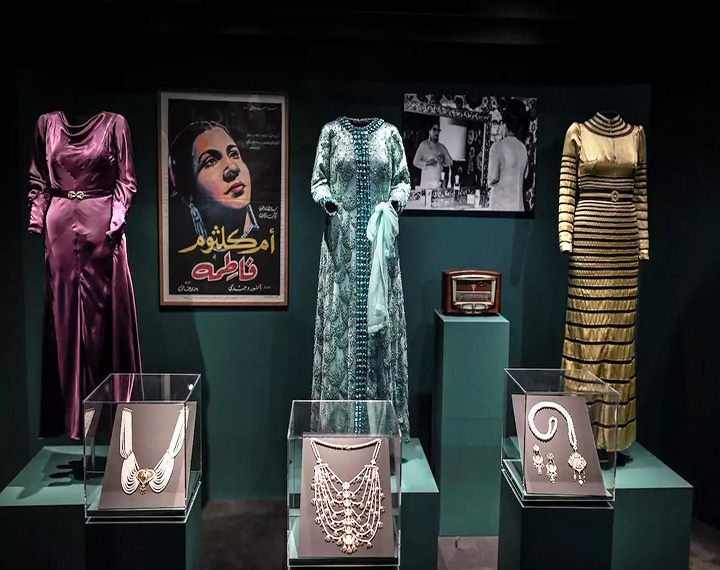
An intimate biographical monument dedicated to the woman known as the Star of the East, whose voice unified the Arab world for decades. Nestled within the grounds of the historic Manasterly Palace on the southern tip of Roda Island, the museum offers a serene escape overlooking the Nile. Established in 2001, it serves as a cultural beacon that preserves the memory of Fatma Ibrahim El-Sayed, immortalizing her impact on music, politics, and Egyptian national identity. The setting itself is a masterpiece of architecture, where the elegant palace gardens and the nearby Nilometer create an atmosphere of regal nostalgia.
Inside, the collection is meticulously curated to showcase the authentic personal belongings that defined her public persona and private life. Visitors can marvel at her iconic diamond-encrusted sunglasses, her famous silk scarves, and the glittery gowns she wore during her legendary monthly concerts. The Main Hall displays her numerous medals and honors, including the prestigious Order of the Nile, alongside handwritten musical notes and letters from world leaders. Each artifact tells a story of a village girl who rose to become a global icon, maintaining a level of respect and influence that transcended borders and generations.
The museum’s immersive experience is enhanced by a state-of-the-art audio-visual library and cinema hall. A fifteen-minute documentary provides a moving look at her career, from her early days performing as a Bedouin boy to her massive funeral, which was attended by millions of mourning fans. In the Panorama Hall, a visual timeline explores various stages of her life through rare photographs and press clippings dating back to the 1920s. The melodic backdrop of her most famous songs, such as Enta Omri, fills the space, allowing guests to truly feel the presence of the voice that once captivated an entire nation.
Beyond the exhibits, the museum functions as a vibrant center for the arts, hosting concerts on the first Thursday of every month in her honor. These performances feature contemporary artists from across the Arab world, ensuring that her musical heritage continues to inspire new generations of singers and musicians. The site is also a valuable resource for researchers and historians, housing an extensive archive of her recordings and documents. Its peaceful garden setting provides the perfect place for reflection after exploring the rich cultural history contained within the palace walls, making it a must-visit for any music lover.
A visit to this landmark is a deeply humanizing journey into the soul of 20th-century Egypt. It stands not just as a museum of objects, but as a testament to the enduring power of art to foster unity and pride. Whether you are a lifelong fan or a curious traveler, the experience offers a profound understanding of why Umm Kulthum remains an irreplaceable symbol of Arab culture. The blend of historic architecture, intimate memorabilia, and the haunting beauty of her music ensures that the legacy of the Lady of Egyptian Song continues to shine brightly along the banks of the Nile.



 Own or work here?