

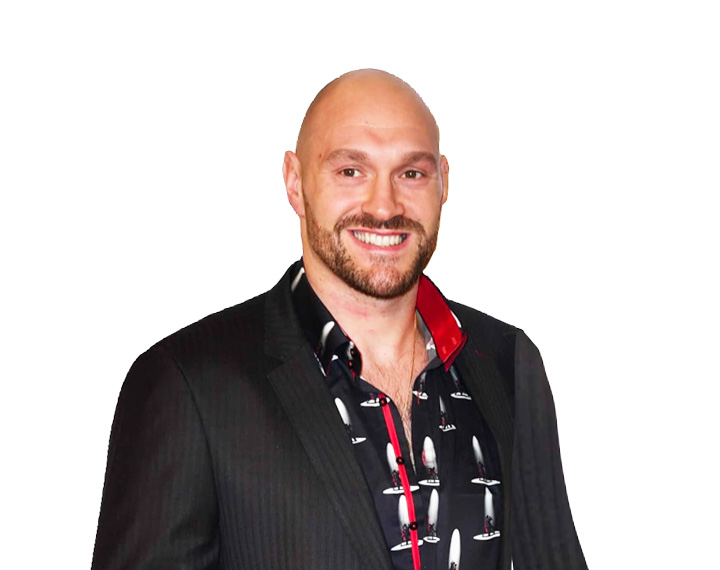
Tyson Fury is a living testament to the power of resilience, belief, and unbreakable spirit. Born into a proud fighting family and named after Mike Tyson, his journey was never destined to be easy. From the very beginning, Fury’s life was marked by struggle, survival, and expectation. Weighing just one pound at birth, doctors doubted he would live, yet even then he defied the odds. That same defiance would later define his rise to the very summit of world boxing.
Standing nearly seven feet tall, Fury redefined what a heavyweight champion could be. Agile, intelligent, fearless, and unorthodox, he shocked the world in 2015 by dethroning the long-reigning champion Wladimir Klitschko in Germany, ending an era and announcing himself as a once-in-a-generation fighter. He became unified heavyweight world champion, proving that belief and preparation can overcome any perceived limitation. At his peak, he stood as the best heavyweight on the planet.
Yet Tyson Fury’s greatest battles were not fought under bright lights. After reaching the pinnacle, he fell into one of the darkest chapters any champion has faced. Struggling with severe depression, addiction, and mental health challenges, he gained weight, lost direction, and openly contemplated ending his life. For years he disappeared from the ring, stripped of titles but fighting a far more dangerous opponent within himself. What followed was not just a comeback, but one of the most inspiring recoveries in modern sport.
Through honesty, courage, faith, and relentless self-discipline, Fury rebuilt himself physically, mentally, and emotionally. His return to boxing was a message of hope to millions around the world who silently battle mental health struggles. When he rose from the canvas to draw with Deontay Wilder in 2018, it symbolised more than survival in a fight, it represented the triumph of the human spirit. He would go on to dominate Wilder in their historic trilogy, reclaiming the WBC heavyweight title and cementing his legacy as the lineal heavyweight champion of the world.
Beyond belts and victories, Tyson Fury’s legacy is defined by authenticity. He speaks openly about mental health, faith, family, and the importance of asking for help. He reminds the world that strength is not the absence of pain, but the courage to face it head-on. A showman, a poet, a warrior, and a survivor, Fury inspires not just through his fists, but through his voice and his truth.
Tyson Fury’s story is proof that no fall is final, no darkness permanent, and no dream unreachable. He stands as a symbol of hope, redemption, and resilience, showing that with belief, honesty, and relentless determination, it is always possible to rise again and reclaim your destiny.
Tyson Fury’s early success came in the amateur ranks, where he represented England and Ireland (via ancestry). In 2006, he won gold at the AIBA Youth World Championships in Agadir, Morocco, marking his first major international medal and announcing his potential on the world stage. That same year, he also won gold at the EU Junior Championships, further establishing himself as a standout young heavyweight. In 2008, Fury captured the ABA (Amateur Boxing Association) Super-Heavyweight title in England, one of the most prestigious amateur honours in British boxing, before turning professional later that year.
After turning professional in 2008, Fury’s achievements transitioned from medals to championship belts, which represent the highest honours in professional boxing. In 2011, he won the English Heavyweight title, followed in 2012 by the British and Commonwealth Heavyweight titles, confirming him as Britain’s leading heavyweight. In 2014, he added the European Heavyweight Championship (EBU), putting him firmly on the path to world contention.
The defining breakthrough came in 2015, when Tyson Fury won the WBA (Super), IBF, WBO, IBO, and The Ring Heavyweight titles by defeating Wladimir Klitschko in Düsseldorf, Germany. This victory crowned him Unified Heavyweight World Champion and Lineal Champion, one of the greatest achievements in boxing.
After his celebrated comeback, Fury reached another historic milestone in 2020, when he defeated Deontay Wilder to win the WBC Heavyweight World Championship, reclaiming his place at the very top of the sport. He successfully defended this title multiple times, further solidifying his legacy as one of the dominant heavyweights of his era.
In summary, Tyson Fury’s career medals and honours progress from youth world gold medals, to elite amateur championships, to national, continental, and ultimately unified world heavyweight titles, reflecting one of the most extraordinary journeys in boxing history.



 Own or work here?