

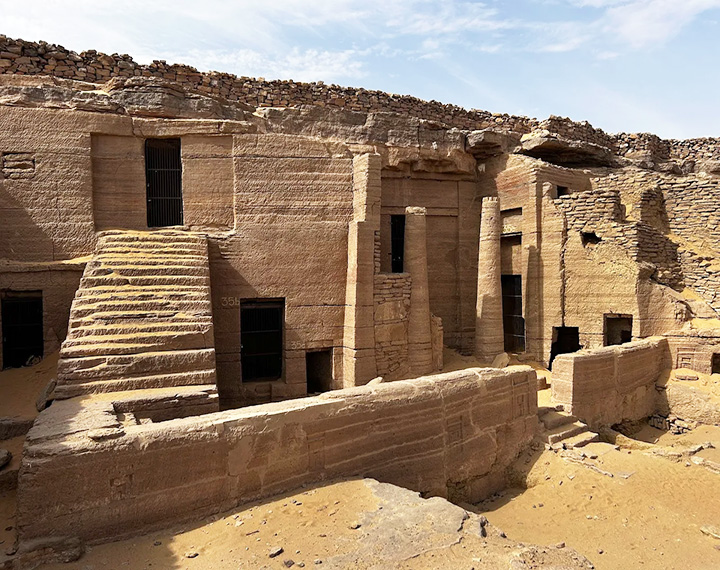
The Tombs of the Nobles are a series of rock-cut burial sites carved into the high cliffs of the West Bank, offering a direct window into the lives of Aswan’s ancient rulers. Dating primarily from the Old and Middle Kingdoms, these tombs belonged to powerful governors, priests, and military commanders who once controlled the vital trade routes between Egypt and Nubia. Climbing the winding stairs up the hillside feels like ascending through the layers of time as you leave the modern riverbank below.
Inside the chambers, visitors are greeted by remarkably preserved inscriptions and reliefs that depict daily life, military expeditions, and the profound spiritual beliefs of the Egyptian elite. Unlike the royal tombs of Luxor, these sites offer a more intimate look at the provincial leaders who managed the day-to-day affairs of the empire. The layout of the tombs, featuring pillared halls and deep burial shafts, showcases the incredible engineering skill required to carve directly into the sandstone cliffs.
The location of the tombs was strategically chosen to overlook the Nile, providing the deceased with a symbolic eternal view of the river that sustained their people. Standing on the terraces outside the tomb entrances, you are rewarded with a panoramic vista of Elephantine Island and the city of Aswan that is simply unparalleled. It is a place of quiet majesty, where the golden desert sands meet the blue water and lush greenery in a perfect, timeless harmony.
Exploring these sites is an invigorating experience for those who enjoy a bit of light hiking combined with deep archaeological discovery. The walk up the cliffside is manageable and offers several vantage points perfect for photography or reflection on the scale of ancient history. It is a site that honors the administrative and artistic brilliance of the individuals who helped build the foundations of the Pharaonic state.
As the late afternoon sun casts long shadows across the valley, the cliffs of the nobles take on a warm, golden glow that enhances the spiritual atmosphere of the necropolis. It remains a cherished and vital part of Aswan’s heritage, inviting travelers to explore the human stories behind the grand history of the Nile. A visit to these tombs is an essential journey for anyone wishing to understand the real people who governed the southern frontier.



 Own or work here?