

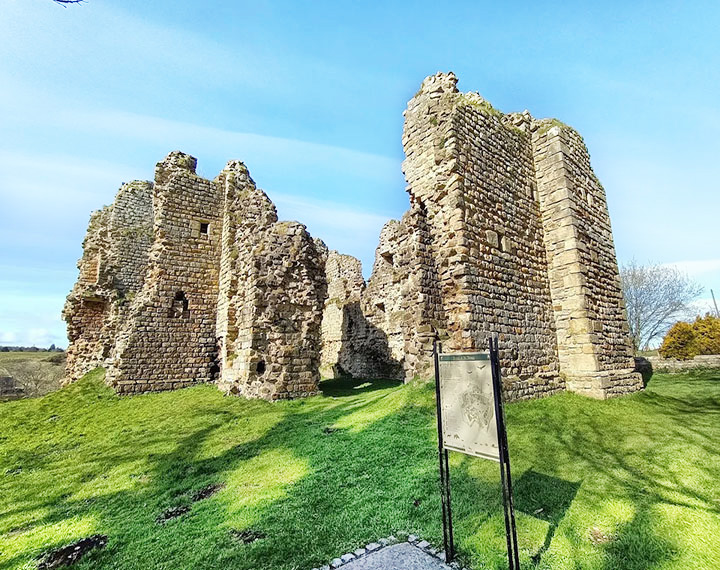
Life in Northumberland between 1300 and 1600 was dangerous and unstable. Cross-border raids between England and Scotland were common. Peace and stability was replaced by violence and intimidation, robbery and ransom. As fear and uncertainty gripped the area, important families protected themselves against attack by building strong defensible homes, like the one at Thirlwall
Originally built in the 12th century, and later strengthened using stones from nearby Hadrian’s Wall, Thirlwall Castle began to fall into disrepair in the 17th century. The site is protected by Grade I listed building and Scheduled Ancient Monument status. In 1999, Northumberland National Park Authority acquired a 99-year lease on Thirlwall Castle and 10 hectares of adjacent woodland.
In the 1330s, John Thirlwall built a stronghold that provided protection for his family and descendants for the next 300 years. The site chosen was a sheltered, wooded bank of the Tipalt Burn surrounded by hill-top positions that could warn of impending raids.
All the materials that were needed lay close by – timber, water and neatly dressed sandstone blocks which had been quarried by the Romans to build Hadrian’s Wall.



 Own or work here?