
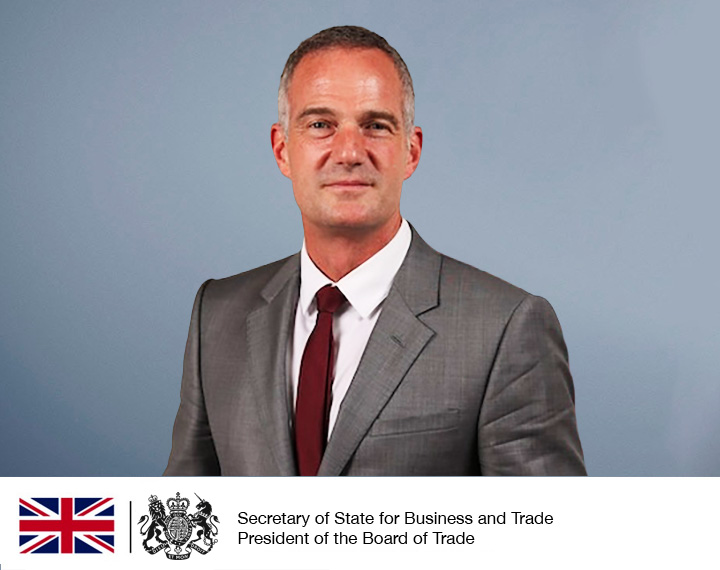
An accomplished professional journey beautifully shapes the path of contemporary economic governance. Born and raised in West Sussex, this dedicated public servant demonstrated immense resilience early in life by overcoming severe dyslexia to achieve high academic and professional goals. After returning to higher education as a mature student, he successfully earned an undergraduate degree and subsequently completed a doctorate in community economic development at the University of Sussex. His early career included meaningful international aid work in Eastern Europe and the Balkans, followed by an appointment as a policy official focusing on social exclusion within the Cabinet Office, experiences that established his enduring commitment to sustainable regional development and economic inclusion.
His parliamentary career began in 2015 when he was elected as the Member of Parliament for Hove and Portslade, a seat he has continuously retained with consistently expanding majorities. Throughout his tenure on both the backbenches and frontbench, he earned a reputation across Westminster for clear, collaborative, and evidence-based leadership. Prior to his current appointment, he managed complex legislative portfolios as a shadow minister and later served in the Cabinet as the Secretary of State for Science, Innovation and Technology, where he successfully spearheaded modern policy frameworks regarding digital safety and advanced technological adoption.
As the Secretary of State for Business and Trade and President of the Board of Trade, he now manages a vital national portfolio dedicated to supporting industrial competitiveness, expanding international commerce, and driving domestic wealth creation. His strategic focus centers on establishing the government as an active partner to the private sector, encouraging robust long-term investments, and fostering a tech-fueled economic growth model. Under his direction, the department prioritizes the integration of innovative technologies like artificial intelligence into traditional industries, ensuring that commercial growth aligns harmoniously with modern regulatory standards.
Beyond his national responsibilities within Whitehall, his professional dedication remains firmly anchored to the development of his local constituency. He continues to champion regional infrastructure improvements, local employment initiatives, and structured youth apprenticeship schemes designed to build tangible economic security from the ground up. His career stands as a motivating testament to the impact of strategic clarity and perseverance, demonstrating how a principled focus on community empowerment and collaborative innovation can effectively elevate the modern corporate and international trade landscape.
The Secretary of State carries the full weight of leadership for the Department for Business and Trade, assuming overall responsibility for both its day-to-day delivery and its long-term strategic direction. This encompassing role places the Secretary of State at the very centre of the department’s operations, ensuring that every initiative, programme, and policy decision aligns with the broader ambitions of government and the needs of British businesses at home and abroad.
Central to the role is a commitment to meaningful engagement across government, bringing together ministers, departments, and business communities in a unified approach to economic growth and opportunity. The Secretary of State also holds responsibility for public appointments within the department, ensuring that the right leadership and expertise are in place to deliver on the ambitions set at the highest level of government.
On the world stage, the Secretary of State is the principal figure in Free Trade Agreement negotiations, setting the mandates that guide those discussions and taking the key decisions that shape Britain’s trading future. This international reach extends to the most significant forums in global economic governance — the WTO, the G7, and the G20 — where the Secretary of State represents the United Kingdom at ministerial level, supported by an extensive overseas network that projects British trade and business interests to every corner of the world.President of the Board of Trade
An ancient office of commerce, shaping Britain’s economic destiny with enduring authority. Few titles in British public life carry the quiet weight of history that belongs to the President of the Board of Trade. Rooted in the seventeenth century, the office was established to oversee the commercial interests of the Crown and the nation, advising on matters of trade, navigation, and economic policy at a time when Britain was emerging as a global mercantile power. Though the Board of Trade itself was formally constituted in 1696, the role evolved steadily over the following centuries, growing in stature and responsibility as Britain’s industrial and imperial ambitions expanded across the world.
At its heart, the President of the Board of Trade functions as the minister responsible for trade and industry within the British government. In practice, the role has historically been held concurrently with the position of Secretary of State for Business and Trade, meaning the officeholder sits at the very centre of the government’s economic agenda. They are responsible for shaping trade policy, negotiating commercial agreements, supporting British businesses at home and abroad, and ensuring that the United Kingdom remains competitive within the global economy. It is a position of genuine executive power, combining the ceremonial dignity of one of the oldest offices of state with the practical demands of modern economic governance.
What makes the role particularly compelling is the way it bridges centuries of constitutional tradition with the pressures of contemporary commerce. From overseeing the great industrial reforms of the Victorian era to navigating post-Brexit trade relationships in the twenty-first century, the President of the Board of Trade has consistently stood at the intersection of history and policy. Today the title endures as both a living link to Britain’s mercantile past and a forward-facing instrument of national economic ambition, held by a minister charged with opening markets, championing exporters, and securing Britain’s place in an ever-changing world.



 Own or work here?