

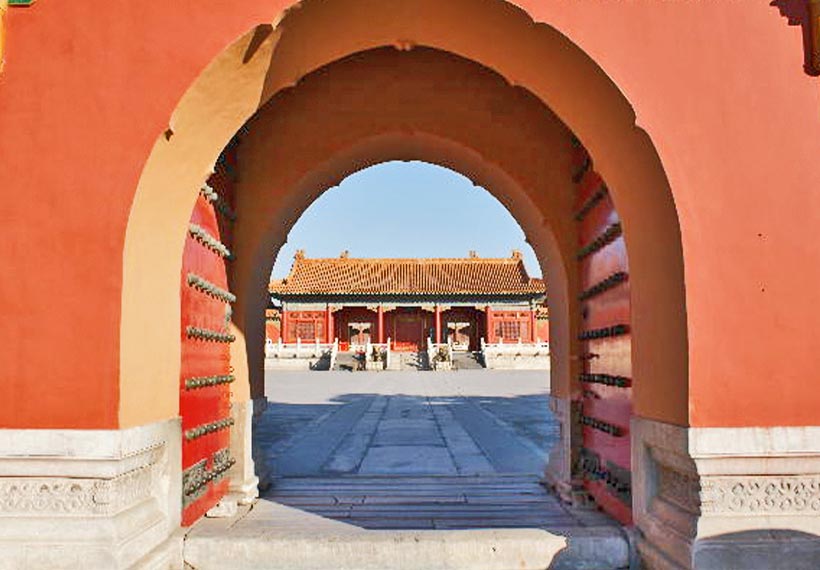
The Gate of Divine Prowess, known in Chinese as Shénwǔ Mén (神武门), stands proudly at the northern end of the Forbidden City in Beijing, serving as both a symbolic and historical portal into China’s imperial past. Constructed during the early Ming Dynasty in the 15th century, the gate originally functioned as a quiet exit reserved for emperors on private excursions or ritual journeys to the imperial gardens beyond the palace walls. Unlike the grand southern Meridian Gate, which welcomed visiting dignitaries and ceremonial processions, the Gate of Divine Prowess offered a more contemplative, secluded passage — one that connected the ruler with the natural and spiritual realms that lay beyond the palace’s rigid order.
Culturally, the gate embodies the deeply rooted Confucian ideals of balance, restraint, and reverence that guided imperial life. The name “Divine Prowess” reflects the emperor’s dual nature as both warrior and sage — a leader whose strength was tempered by virtue. During the Qing Dynasty, the gate gained further importance as a discreet entrance for high-ranking officials and members of the imperial household, linking the Forbidden City to the tranquil landscapes of Jingshan Park, a man-made hill created from the earth excavated to form the palace’s defensive moat. The park’s elevated summit, directly aligned with the gate, offers a commanding view of the golden rooftops below — a vista that once symbolized the emperor’s watchful guardianship over the realm.
For modern visitors, the Gate of Divine Prowess serves as a serene and historically rich counterpoint to the grandeur of the Forbidden City’s main entrances. Passing through its towering red doors and beneath its sweeping eaves, one can almost feel the weight of centuries — the footsteps of emperors, the whispers of attendants, the pulse of dynastic ritual. Today, it remains one of the most atmospheric approaches to the palace complex, blending imperial authority with architectural grace. As sunlight filters across its vermilion walls and the scent of pine drifts from Jingshan’s gardens, the Gate of Divine Prowess invites reflection on the enduring harmony between power, spirituality, and the beauty of ancient Chinese design.
Forbidden City, also known as the Palace Museum, and Gu Gong in Chinese, lies at the city center of Beijing, and once served as the imperial palace for 24 emperors during the Ming and Qing Dynasties. It was first built throughout 14 years during the reign of Emperor Chengzu in the Ming Dynasty.
Ancient Chinese Astronomers believed that the Purple Star was in the center of heaven and the Heavenly Emperor lived in the Purple Palace. The Palace for the emperor on earth was so called the Purple City. It was forbidden to enter without special permission of the emperor. Hence its name ‘The Purple Forbidden City’, usually ‘The Forbidden City’.



 Own or work here?