

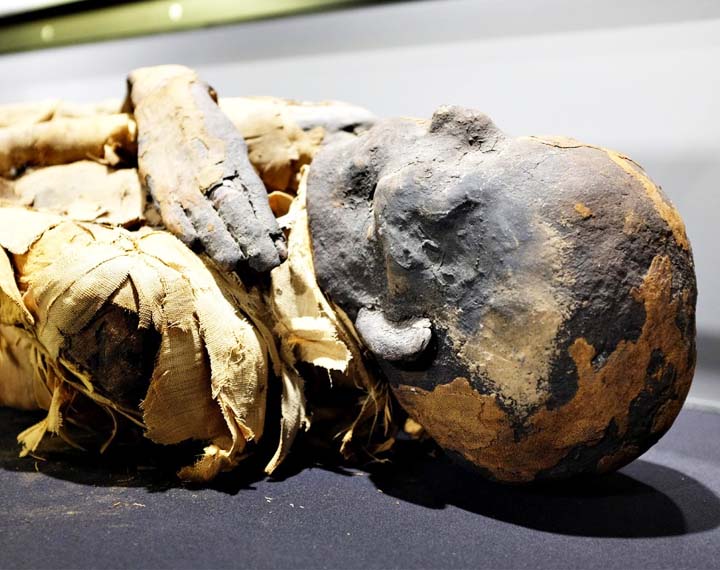
A journey through the ancient world. The Garstang Museum is the University of Liverpool’s museum of archaeology, founded in 1904. Our collections include artefacts excavated from Egypt, Sudan and the Near East with highlights including our exceptional Nubian collection and the Egyptian mummy at the heart of our Egyptian Afterlife gallery.
In 1904, the Liverpool Institute of Archaeology was founded by John Garstang, affiliated with the University of Liverpool. Largely funded by private benefactors, the Institute contained both a library and a museum, intended to support the work of the staff and the teaching of its students. These are core roles that the Garstang Museum of Archaeology continues fulfil today.
Originally housed on the ground floor of 40-42 Bedford Street, this first Museum comprised four rooms. Objects were grouped chronologically, and the collections were chiefly made up from Egyptian antiquities which had been recently excavated by the Institute’s staff.
In 1941, Liverpool suffered from particularly heavy bombing, and the Institute of Archaeology Museum was hit during one of the raids. This led to the dispersal of parts of the collection to safer locations in the city, under the management of Liverpool’s public museums. After the war, some of the material was returned, while other parts of the collection are now on permanent loan to the Liverpool World Museum.



 Own or work here?