

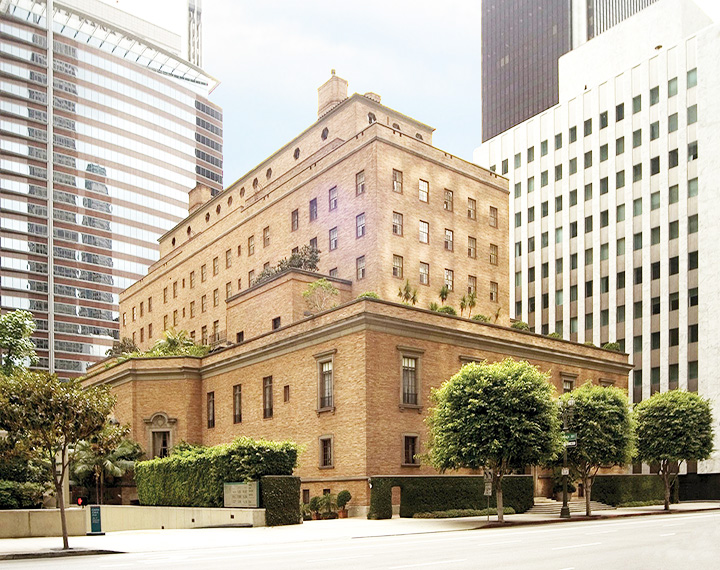
The California Club is a bastion of timeless tradition and the most discreet center of power in Southern California. Established in 1888, it is the second-oldest private social club in the region, serving as the ultimate retreat for the individuals who have architected the legal, financial, and political landscape of Los Angeles. Its biography is an inspiring story of corporate and social resilience, maintaining a standard of unyielding excellence and strict etiquette that has made it the city’s most respected enclave for over a century. It motivates us to appreciate the value of privacy and the enduring power of a sterling reputation.
Culturally, the club represents the “quiet giant” of Los Angeles society. It is a place where the modern world’s noise is replaced by the soft hum of meaningful conversation and the clink of fine crystal. The club’s culture is one of profound respect for history, having transitioned from a gentlemen-only institution to a modern, inclusive hub for the city’s top professional talent. It remains a place where the most significant deals are made not with a shout, but with a handshake in a room filled with the scent of leather-bound books and aged mahogany.
Historically, the current clubhouse on Flower Street is a Beaux-Arts masterpiece completed in 1930 and designed by the renowned architect Robert D. Farquhar. Listed on the National Register of Historic Places, the building hides secrets within its walls, including a hidden sliding door discovered in 2015 that was allegedly used to smuggle alcohol during Prohibition. This rich history reminds us that even the most formal institutions have a vibrant, human soul. The club has been the site of pivotal meetings that have directed the growth of the Western United States, making it a true monument to the American Century.
For the student of civic history, the California Club is an uplifting example of how an institution can maintain its soul while evolving with the times. It proves that tradition is not a burden, but a foundation upon which a powerful and influential community can be built. The club continues to stand as a symbol of architectural and social permanence in a city known for its constant change. It is a reminder that the most powerful legacies are often those that are nurtured behind closed doors, away from the fleeting gaze of the public eye.
The California Club & 538 Wine
The club operates as a premier professional and social network, offering members access to private dining, athletic facilities, and a legendary wine program. A unique aspect of its business is the “538 Wine and Spirit” shop, which is open to the public and serves as a gateway to the club’s world-class cellar. The business is built on a commitment to “Impeccable Service,” ensuring that every member experience—from a private boardroom meeting to a festive gala—is executed with the highest degree of sophistication and care.
The California Club Foundation
The club’s philanthropic efforts are largely funneled through the California Club Foundation, which focuses on the preservation of the historic clubhouse and supporting local civic and educational initiatives. The foundation plays a key role in the architectural stewardship of the Downtown area, ensuring that one of the city’s most significant buildings is maintained to its 1930 glory. It also provides scholarships and support for the families of the club’s long-tenured staff, reflecting a deep commitment to the community that makes the institution possible.



 Own or work here?