

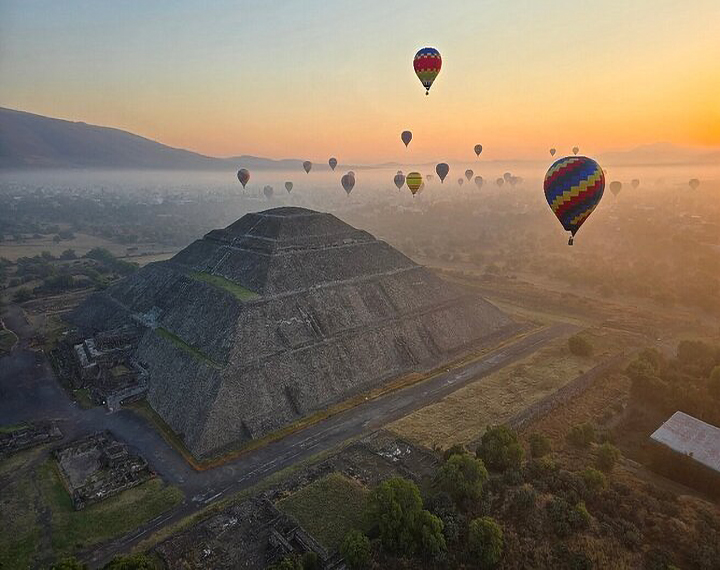
Located northeast of modern Mexico City, Teotihuacan was once one of the largest cities in the ancient world, thriving between the 1st and 7th centuries CE. Known as “the place where the gods were created,” it was a major cultural, religious, and economic center in Mesoamerica. Its vast urban planning, ceremonial complexes, and residential compounds reflect the sophistication and ambition of its builders, offering a remarkable glimpse into a civilization that influenced generations to come.
The city’s layout centers on the Avenue of the Dead, flanked by iconic structures such as the Pyramid of the Sun, the Pyramid of the Moon, and the Temple of the Feathered Serpent. These monumental constructions, along with intricate murals and artifacts, reveal a society deeply connected to cosmology, ritual, and artistic expression. Visitors can experience the scale, symmetry, and spiritual resonance of a city designed to embody both human and divine order.
Teotihuacan’s legacy endures as a symbol of Mesoamerican ingenuity and cultural achievement. Designated a UNESCO World Heritage Site, the city continues to inspire archaeologists, historians, and travelers alike. Every visit offers an opportunity to connect with the mysteries, artistry, and enduring spirit of a civilization that shaped the course of Mexican history and identity.
* Website: [](https://www.inah.gob.mx/zonas/23-zona-arqueologica-de-teotihuacan)
* Phone: +52 55 4040 5300
* Social Media:
* Hours: Daily, 9:00 AM – 5:00 PM



 Own or work here?