

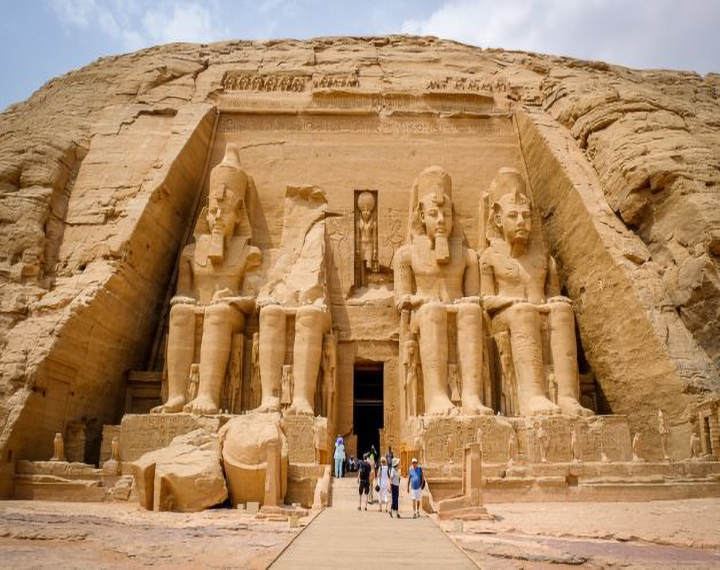
The Great Temple of Ramses II at Abu Simbel stands as one of the most awe-inspiring achievements of ancient engineering, carved directly into the sandstone cliffs of Nubia over 3,000 years ago. Dedicated to the deified King Ramses II and the gods Ra-Horakhty, Amun, and Ptah, the temple was designed to project the pharaoh’s absolute power to the southern reaches of his empire. Its colossal facade, dominated by four twenty-meter-high statues of the seated king, remains an iconic symbol of Egyptian majesty. This sacred site was famously rescued from the rising waters of the Nile in the 1960s through a monumental UNESCO-led international effort, during which the entire temple was meticulously cut into blocks and relocated to higher ground.
The culinary and ambiance review of the surrounding Abu Simbel village offers an inviting taste of traditional Nubian culture, where travelers can enjoy fresh Nile perch and hibiscus tea in vibrant, sun-drenched courtyards. The atmosphere at the temple site itself is one of profound silence and spiritual gravity, particularly during the early morning hours before the heat of the day. The interior sanctuary is a marvel of light and shadow, featuring eight massive pillars shaped like the god Osiris and intricate wall reliefs depicting Ramses II’s victory at the Battle of Kadesh. This sacred space is defined by its architectural precision and a timeless energy that continues to captivate the imagination of every visitor.
Culturally, the temple represents the pinnacle of the New Kingdom’s artistic and astronomical sophistication, most notably through the Solar Alignment phenomenon. Twice a year, on February 22nd and October 22nd, the first rays of the rising sun penetrate the deep darkness of the temple to illuminate the statues of the gods in the rear sanctuary, omitting only Ptah, the god of the underworld. This event draws thousands of global visitors and serves as a powerful reminder of the ancient Egyptians’ deep connection to the celestial cycles. The temple’s presence in Nubia also highlights the historic integration of regional cultures, standing as a beacon of shared heritage and the enduring legacy of the pharaonic state.
Touristically, Abu Simbel provides an informative and inspiring journey that is often the highlight of any Egyptian itinerary, reachable by a scenic flight or a desert drive from Aswan. The site includes the equally beautiful Small Temple dedicated to Queen Nefertari and the goddess Hathor, making it a rare example of a pharaoh honoring his consort on such a grand scale. Visitors are encouraged to stay for the nightly Sound and Light Show, which uses spectacular projections to narrate the temple’s history and its miraculous relocation. This immersive experience offers a beautiful and motivating look at how human ingenuity can preserve the greatest treasures of the past for the enjoyment of future generations.
As a symbol of international cooperation and cultural resilience, the Temple of Ramses II continues to motivate archeologists and travelers alike to explore the depths of human history. The meticulous preservation of the site by the Egyptian Ministry of Tourism and Antiquities ensures that every hieroglyph and statue remains a vibrant testament to the artistry of the Ramses era. Walking through the monumental entrance, one feels an uplifting sense of wonder at the scale of ancient ambition and the beauty of the natural landscape. Abu Simbel remains a cherished crown jewel of the Nile Valley, standing proudly as a testament to the eternal spirit of the pharaohs and the enduring power of faith and art.



 Own or work here?