
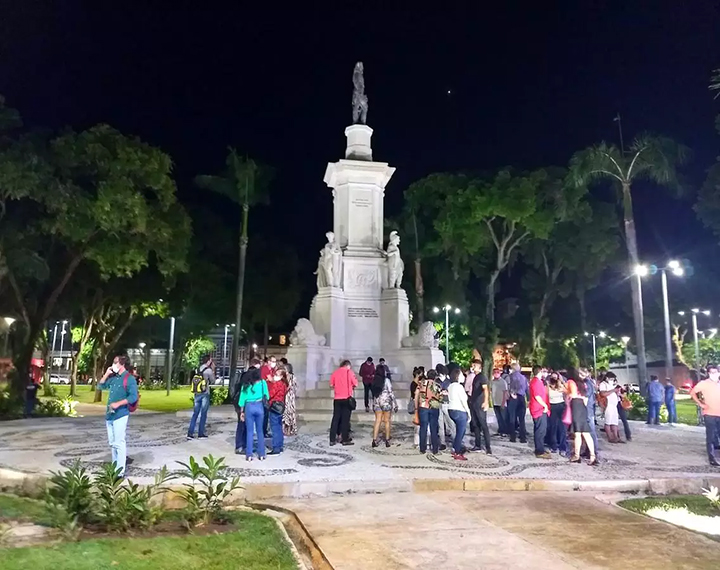
Square Pedro II, also known as Dom Pedro II Square, is a historic landmark nestled in the heart of Manaus, Brazil, serving as a vital part of the city’s cultural and architectural heritage. Established in the 19th century during the rubber boom era, it was originally named Paço do Pelourinho and functioned as a site for public punishments, reflecting the colonial influences of the time. Today, it stands between key streets like Avenida Sete de Setembro and Rua Bernardo Ramos, surrounded by notable structures such as the Museum of the City of Manaus and the historic Rio Branco Palace, making it a central gathering spot for locals and visitors alike.
The square’s rich history traces back even further to pre-colonial times, when it was an indigenous cemetery, and it has undergone numerous transformations over the decades. Renamed several times, including Praça da Redenção in 1924, it finally became Praça Dom Pedro II in 1925 to honor the Brazilian emperor. Archaeological excavations in 2002 uncovered significant artifacts, leading to a major revitalization in 2010 that preserved its gardens and historical elements, including a bandstand relocated from another square and decorative stones imported from Lisbon.
In the modern context, Square Pedro II remains an archaeological treasure and a symbol of Manaus’s evolution from a provincial outpost to a bustling urban center. It hosts community events, markets, and cultural activities, blending its past with contemporary life while offering insights into Amazonian history. Visitors can explore nearby attractions like the former Hotel Cassina, appreciating how this compact yet significant space continues to embody the resilience and diversity of the region.



 Own or work here?