
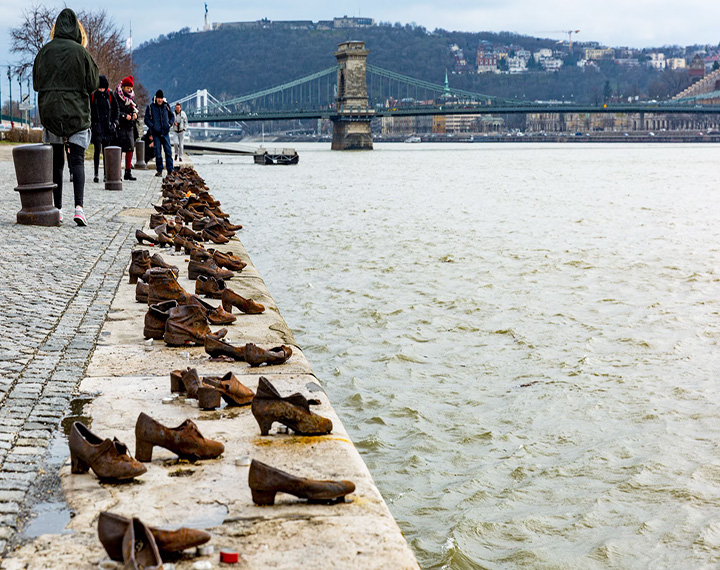
A poignant iron tribute standing in silent remembrance of the lives lost along the river’s edge. The Shoes on the Danube Bank is a deeply moving memorial located on the Pest side of the river, just a short stroll from the Hungarian Parliament Building. Conceived by film director Can Togay and brought to life by sculptor Gyula Pauer in 2005, the installation consists of sixty pairs of iron shoes fixed to the stone embankment. These sculptures represent the thousands of people, primarily Hungarian Jews, who were tragically executed by the fascist Arrow Cross militia during the winter of 1944–1945. The victims were ordered to remove their valuable footwear before being shot into the freezing waters, which served as a convenient and grim means of disposal during the final months of the war.
The variety of the shoes—ranging from robust work boots and elegant women’s heels to tiny, heartbreaking children’s pairs—emphasizes the indiscriminate nature of the tragedy. Each pair is modeled after authentic 1940s styles and is scattered in a way that suggests their owners have only just stepped out of them. This lifelike detail transforms the abstract concept of historical loss into a personal and immediate experience for every visitor. The rusted texture of the iron against the shifting blue of the Danube creates a stark visual contrast that highlights the permanence of the memorial against the constant flow of the river and the passage of time.
Culturally, the site has become one of the most significant places for reflection in Budapest, serving as a powerful counter-narrative to the grand imperial monuments found elsewhere in the city. It acts as a focal point for the annual March of the Living and other commemorative events that honor the resilience of the human spirit in the face of unspeakable hardship. The presence of small candles, pebbles, and flowers often left by visitors adds a layer of modern-day tribute to the historical site. It is a place that invites a shared silence among strangers, fostering a collective commitment to remembering the past to ensure a more compassionate future.
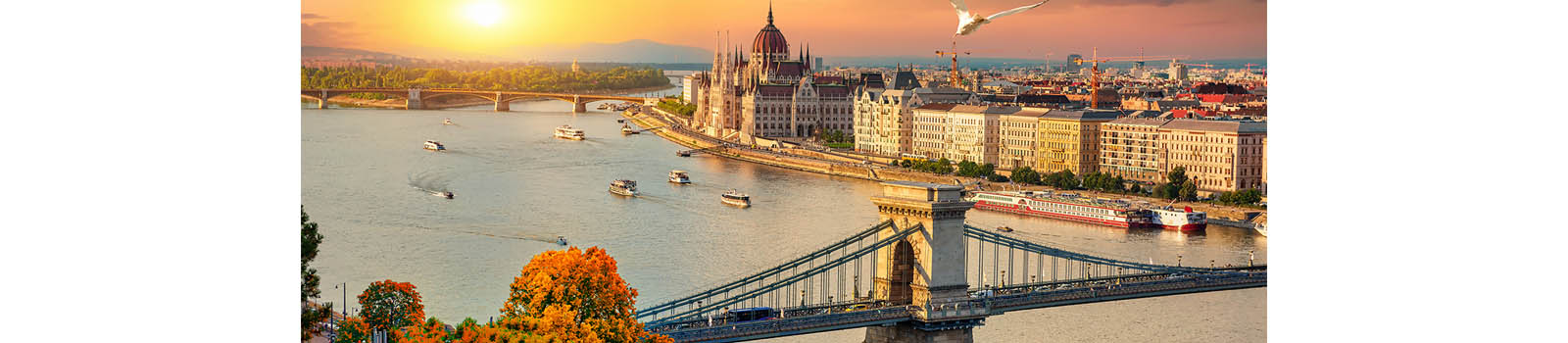
For tourists, visiting the memorial is an essential part of understanding the complex and often painful layers of Budapest’s twentieth-century history. Its location on the Danube Promenade offers a moment of profound contemplation amidst a day of sightseeing, providing a necessary bridge between the architectural beauty of the Parliament and the somber reality of the Holocaust in Hungary. The site is accessible at all hours, and an evening visit is particularly evocative when the shoes are subtly illuminated and the lights of Buda sparkle across the water. It is a destination that does not merely offer a view, but a meaningful encounter with the heart of the city’s narrative.
The atmosphere surrounding the shoes is one of heavy but uplifting beauty, where the natural serenity of the riverbank provides a peaceful setting for honoring the deceased. There are three cast-iron plaques nearby with text in Hungarian, English, and Hebrew, ensuring that the message of the memorial is understood by a global audience. Walking along this stretch of the promenade, one feels the weight of history balanced by the quiet dignity of the art. It stands as a beacon of truth and a masterpiece of public sculpture, ensuring that the souls of those lost to the river are never forgotten by the generations that follow.



 Own or work here?