
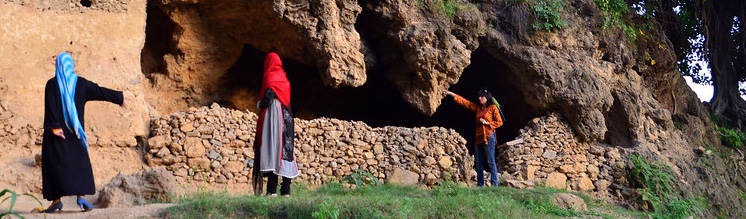
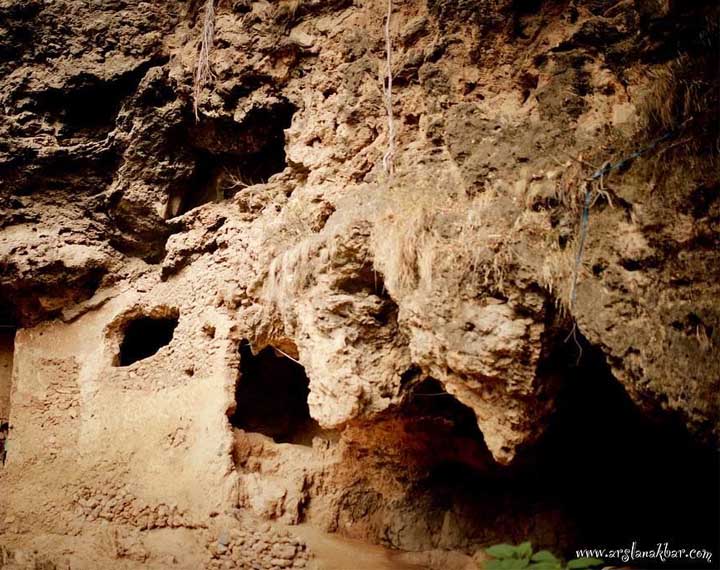
Shah ALLAH Ditta caves can be found in a centuries old village located in Sector D-12 (a few kilometers from Sector E-11) at the foothills of the Margalla Hills in Islamabad. These Caves in Shah ALLAH Ditta village are surrounded by the stunning lush green, saffron fields beyond the first layer of the Margalla Hills. A nice place to hangout with friends and families. Has few food outlets also which serve desi food starting from breakfast to late night BBQ. Caves although a small place but still has a unique attraction due to its calmness and natural look.
It is believed that the village is as old as 700 years. It was used as a route from Kabul to Taxila by Alexander and Sher Shah Suri. Shah Allah Ditta road, is said to be built on the exact path followed by the emperor Sher Shah Suri during his visit to the area. Mughal Rulers also passed through this area while traveling between Afghanistan and Lahore / Delhi. The remains of the Buddhist era dating back to the eighth century can be found in the area. The village is named after a Mughal period Dervish Shah Allah Ditta and bears significant importance of its natural beauty and historical background. There are old caves in the village which were in use by Shah ALLAH Ditta, the eremite and afterwards by a Hindu Sadhu. These caves are next to the shrine of Shah ALLAH Ditta. The caves in shah ALLAH Ditta temples are located around a naturally occurring streamlined with ancient Banyan trees adding magic to the glory of this ancient site.
Archeologists believe that this site was originally a Buddhist enclave whose history dates back to the first century of the Common Era, where Buddhist monks and other devotees came in pilgrimage.. Located around One kilometer North of Shah Allah Ditta village are a few prehistoric limestone caves that have been in human use since thousands of years. Reportedly, these caves have been under use of Buddhist and Hindu monks. Contain a few very old banyan trees, with numerous roots falling to the ground and a fresh water spring. Potohar plateau is known to be Buddhist country. Likewise, Taxila, across from this section of Margalla, owned a large Buddhist university in ancient times, called Takashashila. The Brahman philosopher and strategist Chanakiya (aka Kautilya 324 BC) lectured Chandar Gupt Mauriya at Taxila. This is a very picturesque cycling track that leads straight into the clearer side of Khanpur Dam, through valleys.
Marked on the ground close to the shah ALLAH ditta caves the location where Alexander arrived and was received by Raja Ambi, King of Taxila. The road next to the caves that leads to the main top of the mountain. The caves contain 2,400-year-old Buddhist murals, as well as Buddhist relics dated to the 8th century. According to archaeologists, the caves, and the natural platform-like formations surrounding them, were used for meditation by Buddhist monks, Hindu sadhus, and Muslim ascetics (during the Mughal period).



 Own or work here?