

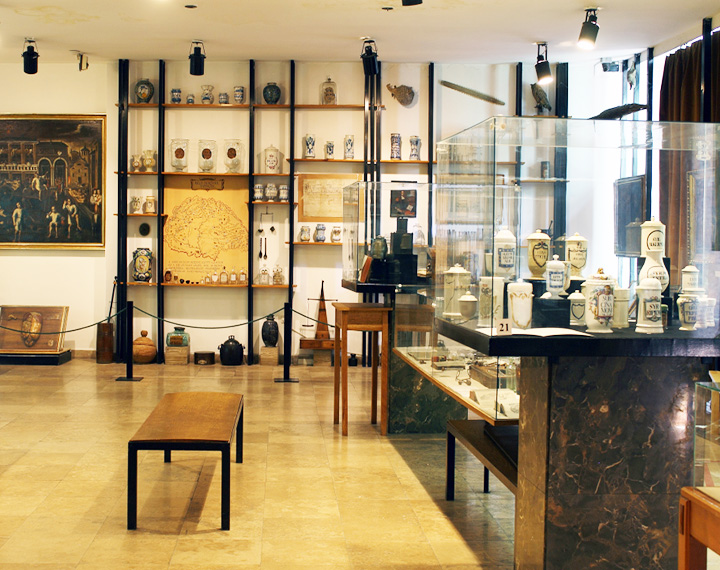
The Semmelweis Museum of Medical History is situated in the Tabán district of Buda, housed within the very birthplace of Ignác Semmelweis, the pioneering physician known as the “savior of mothers.” This late 18th-century Baroque building serves as a fitting monument to the man who discovered the cause of puerperal fever and revolutionized antiseptic procedures. The museum elegantly preserves the historical atmosphere of a middle-class residence while functioning as a comprehensive archive of the evolution of healing, from antiquity to the dawn of modern medicine.
The permanent exhibitions offer a fascinating journey through the history of pharmacy and healthcare, featuring a remarkably diverse collection of artifacts. Visitors can explore a fully reconstructed 19th-century pharmacy, complete with ornate wooden cabinetry and glass apothecary jars, alongside rare surgical instruments and anatomical models. The displays do not merely focus on tools, but also illustrate the shifting philosophies of medicine, showcasing how humanity’s understanding of the body and disease has transformed across different eras and cultures.
Beyond its scientific importance, the museum provides an intimate look at the life and legacy of Semmelweis himself. The memorial rooms contain personal belongings and original documents that trace his struggle to gain professional recognition for his lifesaving hygiene theories. As a site of immense cultural and scientific heritage, the museum stands as a testament to the perseverance of medical truth, making it an essential destination for those interested in the intersection of history, science, and the human condition.



 Own or work here?