

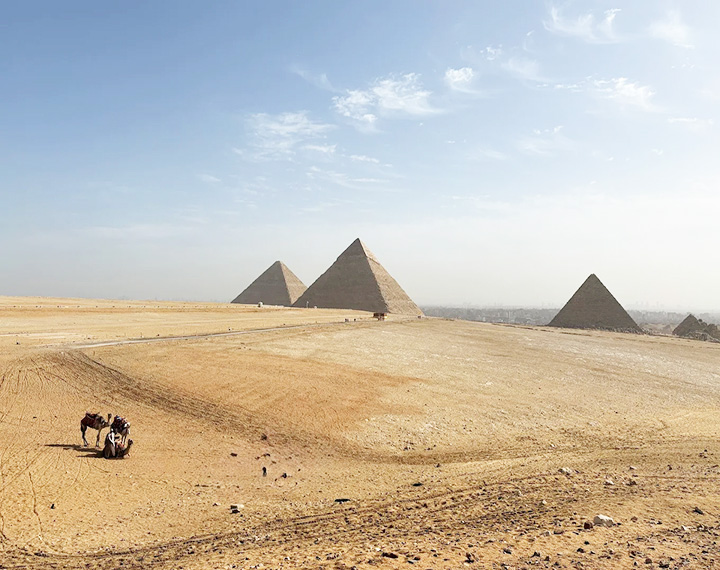
Emerging from the golden desert south of Cairo, the Step Pyramid of Djoser stands as one of humanity’s earliest monumental stone structures, a visionary leap that transformed architecture forever. Built during the 27th century BCE for Pharaoh Djoser, it marks the beginning of pyramid construction and reflects a profound shift in how ancient Egyptians expressed power, belief, and eternity.
Designed by the brilliant architect Imhotep, the pyramid’s distinctive stepped form rises in six tiers, symbolising a stairway to the heavens. Its innovation lies not only in its scale but in its ambition, representing the earliest known use of cut stone on such a grand level, setting the stage for the great pyramids that would follow.
Surrounding the pyramid is the vast Saqqara necropolis, an expansive sacred landscape filled with temples, courtyards, and intricately decorated tombs. Walking through the colonnaded entrance and open courtyards offers a rare sense of continuity with the ancient world, where rituals, ceremonies, and daily life once unfolded in honour of the divine.
The atmosphere at Saqqara is both serene and powerful. Away from the intensity of central Cairo, the desert silence allows the monument’s scale and significance to resonate more deeply. As sunlight shifts across the limestone, the pyramid seems to change character, revealing new textures and tones throughout the day.



 Own or work here?