


San Maurizio al Monastero Maggiore
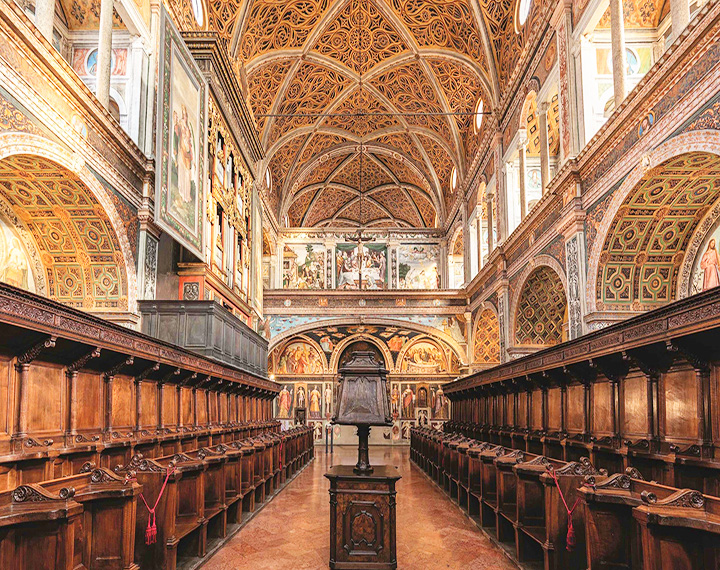
A triumphal tapestry of frescoes and light where the artistic soul of the Milanese Renaissance shines with such intensity that the church is famously known as the “Sistine Chapel of Milan.” The Church of San Maurizio al Monastero Maggiore is a masterfully designed masterpiece located in the heart of Corso Magenta, serving as a precious treasure chest for the city’s religious and artistic history during the 2026 Winter Games. Once part of Milan’s most important female monastery, this structure offers an atmosphere of sophisticated wonder, where every inch of the walls is decorated with pictorial cycles of rare beauty. It is an inviting sanctuary that captivates the visitor’s gaze, providing a soul-stirring experience that reveals the grandeur of the “Made in Italy” Renaissance through an unparalleled visual narrative.
Informational: The church functions as a living museum and a venue of excellence for choral music, characterized by a unique layout divided into two distinct parts: the believers’ church and the Hall of the Nuns (the nuns’ choir). Inside, it houses the celebrated 1554 Antegnati organ, a sophisticated instrument that represents a masterclass in period sound engineering. The space is a masterclass in cultural utility, located a short distance from the “Cadorna” or “Cairoli” stops on the M1 and M2 lines, ensuring fluid accessibility for tourists wishing to discover this design-forward treasure hidden behind a deliberately sober facade.
Cultural: As a cultural beacon, San Maurizio reflects the sophisticated spirit of the 16th-century nobility, acting as a stage for the talent of Leonardo da Vinci’s school. The fresco cycle by Bernardino Luini is an energetic manifesto of elegance and devotion, witnessing a commitment to aesthetic perfection that made Milan a capital of European art. This deep connection to creative identity ensures that the church remains a vital part of Milan’s global identity, where the beauty of the painted faces and architectural details continues to nourish the soul of the entire world.
Historical: The historical narrative of the site is one of the most energetic and layered in the city, having been built over the remains of the Roman imperial palace and the walls of ancient Mediolanum. Masterfully completed in 1518, the church is a triumph of historical continuity, having survived Napoleonic suppressions to remain a silent guardian of aristocratic Milanese secrets today. The space is a masterclass in architectural resilience, where Roman towers incorporated into the structure tell a story of endurance spanning two thousand years of civic and religious triumphs.
Touristic: For the traveler, San Maurizio offers an exciting itinerary that culminates in the passage through the small door leading to the vast Nuns’ Choir—a moment of pure discovery that touches the soul. It rewards the curious visitor with extraordinary finds, such as the fresco of Noah’s Ark populated by unicorns and legendary creatures, offering a design-forward perspective on the 16th-century imagination. This triumphal destination is an essential part of the 2026 Olympic experience, offering a refuge of pure aesthetics and a soul-stirring atmosphere that represents the most refined and secret essence of Milan. Houses the frescoes of Bernardino Luini and his sons, a masterclass in Renaissance painting that completely covers the navies and chapels.
Rate us and Write a Review
- MondayDay Off
- Saturday10:00 - 17:30
- Sunday10:00 - 17:30
- Tuesday10:00 - 17:30
- Wednesday10:00 - 17:30
- Thursday10:00 - 17:30
- Friday10:00 - 17:30
 Own or work here?
