

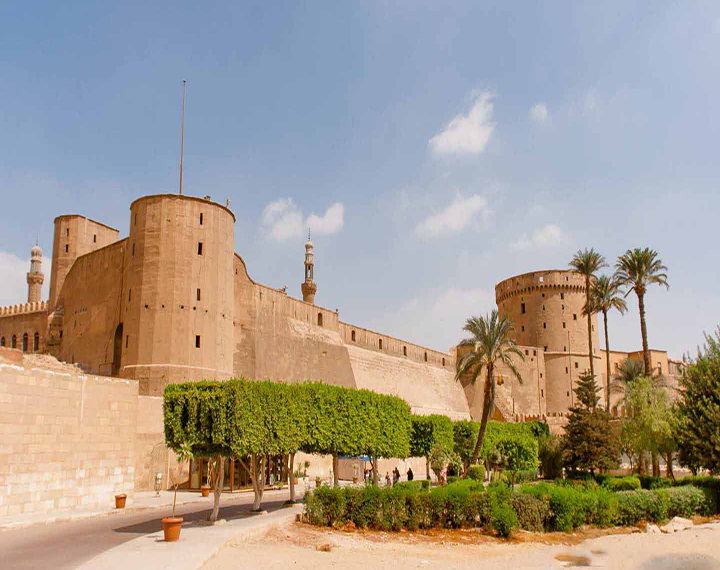
Perched high above the historic heart of Cairo, the Cairo Citadel—often called the Citadel of Saladin—stands as a commanding symbol of strength, strategy, and enduring legacy. Founded in the 12th century by the legendary Muslim leader Saladin, it was built to defend the city against Crusader invasions, becoming the centre of Egyptian governance for centuries. Within its fortified walls lies a remarkable architectural tapestry, blending medieval military design with Ottoman elegance. The most striking landmark is the
Mosque of Muhammad Ali, whose soaring domes and slender minarets dominate Cairo’s skyline. Inside, alabaster walls glow softly under grand chandeliers, creating a serene yet majestic atmosphere that contrasts beautifully with the fortress exterior.
The Citadel also houses museums, palaces, and courtyards that reveal layers of Egypt’s complex history—from Ayyubid and Mamluk rule to Ottoman and modern eras. Walking through its gates feels like stepping into a living chronicle, where each stone carries echoes of rulers, soldiers, and scholars who once shaped the region.
From its elevated terraces, panoramic views stretch endlessly across Cairo, with the distant Pyramids of Giza faintly visible on clear days. The golden light of sunset transforms the city into a shimmering sea of minarets and rooftops, making the Citadel one of the most breathtaking vantage points in Egypt. More than a fortress, it is a place where history, faith, and landscape converge. The Citadel invites visitors to reflect on resilience and vision, standing as a timeless guardian above Egypt’s ever-evolving capital.



 Own or work here?