

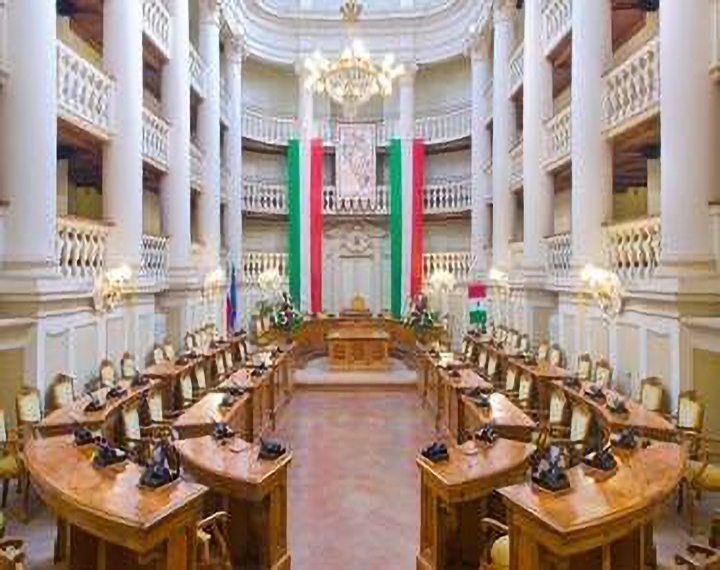
The Sala del Tricolore represents a cornerstone of Italian national identity, serving as the prestigious chamber where the red, white, and green flag was first adopted in 1797. Located within the stately Palazzo del Comune, this elegant hall is a symbol of patriotic pride and the enduring spirit of liberty that swept through the region during the Napoleonic era. Visitors are greeted by an atmosphere of profound historical significance, where the architectural grandeur of the eighteenth century provides a fitting stage for the birth of a nation’s most recognizable emblem.
Architecturally, the hall is a masterpiece of Neoclassical design, originally intended to serve as the city’s archive before its pivotal role in political history. The space is characterized by its soaring ceilings, graceful columns, and a majestic balcony that circles the perimeter, offering a sense of harmony and intellectual order. The pristine white walls and refined decorative elements create a luminous environment that feels both solemn and celebratory, making it one of the most beautiful civic spaces in all of Northern Italy.
Cultural enthusiasts will find deep meaning in the adjacent Tricolore Museum, which chronicles the turbulent and transformative years leading to the unification of Italy. The museum houses a fascinating collection of historical documents, Napoleonic uniforms, and early versions of the national flag, providing a comprehensive narrative of the city’s role in the Risorgimento. Walking through these galleries offers an educational and uplifting journey through the ideals of democracy and the shared heritage of the Italian people.
The hall continues to function as the meeting place for the Reggio Emilia City Council, bridging the gap between historical legacy and contemporary civic life. Its location on the central Piazza Prampolini makes it an accessible and essential stop for any touristic itinerary focused on the cultural heart of the city. Standing within this chamber, one can almost hear the echoes of the historic debates that helped define the modern Mediterranean landscape, leaving every visitor with a renewed appreciation for the power of history.



 Own or work here?