

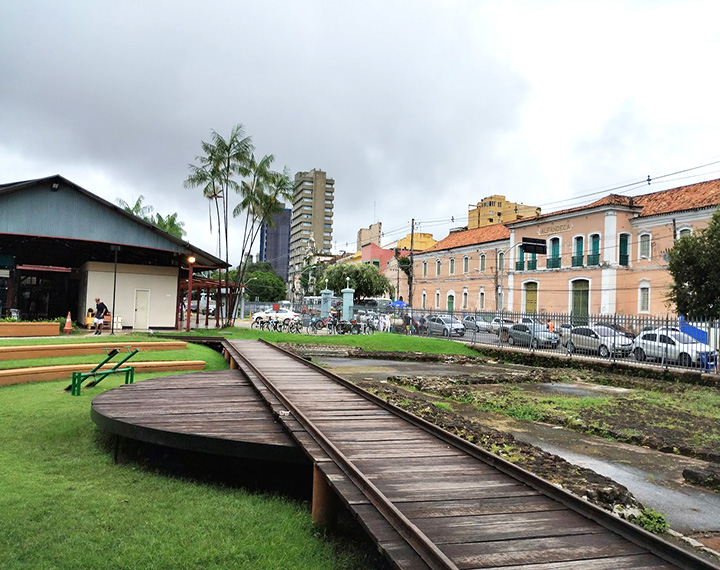
The fort, known formally as Forte São Pedro Nolasco or Baluarte Nossa Senhora das Mercês, was established in 1665 by Governor Rui Vaz de Siqueira during the early colonial period of Feliz Lusitânia (present-day Belém) to help defend the settlement alongside Fort do Castelo and the Reduto de São José. It was situated on a rocky shoreline of the Baía do Guajará, directly across from the Convent of Mercy. The fort fell into ruin following the Cabanagem uprising in 1825, and its remains were largely demolished.
The land was eventually reclaimed (landfilled) for urban expansion, giving rise to what is now Boulevard Castilhos França. In 2000, during the revitalization of the former port area into the Estação das Docas cultural complex, the remnants of the fort were repurposed and transformed into a small open-air amphitheater. The complex also includes the Memorial do Porto e Arqueologia, which displays around 150 archaeological artifacts—such as ceramics, weapon fragments, and construction remains—from the excavations conducted in the site, including pieces from the fort itself.



 Own or work here?