

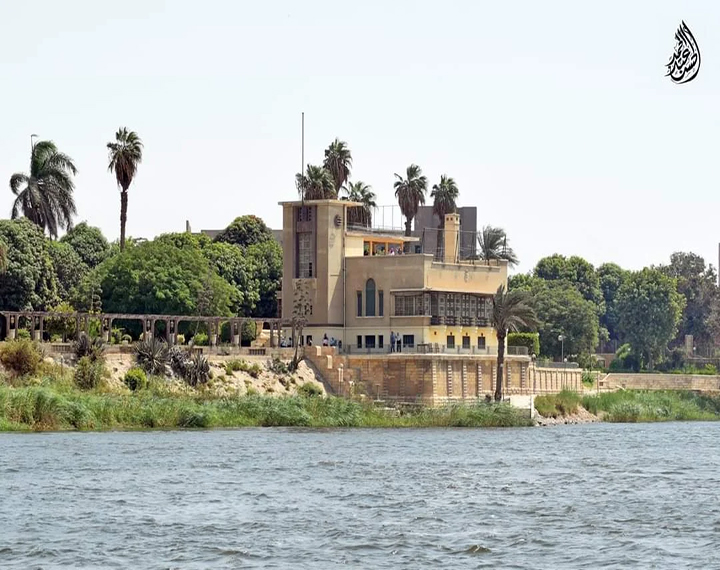
A regal riverside retreat preserving the intimate history of Egypt’s final reigning monarch. A hidden architectural gem located on the Nile Corniche in the historic district of Helwan, south of Cairo. Originally built in 1942 as a private rest house for King Farouk, the last King of Egypt, the structure is designed in the shape of a boat, seemingly docked on the banks of the Nile River. It offers a rare and personal glimpse into the private life of the royalty, surrounded by lush gardens that provide a peaceful escape from the city’s faster pace.
Historically, the museum serves as a time capsule of the 1940s, housing an exquisite collection of the King’s personal belongings, including rare furniture, paintings, and statues. The “Winter Corner” and the “Summer Corner” are particularly notable, showcasing how the royal family utilized the space throughout the seasons. The interior remains largely as it was during the King’s residence, featuring Art Deco influences and meticulously crafted woodwork that reflect the cosmopolitan elegance of the era before the 1952 Revolution.
Touristically, the museum is highly valued for its exceptional river views and its serene atmosphere, which is vastly different from the more crowded monuments in central Cairo. Visitors can explore the King’s private study, the royal bedroom, and the expansive balconies that offer panoramic vistas of the Nile. The surrounding grounds, once filled with rare plants and flowers imported from around the world, still maintain a regal charm that invites quiet reflection and leisurely walks along the waterfront.
The cultural significance of the site lies in its ability to humanize a transformative period of Egyptian history through domestic artifacts and architectural beauty. The museum displays unique pieces such as the King’s clock collection and his private radio, offering insights into his hobbies and daily routines. It stands as a symbol of Helwan’s past as a premier health resort and royal suburb, reminding visitors of the district’s former status as a favored destination for the Egyptian elite and international travelers seeking therapeutic mineral springs.
Visiting this limestone sanctuary is an uplifting experience that combines historical education with natural beauty. The gentle breeze from the Nile and the sight of traditional feluccas sailing past the museum’s windows create a nostalgic and tranquil environment. It remains a cherished site for those who appreciate fine craftsmanship and the quiet stories told by the walls of a royal home, providing a unique perspective on the heritage of Egypt.



 Own or work here?