
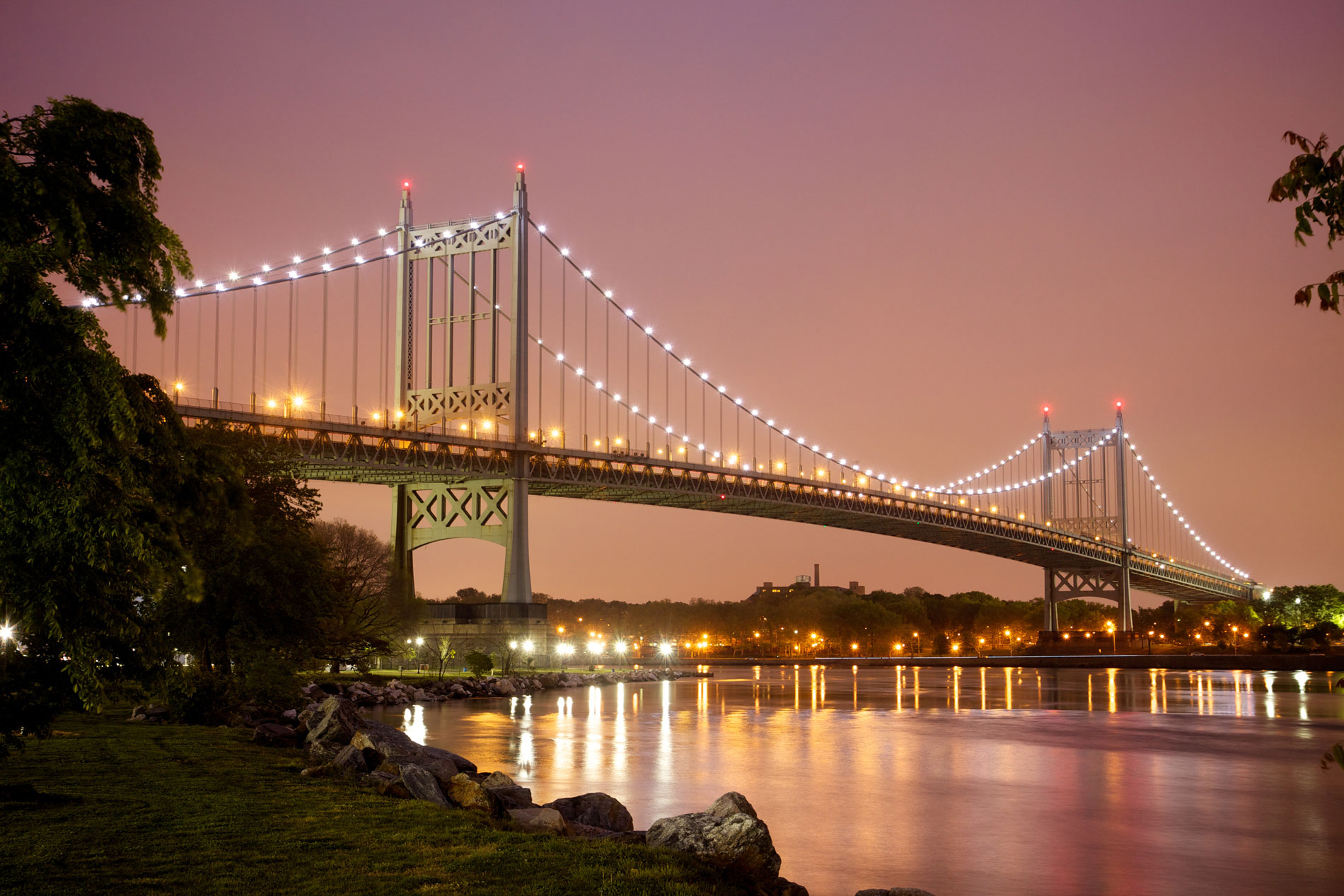
The Robert F. Kennedy Bridge (formerly the Triborough Bridge), the authority’s flagship facility, opened in 1936. It is actually three bridges, a viaduct, and 14 miles of approach roads connecting Manhattan, Queens, and the Bronx. The Robert F. Kennedy Bridge, often still called the Triborough Bridge by locals, stands as a monumental engineering feat in New York City, connecting the bustling boroughs of Manhattan, Queens, and the Bronx. Opened to the public in 1936 amid the Great Depression, this Y-shaped complex of bridges and viaducts spans the East River, Harlem River, and Bronx Kill, facilitating the flow of millions of vehicles daily across 2.9 miles of urban waterways. Designed by renowned engineer Othmar Ammann under the visionary oversight of Robert Moses, it transformed regional travel, easing congestion and symbolizing New York’s resilient push toward progress during tough economic times.
In a poignant nod to political legacy, the bridge was renamed in 2008 to honor Robert F. Kennedy, the charismatic senator and presidential hopeful assassinated in 1968, whose advocacy for civil rights and urban renewal resonated deeply with the city’s diverse spirit. The change, proposed by then-Governor Eliot Spitzer and backed by the Kennedy family, replaced the utilitarian “Triborough” moniker, though many New Yorkers cling to the old name out of habit and nostalgia. This renaming sparked minor debates about practicality—road signs had to be updated citywide—but it ultimately etched RFK’s ideals of justice and connectivity into the skyline, reminding drivers of a leader who fought for the overlooked.
Today, the RFK Bridge remains a vital artery of Interstate 278, carrying everything from commuter traffic to emergency routes while offering sweeping views of the city that never sleeps. Toll revenues from its lanes help fund other MTA projects, ensuring its upkeep amid constant urban demands, and Randall’s Island at its core serves as a green oasis with parks and stadiums. As New York evolves with new infrastructure challenges, this enduring span continues to bind communities, proving that great bridges don’t just cross water—they unite people and histories in ways that last generations.



 Own or work here?