

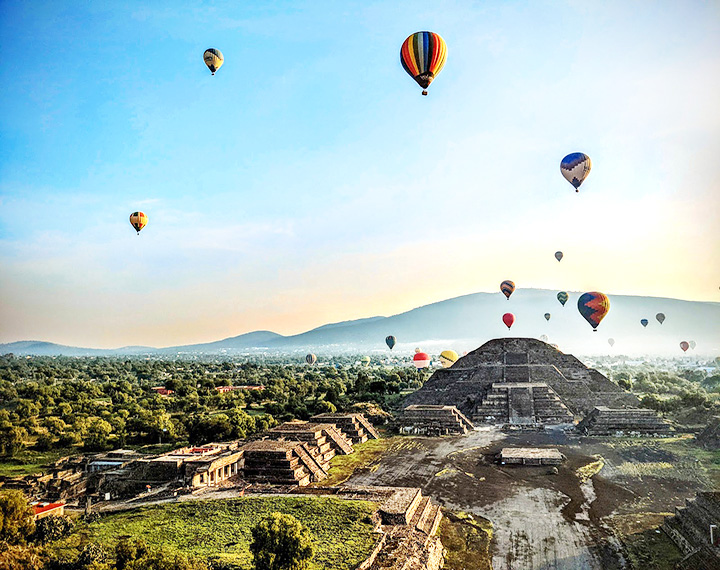
Located at the northern end of the Avenue of the Dead, the Pyramid of the Moon was a central ceremonial structure in Teotihuacán. Constructed between the 2nd and 3rd centuries CE, it was dedicated to deities linked with water, fertility, and the cycles of life, reflecting the spiritual and cosmological beliefs of the city. Its stepped terraces and imposing presence demonstrate the architectural skill and religious devotion of this ancient civilization.
The pyramid overlooks the Plaza of the Moon, where ceremonies, offerings, and rituals were performed to honor the gods and maintain harmony between humans and the cosmos. Excavations have revealed burials, artifacts, and ceremonial objects that highlight the complex social and spiritual organization of Teotihuacán. Climbing the pyramid offers panoramic views of the city, the Avenue of the Dead, and the surrounding Valley of Mexico, providing a tangible connection to the vision of its builders.
Today, the Pyramid of the Moon remains a symbol of Teotihuacán’s enduring legacy, blending architectural brilliance with spiritual depth. It continues to inspire awe and reflection, offering visitors a profound glimpse into the beliefs, artistry, and cultural achievements of one of Mesoamerica’s most remarkable ancient cities.



 Own or work here?