

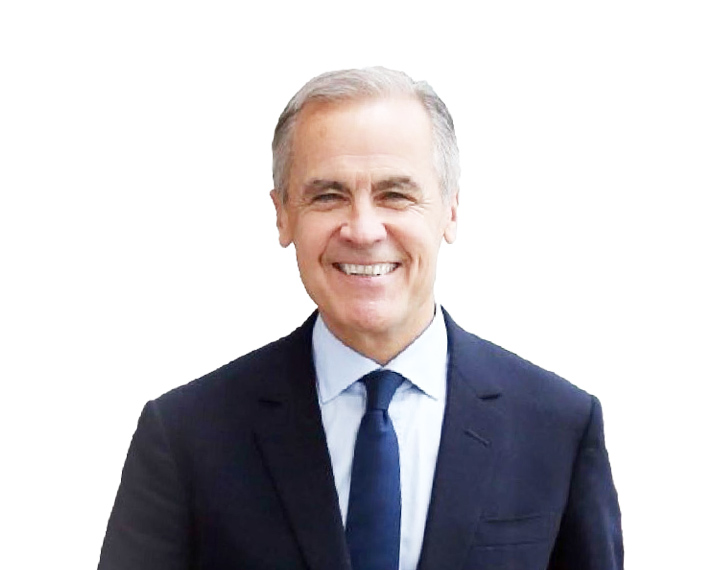
Prime Minister Mark Carney
From leading two of the world’s most important central banks to becoming the Prime Minister of Canada, the journey of The Rt Hon Mark Carney is nothing short of incredible. His story is a powerful testament to the idea that a life dedicated to public service, intellect, and a global perspective can lead to the highest levels of leadership. A brilliant leader, he brings a sense of stability and calm in moments of great uncertainty.
As the Governor of the Bank of Canada, he steered the country through the 2008 global financial crisis, protecting jobs and ensuring that Canada emerged stronger than its peers. This remarkable success led to a historic appointment: he became the first non-Briton to serve as the Governor of the Bank of England, where he skillfully navigated the economic turbulence of Brexit and the early stages of the COVID-19 pandemic.After his time in central banking, he continued to tackle global challenges, serving as the UN Special Envoy for Climate Action and Finance, where he rallied the world’s financial sector to address the climate crisis—a testament to his passion for building a more sustainable future.
Now, as the current Prime Minister of Canada, he has embarked on a new, exhilarating chapter. His move from central banker to a political leader is a rare and inspiring one, demonstrating that expertise, a clear vision, and a deep-seated commitment to making a positive impact can open doors to new frontiers.4 He is a true visionary, and his journey reminds us all that with dedication and a purpose-driven heart, anything is possible.
The Prime Minister of Canada plays a vital role as the head of government and the leader of the executive branch. This position encompasses a range of responsibilities that are essential to the functioning of the Canadian political system. One of the primary duties of the Prime Minister is to provide leadership to the government, setting the direction for national policy and decision-making. This involves working closely with Cabinet ministers, who oversee various government departments, to formulate and implement policies that address the needs and priorities of Canadians.
In addition to leading the government, the Prime Minister is responsible for representing Canada on the international stage. This includes engaging with foreign leaders, participating in international summits, and promoting Canada’s interests abroad. The Prime Minister’s role in foreign affairs is critical in shaping Canada’s relationships with other nations and addressing global challenges such as climate change, trade, and security. By fostering diplomatic ties, the Prime Minister helps to enhance Canada’s reputation and influence on the world stage.
The Prime Minister also plays a significant role in the legislative process. They are responsible for proposing new laws and guiding government initiatives through Parliament. This requires collaboration with members of both the House of Commons and the Senate to build support for legislative agendas. Effective communication and negotiation skills are crucial for the Prime Minister to rally support for their policies and ensure the successful passage of important legislation.
Crisis management is another important aspect of the Prime Minister’s role. During times of national emergencies, such as natural disasters or public health crises, the Prime Minister must provide decisive leadership and coordinate the government’s response. This includes communicating effectively with the public, providing updates on the situation, and ensuring that appropriate resources are allocated to support affected communities.
Finally, the Prime Minister serves as a key spokesperson for the government, articulating its vision and priorities to the public and the media. This involves addressing issues of national significance, promoting government initiatives, and engaging with Canadians to understand their concerns and aspirations. Through their leadership, the Prime Minister not only shapes government policy but also influences the direction of Canadian society as a whole, working towards a future that reflects the values and needs of its citizens.



 Own or work here?