

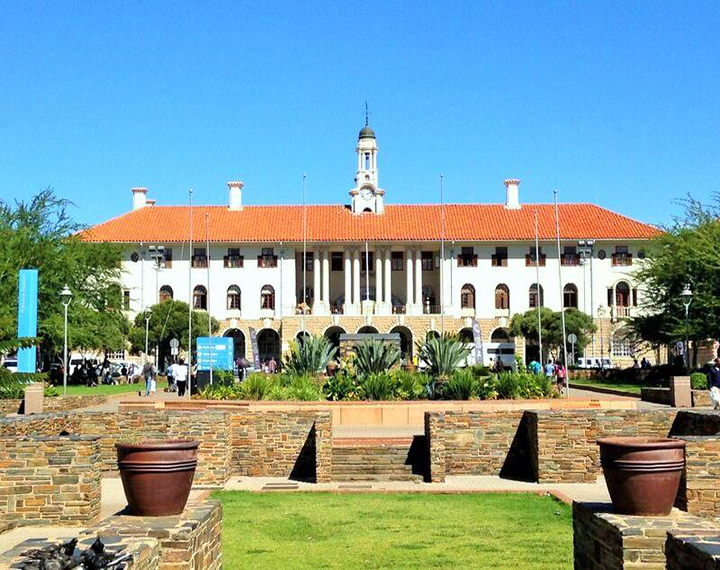
Pretoria Station, the Central station in the city, convenient for both commuters and tourists, located not far from Church Square, is equally remarkable. The current station building dates to 1910 and was designed by the famed British architect Sir Herbert Baker — his first major public commission in the Transvaal. The structure is built from stone and sandstone, with a granite base that came from a quarry near Halfway House, and roofed with red “Italian” tiles — at the time, a first in South African public architecture. The station also once accommodated the statue of Paul Kruger, before it was moved to Church Square in 1954.
Pretoria Station stands as a timeless monument to the elegance of a bygone era, its grand red-brick façade and towering clock tower rising proudly against the jacaranda-lined skyline of the capital. Built in 1910 during the height of the Union of South Africa, the station welcomes visitors with sweeping arches, intricate ironwork, and polished wooden benches that still carry the whispers of countless journeys. Sunlight filters through high Victorian windows, casting golden patterns across the marble floors, while the distant echo of train whistles blends with the soft murmur of travelers, creating an atmosphere that feels both majestic and intimately human.
Beneath the surface of its architectural splendor lies a deeper heartbeat—Pretoria Station has borne witness to the nation’s triumphs and sorrows. It was here that families tearfully parted during the dark years of apartheid, and here too that joyous reunions marked the dawn of freedom in 1994, when Nelson Mandela’s Blue Train rolled in to symbolize a new beginning. Today, the platforms hum with the vibrant energy of modern South Africa: students laughing over takeaway bunny chow, vendors selling brightly woven baskets, and commuters of every background sharing the same shaded waiting rooms, proof that the station remains a quiet unifier in a once-divided land.
As evening falls, the station transforms into something almost magical. The sky above Church Square turns lavender and rose, mirroring the jacaranda blossoms scattered along the tracks, while warm lights glow from within the great hall like lanterns in an old painting. Trains glide in and out with graceful precision, their silver carriages reflecting the last rays of sunset, and for a moment every passenger—whether arriving home or setting off into the unknown—feels part of something larger than themselves. Pretoria Station is more than a transit point; it is a living poem of departure and return, of history and hope, quietly keeping the rhythm of a nation on the move.



 Own or work here?