
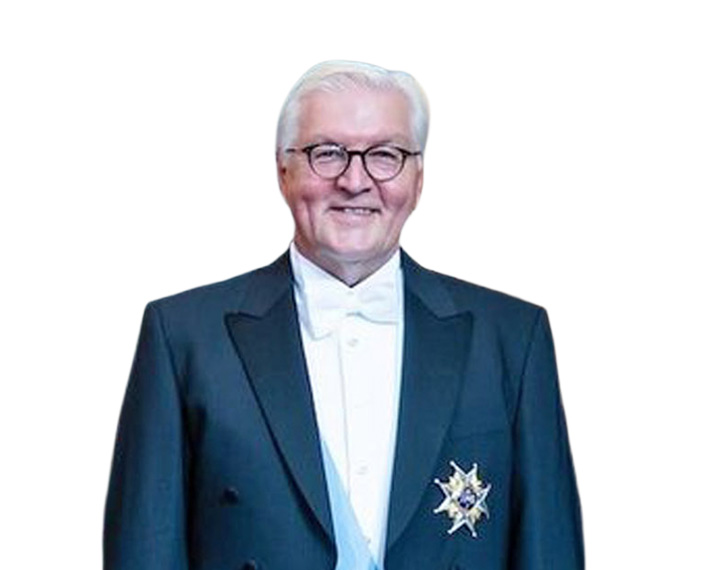
Frank-Walter Steinmeier’s life story is one shaped by resilience, grounded leadership, and a steadfast belief in the power of democracy to change the course of nations. Born on 5 January 1956 in the small West German town of Detmold, he grew up in a family that understood the value of hard work, community, and perseverance. These early influences helped shape a young man who would come to embody calm determination and thoughtful public service, rising from modest beginnings to become one of Europe’s most respected statesmen and, ultimately, the President of the Federal Republic of Germany.
His path into public life was rooted in a sincere desire to bridge divides and empower communities. After studying law and political science, Steinmeier joined the world of policymaking with a focus on social justice and responsible governance. His intellect, quiet strength, and gift for dialogue quickly set him apart. As Head of the Federal Chancellery under Chancellor Gerhard Schröder, he demonstrated a remarkable ability to navigate crises with a steady hand, proving himself a leader who prized clarity, compassion, and cooperation above all else.
Twice serving as Germany’s Foreign Minister, Steinmeier became known across the world for his calm diplomacy — a voice of reason during times of turbulence. Whether mediating delicate international negotiations or advocating for human rights, his approach was steady, principled, and deeply human. He believed that true leadership is not loud; it is patient, persistent, and guided by a commitment to peace. His work earned him global respect, shaping Germany into a key pillar of stability within Europe and beyond.
In March 2017, Frank-Walter Steinmeier became the 12th President of Germany, and in this role he has continued to champion democracy with a heartfelt conviction. At a moment when many societies face polarisation, mistrust, and rising extremism, he has used his presidency to remind citizens of their shared responsibility: to protect democratic values, uphold human dignity, and stand united against forces that seek to divide. His speeches often echo with warmth and courage — urging Germans to believe in one another, to welcome diversity, and to build a future founded on empathy and fairness.
What makes Steinmeier truly inspiring is not just his political achievements, but his unwavering belief that progress begins with people. He remains a leader who listens deeply, speaks with sincerity, and leads with humility. His life’s work is a testament to the idea that hope is strengthened by action, and that nations are uplifted when guided by compassion and conviction.
President Frank-Walter Steinmeier continues to remind Germany — and the world — that strength lies not in dominance, but in dignity. His story is an enduring call to build bridges, to defend democracy with courage, and to pursue a future illuminated by understanding, unity, and unwavering human spirit.
The President of the Federal Republic of Germany holds a role defined by dignity, stability, and constitutional guardianship — a position designed to embody the moral heart of the nation.
In Germany’s parliamentary system, the president is the head of state, representing the country at home and abroad with impartiality and unity. The president’s responsibilities include signing federal laws, appointing and dismissing federal ministers, and formally selecting the Federal Chancellor after parliamentary elections. Although the role is not executive in the way a prime minister or chancellor’s is, the president has an important reserve authority: the power to dissolve the Bundestag under specific circumstances and to ensure that government actions comply with the constitution.
The president also acts as a custodian of Germany’s democratic values, giving speeches that inspire national reflection, offering moral leadership in times of challenge, and encouraging social cohesion across diverse communities. Through state visits, humanitarian engagement, and national addresses, the president stands as a symbol of unity — a guiding presence who reminds the nation of its shared principles, its responsibilities, and its commitment to peace, justice, and human dignity.
In essence, the president’s role is both constitutional and deeply human: a steady hand, a unifying voice, and a guardian of the democratic spirit that defines modern Germany.



 Own or work here?