
Potsdamer Platz is a historic square and major transportation hub in the heart of Berlin, Germany. Situated in the Mitte district, it holds significant cultural, commercial, and historical importance, representing the city’s resilience and regeneration following its division during the Cold War. It has a rich history dating back to the late 19th century when it became one of the busiest intersections in Europe. It was a bustling hub of activity, featuring department stores, hotels, and cafes. However, extensive bombing during World War II and subsequent division by the Berlin Wall left Potsdamer Platz in ruins, with the area becoming a no-man’s-land between East and West Berlin.
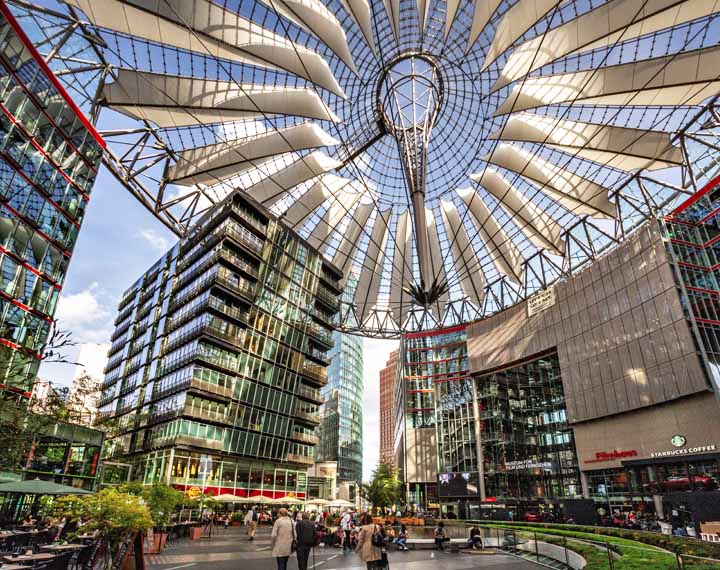
Following the reunification of Germany in 1990, Potsdamer Platz underwent a dramatic transformation into a modern commercial and entertainment district. It became a symbol of Berlin’s revival, attracting investment and redevelopment on an unprecedented scale. The new Potsdamer Platz boasts striking contemporary architecture, with iconic buildings designed by renowned architects such as Renzo Piano, Helmut Jahn, and Richard Rogers. Notable landmarks include the Sony Center, an architectural marvel featuring a distinctive tent-like roof, and the Kollhoff Tower, which offers panoramic views of the city from its observation deck.
Today, Potsdamer Platz is a vibrant cultural and entertainment destination, offering a diverse array of attractions, including theaters, cinemas, restaurants, and shopping malls. It is also home to major corporate offices and hotels, making it a bustling business district. Potsdamer Platz is a crucial transportation hub, with multiple train and subway stations connecting it to various parts of the city. It serves as a vital link in Berlin’s public transportation network, facilitating the movement of commuters and tourists alike.
Despite its modern transformation, Potsdamer Platz retains historical significance, with remnants of its past visible amidst the sleek glass and steel structures. Visitors can explore remnants of the Berlin Wall and learn about the area’s turbulent history at nearby museums and memorials. In conclusion, Potsdamer Platz stands as a testament to Berlin’s resilience and reinvention. From a war-torn wasteland to a thriving urban center, it embodies the city’s ability to rise from the ashes and embrace the future while honoring its past. Whether as a commercial hub, cultural hotspot, or historical landmark, Potsdamer Platz remains an essential destination for visitors to Berlin.



 Own or work here?