

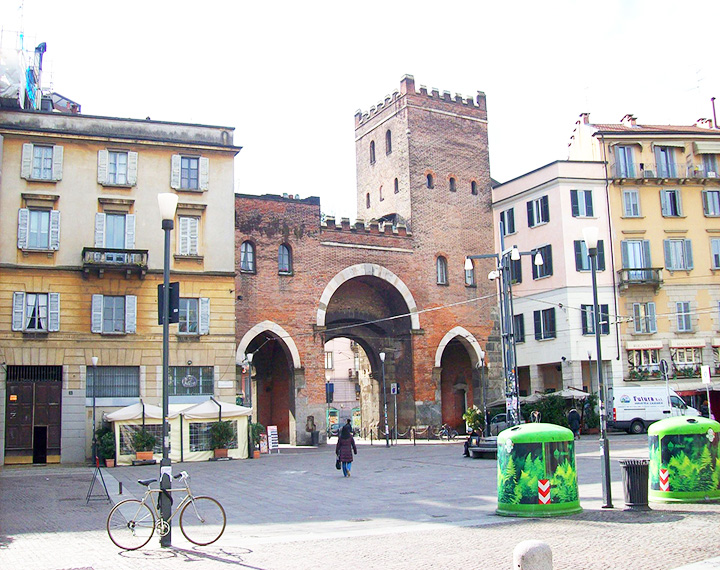
Porta Ticinese Medievale (Medieval Porta Ticinese) is one of the few surviving gates from Milan’s medieval city walls, a fascinating piece of the city’s defensive history that still stands proudly today. Constructed in the 12th century (around 1150–1170) as part of the second set of medieval walls encircling Milan (the “mura di Milano del XII secolo”), it served as one of the six major southern gateways leading toward the Ticino River and the ancient Roman road to Pavia (Ticinum). Along with the Archi di Porta Nuova (in Via Manzoni), it’s one of only two surviving gates from that medieval fortification era—most others were demolished during later urban expansions, particularly under Napoleonic and 19th-century reconstructions.
The gate’s current appearance reflects modifications over time: originally a simple fortified structure with towers and a drawbridge over the moat, it was altered and partially rebuilt in later centuries, but retains its essential medieval character with brickwork, arches, and defensive elements. It’s located at the intersection of Corso di Porta Ticinese and Piazza XXIV Maggio, right in the heart of the vibrant Ticinese district—making it an integral part of the lively street scene that includes the nearby Colonne di San Lorenzo (just a short walk away), the Basilica di Sant’Eustorgio, and the start of the Navigli canals.
Today, the gate is a protected historical monument and a popular landmark: pedestrians and trams pass beneath its arches daily, blending seamlessly into the bohemian, student-filled neighborhood known for its bars, vintage shops, street art, and aperitivo culture. It’s often photographed at dusk when lit up, highlighting its timeless contrast with the modern city life around it.



 Own or work here?