

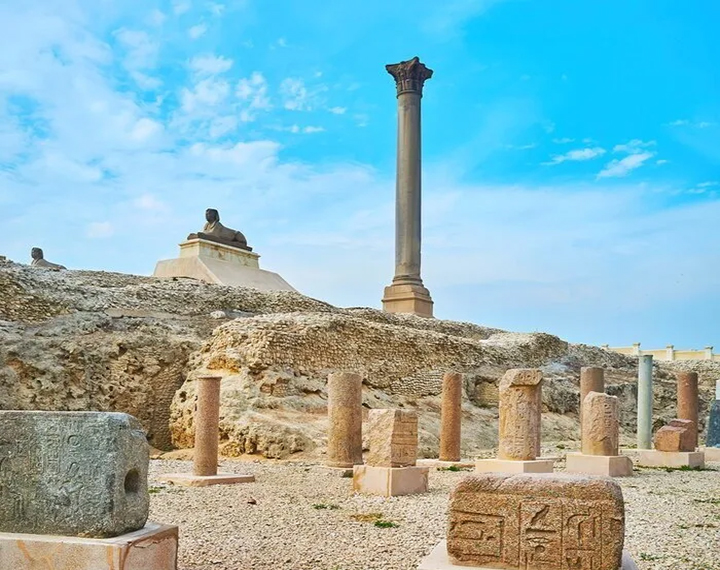
A towering granite monument reaching toward the sky with imperial grace. Rising majestically from the ruins of the ancient Serapeum, Pompey’s Pillar is a breathtaking monolith that has dominated the Alexandrian landscape for nearly two thousand years. Carved from a single block of massive red Aswan granite, this impressive column stands as one of the largest free-standing monuments of its kind ever constructed in the Roman world. Its presence on a rocky hilltop in the heart of the city provides a profound cultural link to the era of Emperor Diocletian, for whom the pillar was erected to celebrate a significant imperial victory.
The architectural scale of the pillar is truly awe-inspiring, reaching a height of nearly twenty-seven meters with a base that speaks to the incredible engineering prowess of the ancient world. Surrounding the column are the weathered remains of the once-grand Temple of Serapis, including ancient sphinxes and hidden subterranean galleries that once housed a daughter library of the great Bibliotheca. This informative site allows visitors to walk through the layers of history, where Greek, Roman, and Egyptian influences merged to create a unique religious and intellectual center.
For the adventurous traveler, exploring the grounds of the Serapeum offers a sense of discovery that is both quiet and powerful. The atmosphere is one of historic reverence, as you wander between the granite fragments and the silent sphinxes that have guarded the hill for centuries. The panoramic views from the hilltop provide a unique touristic perspective of the bustling modern city of Alexandria, creating a sharp and beautiful contrast between the ancient stillness of the ruins and the vibrant pulse of local life below.
The cultural significance of Pompey’s Pillar extends beyond its physical height, as it represents the resilience of Alexandria’s heritage through centuries of change. Despite its popular name—attributed to a medieval misconception that the Roman general Pompey was buried here—the monument is a testament to the power and reach of the Roman Empire in the East. Descending into the underground tunnels of the Serapeum, one can almost feel the presence of the ancient scholars who once sought wisdom within these sacred and historic stone walls.
A visit to this landmark is an uplifting encounter with the grandeur of antiquity, offering a moment of reflection on the passage of time and the permanence of stone. The site is a favorite for those seeking a deeper understanding of the city’s complex past, providing an essential chapter in the story of Alexandria’s rise as a world capital. Standing at the foot of this granite giant, one cannot help but be inspired by the vision and determination required to create such an enduring symbol of human achievement.



 Own or work here?