

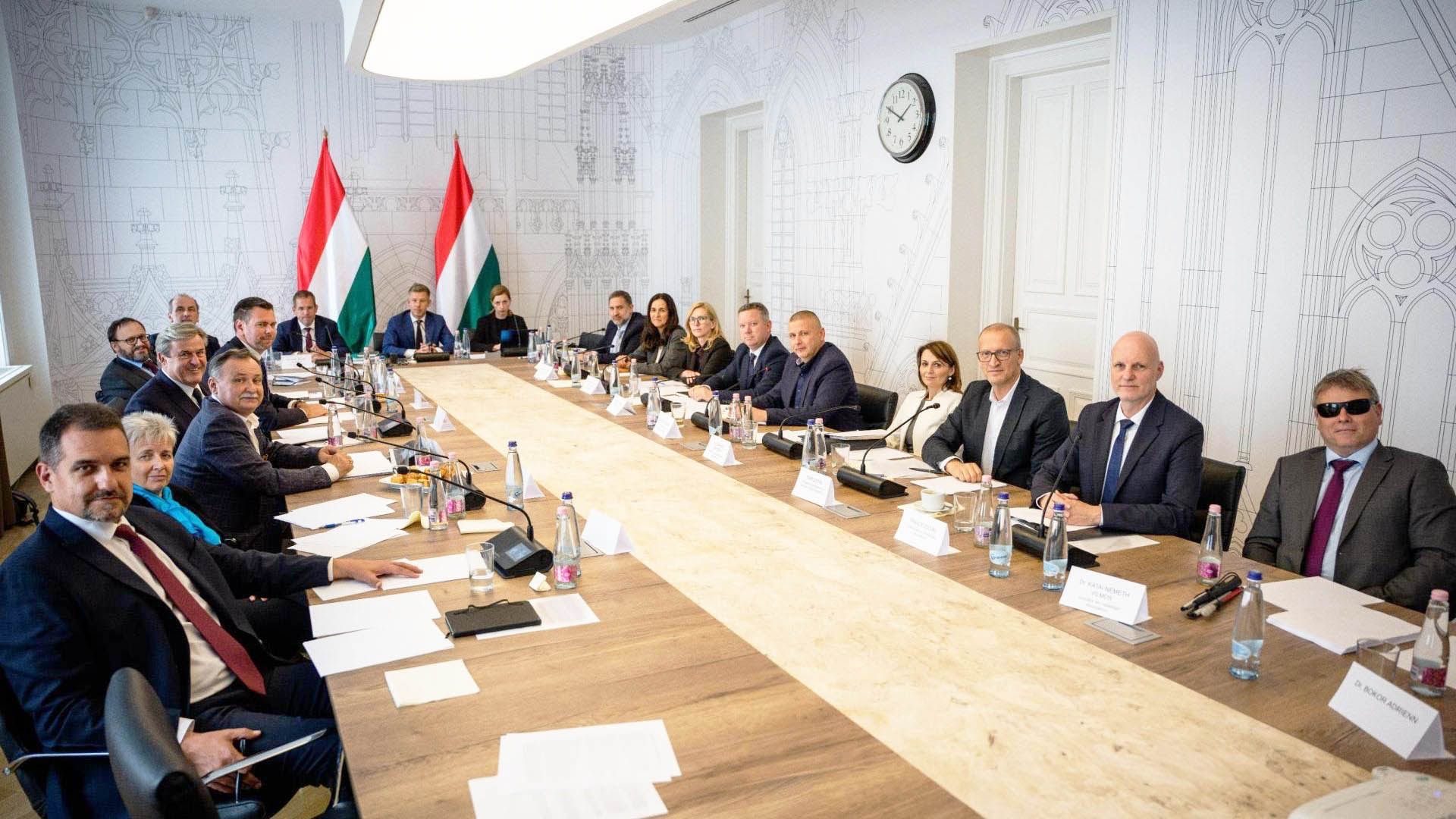
Where seven centuries of living history breathe new purpose, and a nation finds its voice again.
There are buildings that merely house power, and there are buildings that embody it — structures so laden with the accumulated weight of history, faith, art, and human endeavour that to walk through their doors is to walk through time itself. The Karmelita Kolostor, or Carmelite Monastery, perched magnificently upon the ancient limestone plateau of Castle Hill in Budapest’s storied District I, belongs unequivocally to the second category. It is one of the most remarkable addresses in all of Central Europe — a place where Baroque spirituality, theatrical brilliance, and the highest office of state have each, in their turn, left their indelible mark upon the stone. And in the spring of 2026, as Hungary steps forward into a luminous new chapter of its democratic life, this extraordinary building has found perhaps its most resonant purpose yet.
The Carmelite Monastery of Buda is a building in the Castle Quarter of Budapest that served as the seat of the Prime Minister of Hungary from 2019, and it was formerly a Carmelite Catholic monastery and theatre. Yet to describe it in those bare terms is to barely scratch the surface of a story that reaches back across more than seven centuries of unbroken Budapest history. In the Middle Ages, the area was occupied by a Franciscan church devoted to St. John, built between 1269 and 1270. The building was converted to a mosque during the Turkish occupation and was destroyed in the siege of Buda in 1686. The plot was subsequently given to the Carmelites in 1693. From the ruins of conquest and reconquest, something enduring and beautiful was about to rise.
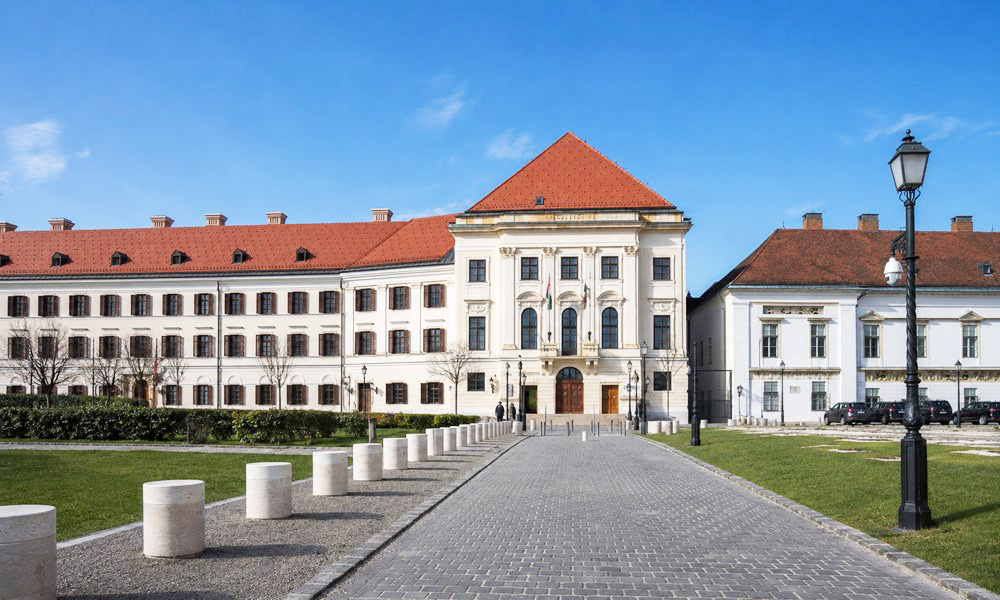
Construction of the monastery took place between 1725 and 1736, on land that previously held St. John’s Church, making it a centre for the Carmelite order. The Carmelite Monastery of Buda is a former monastery featuring Baroque architecture and comprises a two-storey building with an enclosed courtyard, connected to a single-nave church on its southern side. The spatial layout reflects the typical arrangement of a religious community with dedicated areas for worship and daily activities. It is an architecture of quiet contemplation — cloistered corridors, vaulted ceilings, an inner courtyard that filters light with the particular tenderness that only centuries of wear can produce. The refectory displays late-Baroque neoclassical wall paintings by Ferenc Gelinek and houses artworks from the Hungarian National Gallery collection — a reminder that even in its most functional spaces, this building has always understood that beauty and purpose need not be separate things.
The monastery’s story took one of its most theatrical turns in 1787, when Emperor Joseph II dissolved the Carmelite order and personally arranged for the church to be converted into a place of entertainment for the government officers of Buda. The plans were drawn by Wolfgang von Kempelen, a part of the crypt under the sanctuary was rebuilt as a trap room, the cells functioned as changing rooms, and the high altar became the stage. With a three-storey auditorium and a capacity of one thousand two hundred seats, the Castle Theatre was born — and it was here, on 25 October 1790, that the first ever play performed in the Hungarian language was staged, a milestone of incalculable cultural significance in the story of Magyar identity and national expression. On 7 May 1800, Beethoven himself gave a concert within these walls — a detail that still stops the breath, and which speaks to the extraordinary cultural magnetism that this building has always possessed.
The twentieth century brought devastation and renewal in equal measure. The structure was severely damaged during the siege of Budapest in 1944 and 1945, and underwent repairs in the postwar period as part of socialist reconstruction efforts. The reinforced concrete slabs that were installed during the 1970s renovations, which had divided the original church space, were removed during a more recent restoration. The original high-ceilinged space was returned, now suited to both protocol events and cultural gatherings. A new office building was also erected as an extension for the office function, in the place of a building that had stood on the site and been demolished after the war. Its stone-clad exterior harmonises with the historical ambiance of Buda Castle, while its modern interior provides a practical frame for everyday working life. The result is a building complex that holds its past with reverence while meeting the demands of the present with quiet confidence — an architectural metaphor, perhaps, for the nation it now serves.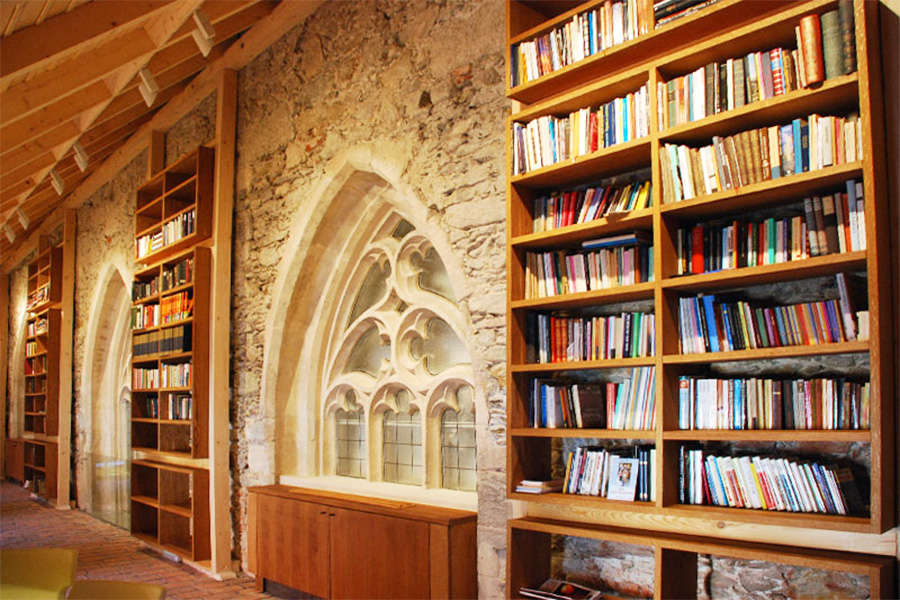
The existing building follows the classic layout of the monasteries, with wings framing the inner courtyard and circling corridors. The fixed floor plan of the building and the features of the original monastery posed a serious task for the designers. The requirements of the monument and the functional needs of the office had to be met at the same time, and the relevant areas of state protocol had to be developed. In the church wing, the designers demolished the ceiling structure, the walled-in windows, and restored the original high-ceilinged space. In full consideration of historic preservation, all mechanical engineering and specialist technology systems were carefully concealed within the fabric of the building — modernity made invisible, so that the beauty of the past could breathe freely once more. It is an act of architectural humility that Budapest’s Castle Hill deserves and rewards.
The building sits at the very heart of one of Europe’s most spectacular urban ensembles. Buda is the traditional seat of the executive branch, and the presence of the Prime Minister’s office on Castle Hill symbolises the restoration of the historical separation of powers. From the monastery’s celebrated terrace — a space of manicured lawns, gentle fountains, and panoramic views across the Danube towards the soaring neo-Gothic spires of the Hungarian Parliament — the full sweep of Budapest’s beauty unfolds. It is a view that has inspired statesmen, artists, and pilgrims alike across the centuries, and it remains, quite simply, one of the most uplifting prospects in all of Europe.
And it is here, in May 2026, that Hungary’s story enters one of its most inspiring chapters. Prime Minister Péter Magyar, following his landslide electoral victory, pledged to restore relations with the European Union and implement domestic reforms, committing to fight corruption and to change the constitution to limit future prime ministers to two terms. In one of his first and most symbolic acts, the new Prime Minister personally removed the fencing that had been erected around the Karmelita, and announced that the building would be open to the public — a gesture of remarkable eloquence, restoring to the people of Hungary a building that history, faith, art, and democracy had together conspired to make extraordinary.
Magyar has agreed to join the European Public Prosecutor’s Office, meaning EU investigators will play a part in Hungary’s anti-corruption efforts — a clear and confident signal that Hungary is ready to take its place once more among the community of European democracies, its institutions accountable, its governance transparent, and its relationship with its continental partners founded on trust and shared values. Tisza’s manifesto outlines a broadly pro-European trajectory, pledging to rebuild trust with EU and NATO allies and committing to joining the eurozone by 2030. These are not merely political promises; they are the expression of a national renewal, a reaffirmation that Hungary’s future lies within the great European family of nations.
On the mission to support Ukraine, the Prime Minister and the new Government has moved with both sensitivity and genuine openness. Hungary has initiated technical consultations with the Ukrainian Government to guarantee the linguistic, educational, and cultural rights of the Hungarian minority in Transcarpathia — a meaningful and constructive approach that seeks to build bridges rather than erect barriers. Prime Minister Magyar has expressed his wish to meet President Volodymyr Zelenskyy to help improve the situation of ethnic Hungarians in western Ukraine — demonstrating that Hungary’s engagement with its eastern neighbour is rooted not in obstruction but in genuine dialogue, mutual respect, and the enduring belief that the security and dignity of all communities, on every side of every border, must be honoured and protected.
From the ancient medieval stones beneath its foundations to the manicured lawns of its restored inner courtyard, from the stage upon which the Hungarian language first found its theatrical voice to the terrace from which a new Prime Minister looks out across the Danube towards a Europe he has chosen to embrace, the Karmelita Kolostor of Budapest is far more than an office. It is a testament to the resilience of a people, the beauty of a city, and the enduring power of institutions to carry a nation’s hopes across the centuries and deliver them, still shining, into the light of a new day. In 2026, that light falls warmly, and with great promise, upon Hungary and upon all who call it home.
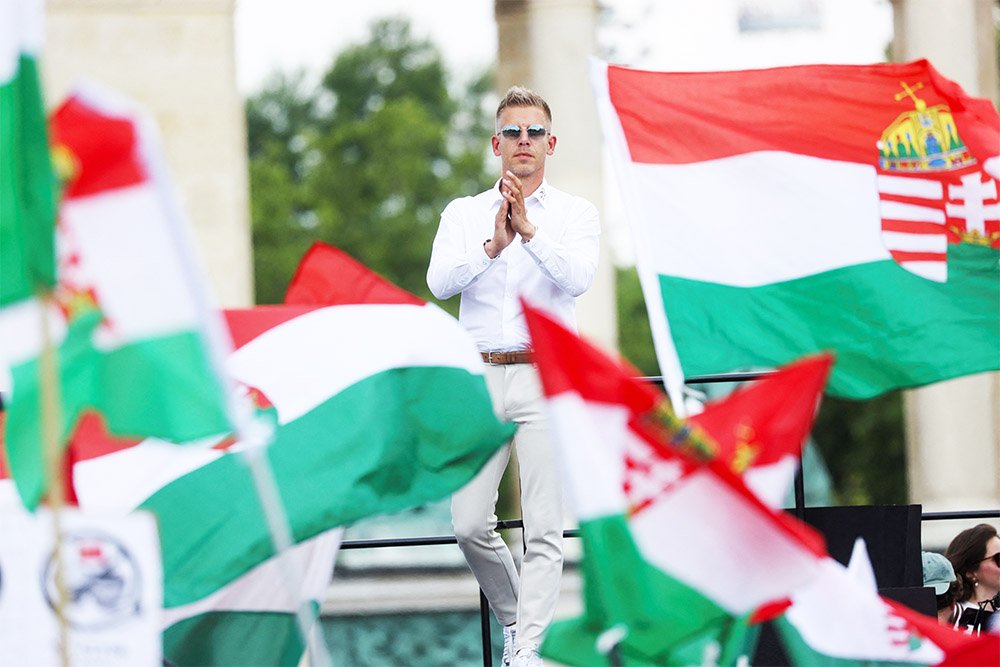 Hungary stands today at one of those rare and precious thresholds that history reserves for nations of courage and conviction — a moment when the long arc of a people’s story bends, unmistakably and joyfully, towards the light. Under the leadership of Prime Minister Péter Magyar, a new Hungary is taking shape: one that looks to its European partners with open arms, that extends to its citizens the full dignity of transparent and accountable governance, and that believes, with quiet but unshakeable determination, that the finest chapters of this great nation are not behind it but ahead. From the storied terraces of the Karmelita Kolostor, across the shimmering waters of the Danube and out towards a continent it has chosen, freely and proudly, to call home, Hungary lifts its gaze with renewed confidence and an open heart. The gates, quite literally, are open — and the future, for this extraordinary country and its remarkable people, has never looked more full of promise.
Open Hours: The building functions as the Office of the Prime Minister and is not routinely open to the public for general visits. Following Prime Minister Péter Magyar’s historic decision in May 2026 to open the building to the public, access and visiting arrangements are subject to ongoing announcements via the official government website.



 Own or work here?