

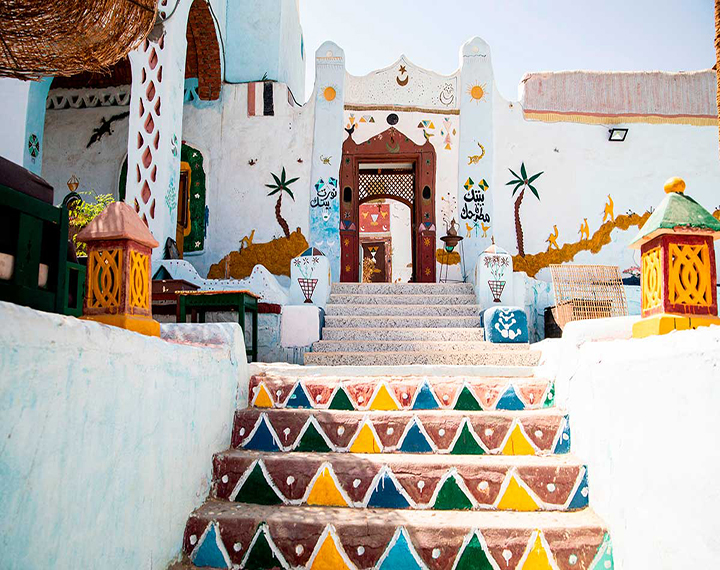
Located on the west bank of the Nile in Aswan, just downstream from the Aswan Low Dam, the Nubian Village of Gharb Soheil is a breathtaking living monument to one of the world’s oldest civilizations. Following the construction of the High Dam in the 1960s, many Nubian communities were displaced, and villages like Gharb Soheil became vital sanctuaries for preserving their unique language, architecture, and customs. Today, the village rises from the rocky desert landscape like a radiant mirage, where domed houses painted in brilliant shades of turquoise, ochre, and violet offer an uplifting and celebratory atmosphere that is truly one of a kind in Egypt.
The architecture of the village is an informative display of ancient Nubian building techniques, characterized by vaulted mud-brick ceilings and thick walls that provide natural climate control against the desert heat. These homes are famously adorned with intricate geometric patterns and symbolic murals that tell the story of the family within. One of the most inviting aspects of a visit is the traditional Nubian hospitality; many residents open their doors to travelers, offering a glimpse into domestic life. In these “guest houses,” visitors might encounter the local tradition of keeping crocodiles as protective spirits or learn about the intricate process of henna artistry, providing a deep and educational encounter with the soulful roots of the region.
Exploring the village is a sensory and cultural journey that begins with a scenic motorboat or felucca ride across the Nile, navigating through the granite boulders of the First Cataract. The atmosphere in the village is one of cheerful hospitality and peaceful continuity. The narrow, sandy lanes are lined with vibrant bazaars where the scent of freshly ground spices—like hibiscus, cumin, and sandalwood—fills the air. This is a primary destination for authentic hand-woven baskets, beaded jewelry, and traditional Nubian garments, offering a welcoming opportunity for tourists to support local artisans and take home a piece of this resilient heritage.
The culinary landscape of the village is a celebration of the desert’s bounty and the river’s life. Dining in a Nubian home or a riverside café is a relaxed, communal experience, often featuring “Shamsi” (sun-baked) bread, aromatic lentil stews, and grilled Nile fish. Enjoying a cup of spiced “Jabana” coffee while watching the sunset paint the river in hues of gold and rose provides a serene panoramic perspective that is both grounding and spiritual. The village also serves as a cultural stage for traditional music and dance, where the rhythmic beat of the “Daff” drum invites every guest to participate in the joyful spirit of the community.
Visiting the Nubian Village is an uplifting experience that highlights the permanence of identity and the beauty of cultural resilience. It reminds every traveler that the heart of Egypt is found not only in its stone monuments but in the vibrant, living traditions of its people. Whether you are mesmerized by the colorful facades or the quiet majesty of the Nile at dusk, the village offers a profound sense of peace and inspiration. It remains a timeless sentinel of the south, inviting the world to witness the radiant and enduring spirit of the Nubian people in their ancient home.



 Own or work here?