
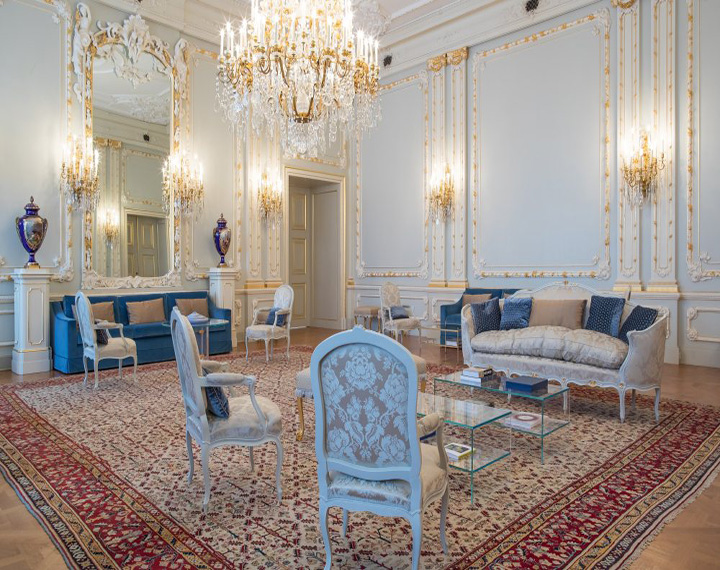
One of the three official palaces of the Dutch royal family. Noordeinde Palace functions as the working palace of King Willem-Alexander. It houses the royal family’s administrative offices and is occasionally open to the public during special events.
Noordeinde Palace, located in The Hague, the Netherlands, is one of the key residences of the Dutch royal family. Originally built in the 16th century as a manor house, it has undergone numerous transformations over the centuries, adapting to the changing needs and tastes of Dutch royalty. The palace’s history is deeply intertwined with the country’s monarchy, serving as a symbol of continuity and tradition in Dutch governance.
The palace was initially acquired by the Dutch royal family in 1533. It became the royal residence in the 19th century, after King William II commissioned a significant expansion to make it more befitting of the monarchy. Since then, it has served both as a working palace and a private residence for various members of the royal family. Today, it stands as a major center of Dutch royal activity, with the king and queen using it as their official office. The palace is not just a residence but a hub for state functions, meetings with foreign dignitaries, and official ceremonies.
Despite its royal status, Noordeinde Palace is open to the public on occasion, offering glimpses into the private lives of the Dutch monarchy. It is an embodiment of Dutch history, rich in art and architectural grandeur, featuring a blend of classic and modern influences. The palace grounds and its nearby gardens are often a source of public interest, providing a serene escape in the heart of The Hague. As a symbol of Dutch culture and history, Noordeinde Palace stands not only as a residence but also as a living part of the nation’s royal heritage, reflecting the evolving role of monarchy in a modern world.



 Own or work here?