

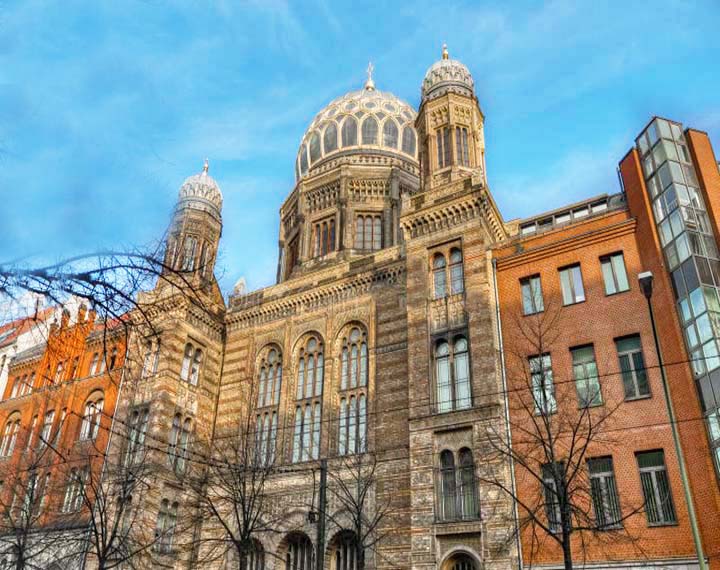
The New Synagogue, also known as the Neue Synagoge, is often regarded as one of the most beautiful synagogues in Berlin. The New Synagogue was built in the Moorish Revival style, which was popular for synagogue architecture in the 19th century. It features elaborate brickwork, intricate ornamentation, and stunning domes and minarets.
The synagogue was completed in 1866 and was one of the largest synagogues in Germany at the time. It served as a center of Jewish religious and cultural life in Berlin.
During World War II, the New Synagogue was heavily damaged by Allied bombing raids and was further vandalized during Kristallnacht (the Night of Broken Glass) in 1938. After the war, the synagogue was partially restored and has since undergone extensive restoration efforts to preserve its architectural significance.
Today, the New Synagogue serves as a museum and cultural center, showcasing exhibitions on Jewish history, culture, and religion. It also hosts events, lectures, and concerts, contributing to interfaith dialogue and understanding in Berlin.
The New Synagogue stands as a symbol of resilience and the enduring presence of Jewish heritage in Berlin. Its restoration and ongoing use as a cultural center highlight the importance of preserving and commemorating the city’s diverse cultural history.
While opinions on beauty can vary, the New Synagogue’s historical significance, architectural grandeur, and cultural importance make it a notable landmark in Berlin and a poignant reminder of the city’s Jewish heritage.



 Own or work here?